


“The sea is emotion incarnate. It loves, hates, and weeps. It defies all attempts to capture it with words and obeys no man’s command.”
— Ralph Waldo Emerson
Forgive me. I took a week off to soak up good times and critical events in DC (for good reason, I assure you). A gossip series tracking this stuff is on the way.
I’m back and catching up. The news is crazy; I’m still mourning Diane, like so many of you.
But let’s not scrape over Monday’s milestone: the 250th birthday of the U.S. Navy. Continental Congress first ordered ships to defend us, a fledgling nation, in 1775. That first fleet was small and short-lived. It disbanded after the Revolution, but by 1794 a modern Navy was already taking shape. (Go ahead and file this under “things we should know but don’t.”)
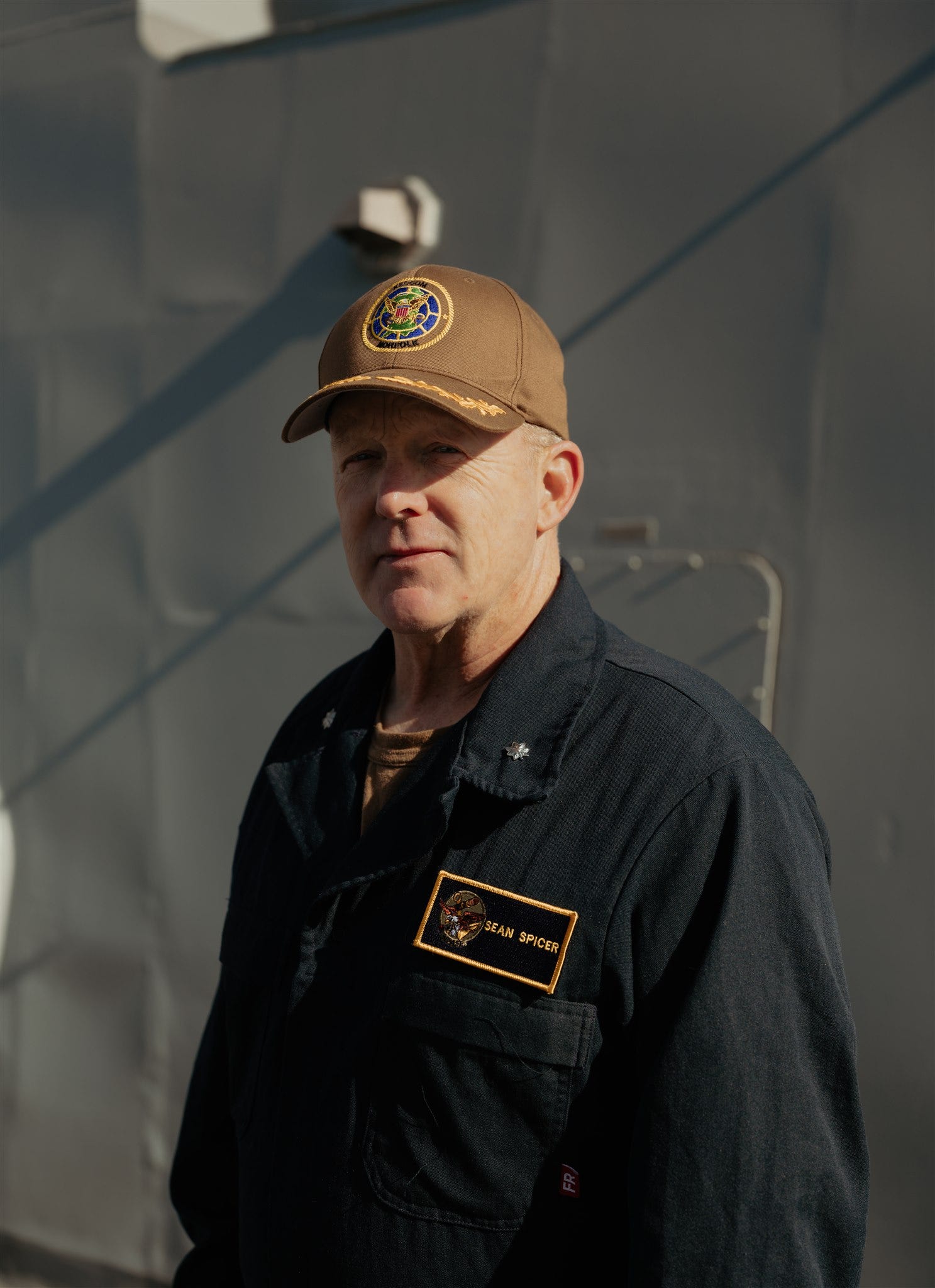
When Sean Spicer called to invite me to cover Fleet Week from aboard a moving warship, I said yes before fully grasping what I was agreeing to (I tend to do that). I figured any writer curious about the layers of American patriotism shouldn’t pass up the opportunity, even if that writer happens to be notoriously claustrophobic and generally terrified of drifting into open water.
We love sailboats. Loathe cruises.
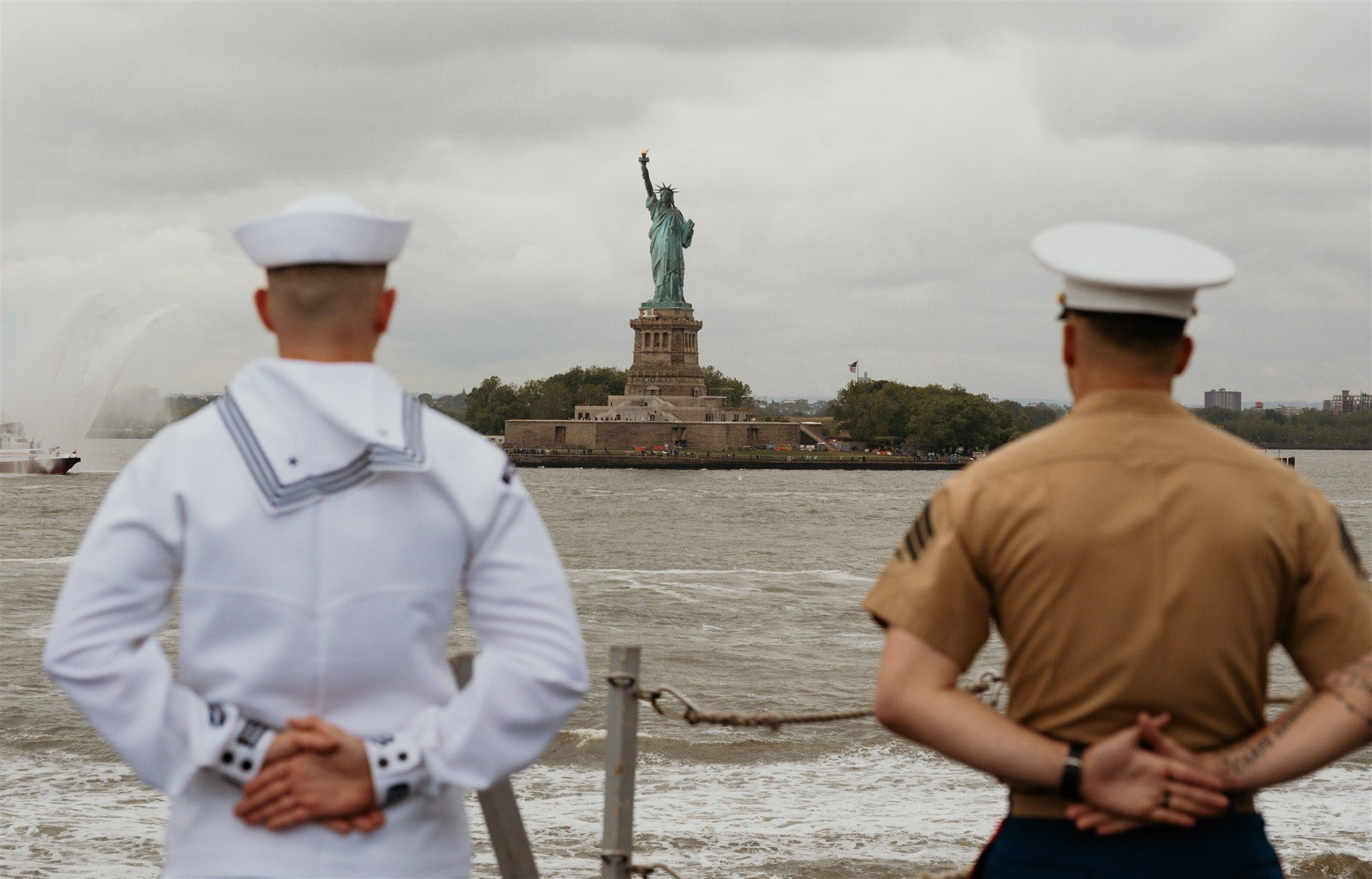
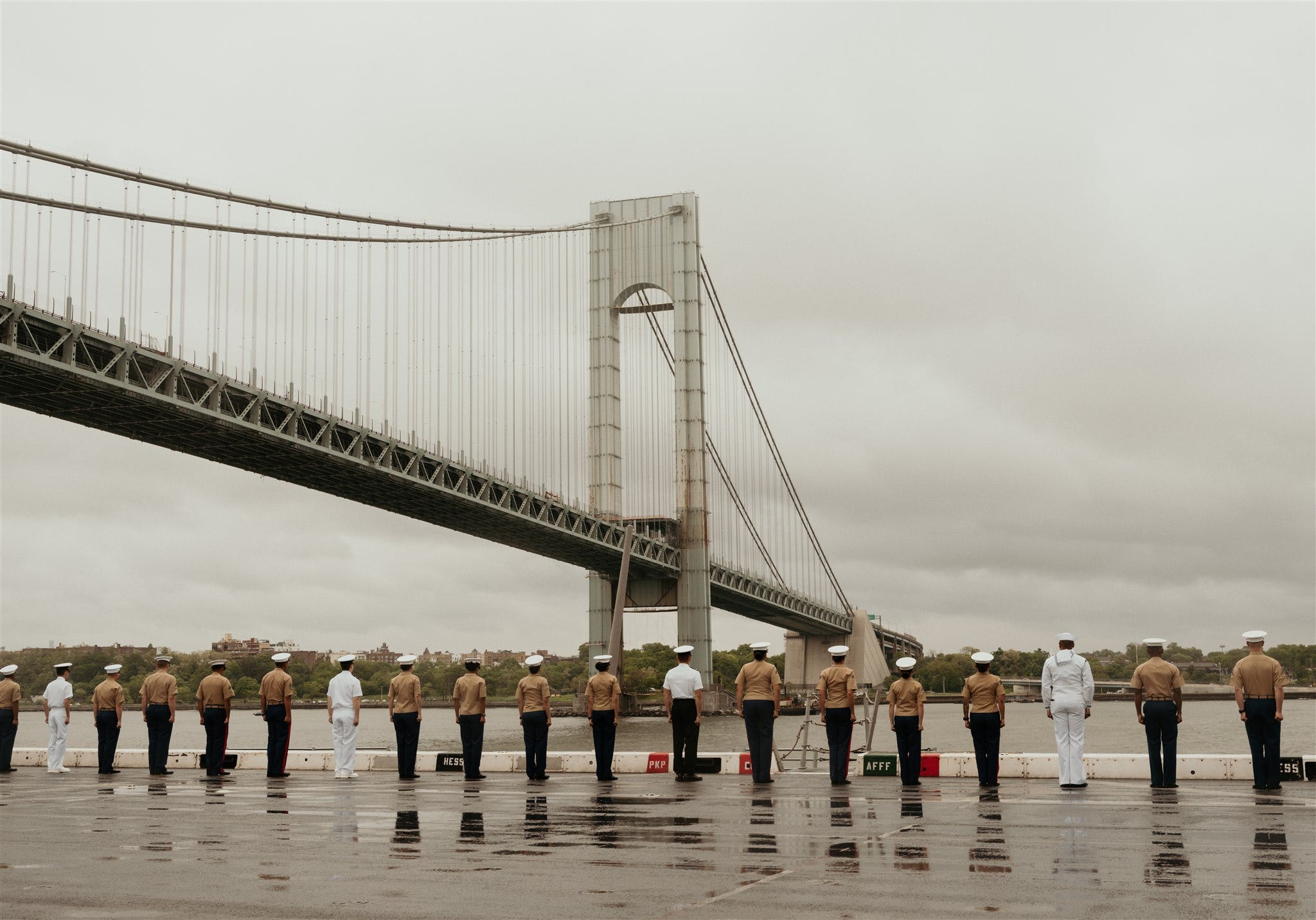
Salute upon passing where the twin towers stood
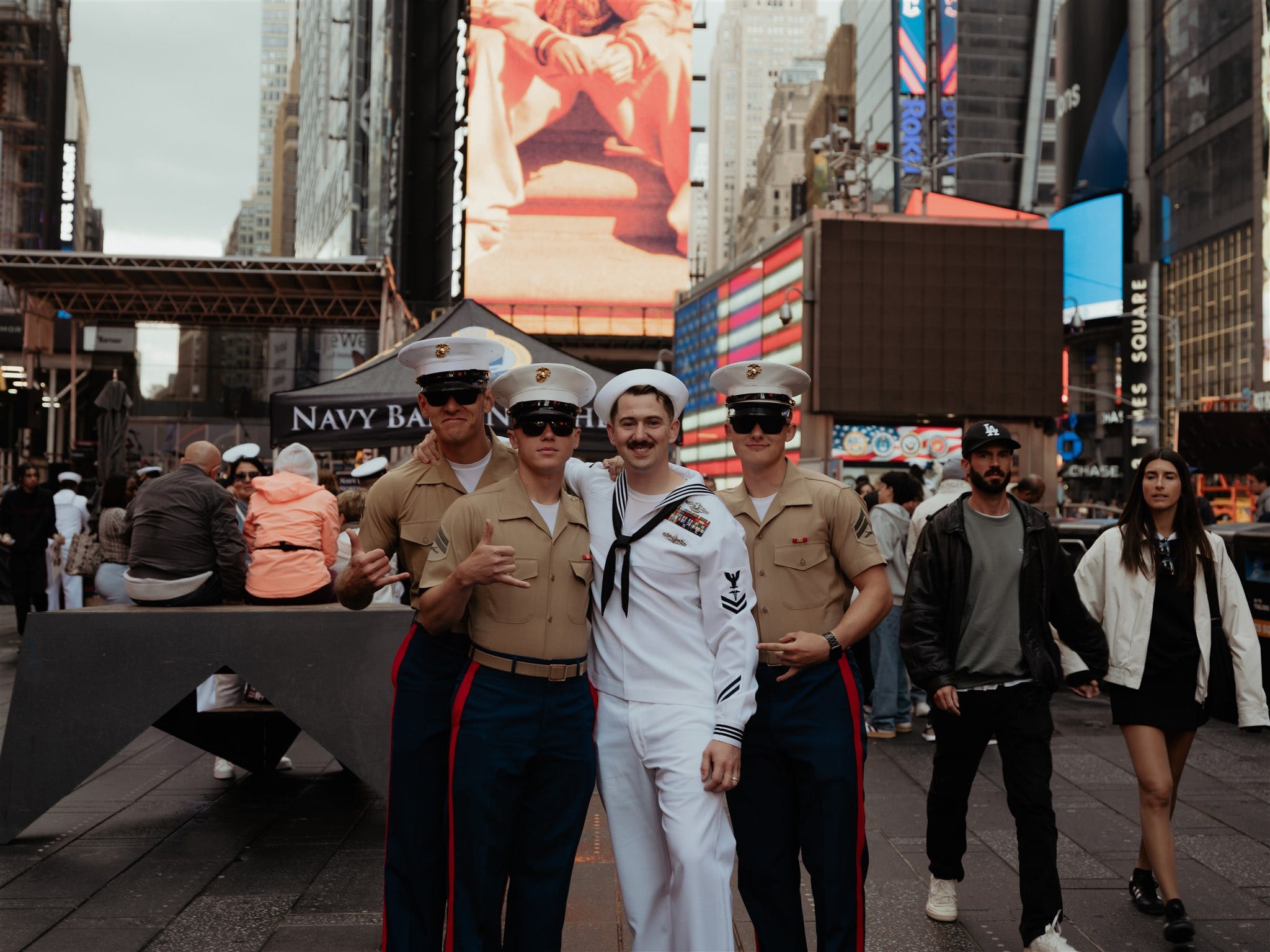
Fleet Week—for those unfamiliar—is a long-standing celebration of America’s maritime forces; a tribute to service and sacrifice. Each spring, as Memorial Day approaches, the harbor transforms into a patriotic spectacle stretching from Norfolk to Times Square. Officially established in 1982, the tradition actually dates back to 1898—a ritual that thrives thanks to collective pride in the American spirit when it comes to our military.
John Taylor
On the Navy’s promise to protect.
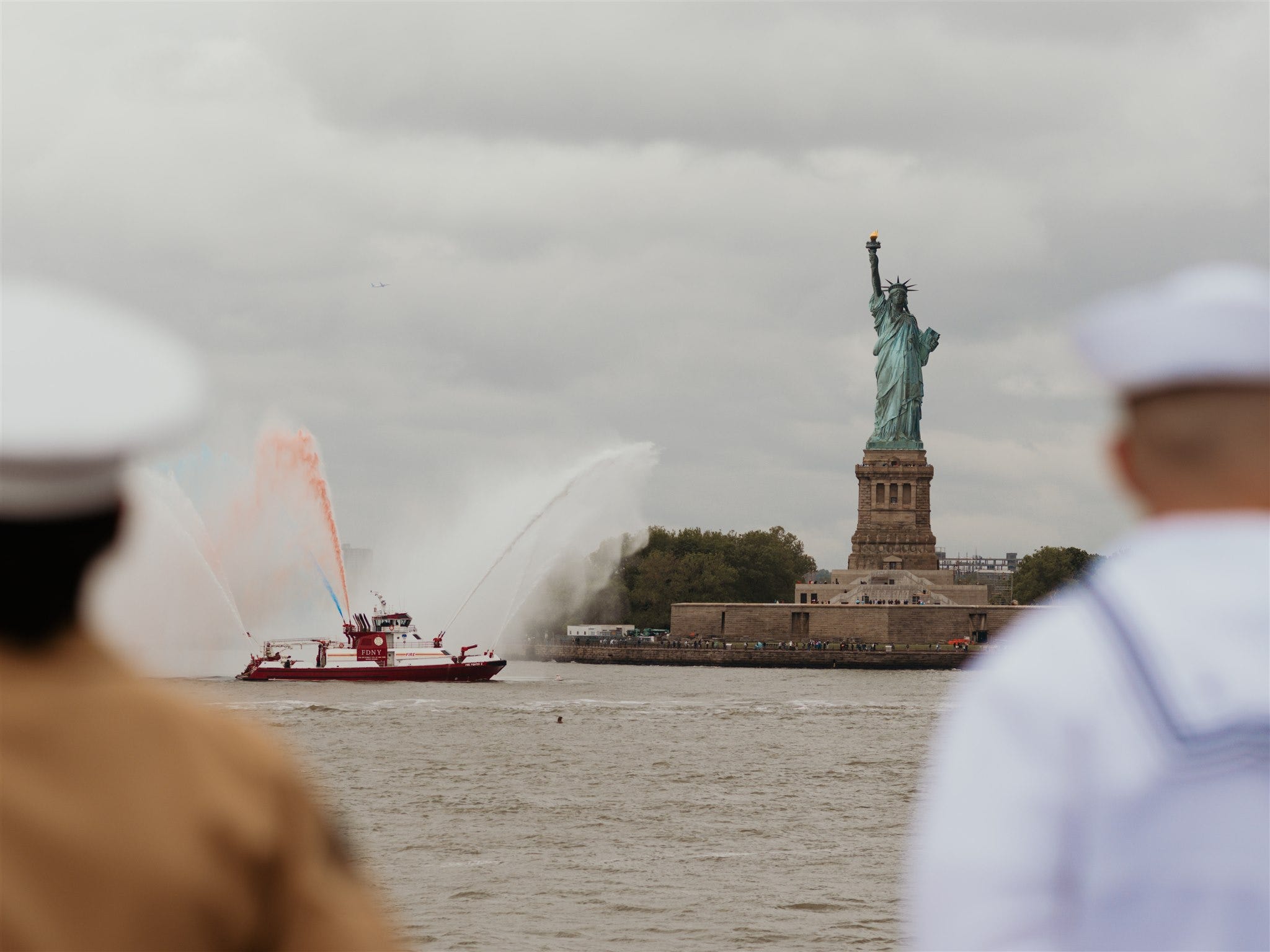
The event kicks off with the Parade of Ships: a majestic procession of Navy, Marine Corps, and Coast Guard vessels glide past the Statue of Liberty before docking along Manhattan’s piers. The city opens its arms upon their arrival. You might recall Samantha’s enthusiasm in that Sex and the City episode about hot sailors infiltrating NY’s social scene, or the iconic black-and-white photographs of sailors kissing pretty girls in Times Square under a spray of confetti.
Society photographer Dafydd Jones told me it was one of his favorite moments to capture. After experiencing it firsthand, I understand why.
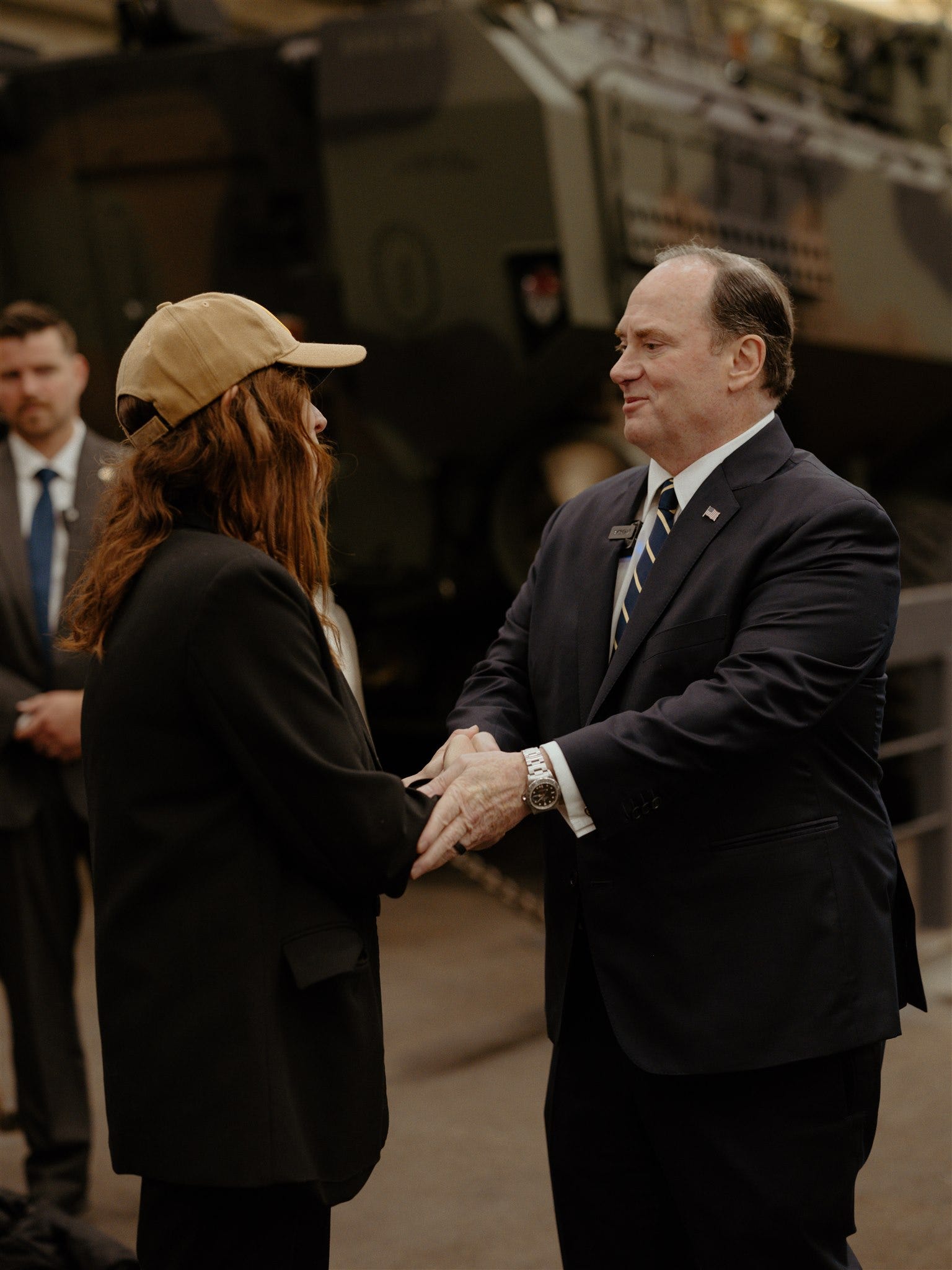
Meeting John Phelan, the 79th Secretary of the Navy
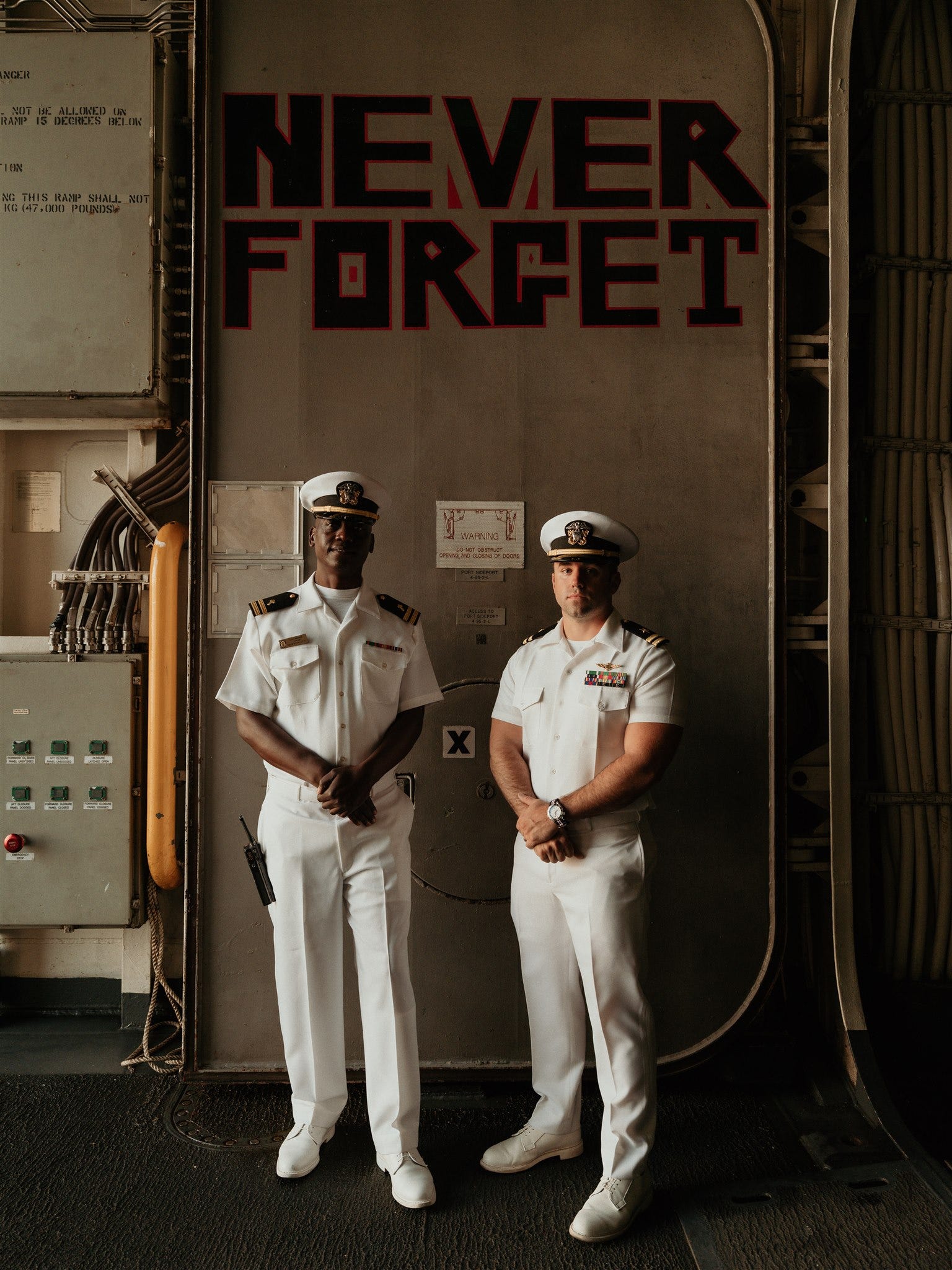
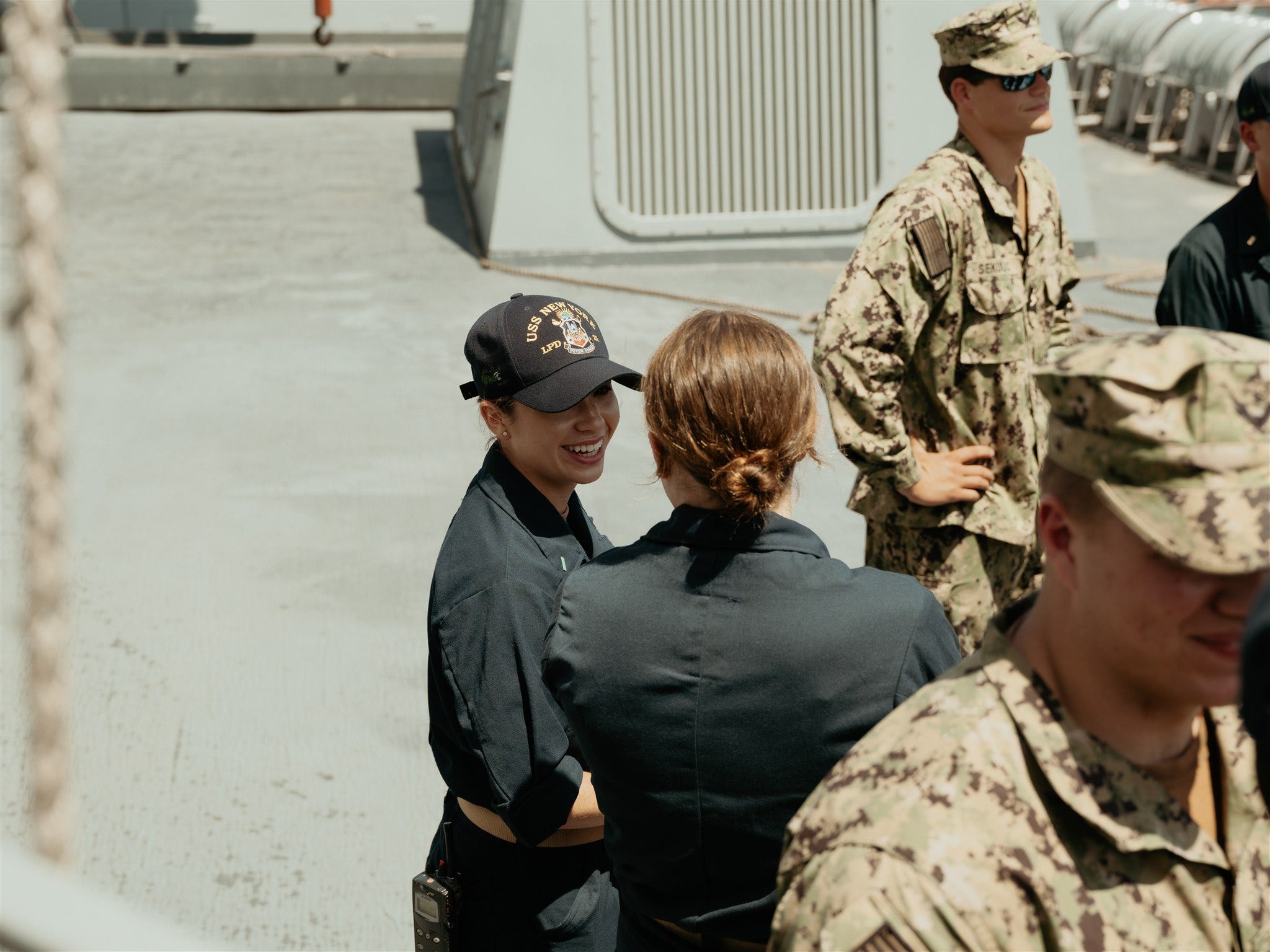
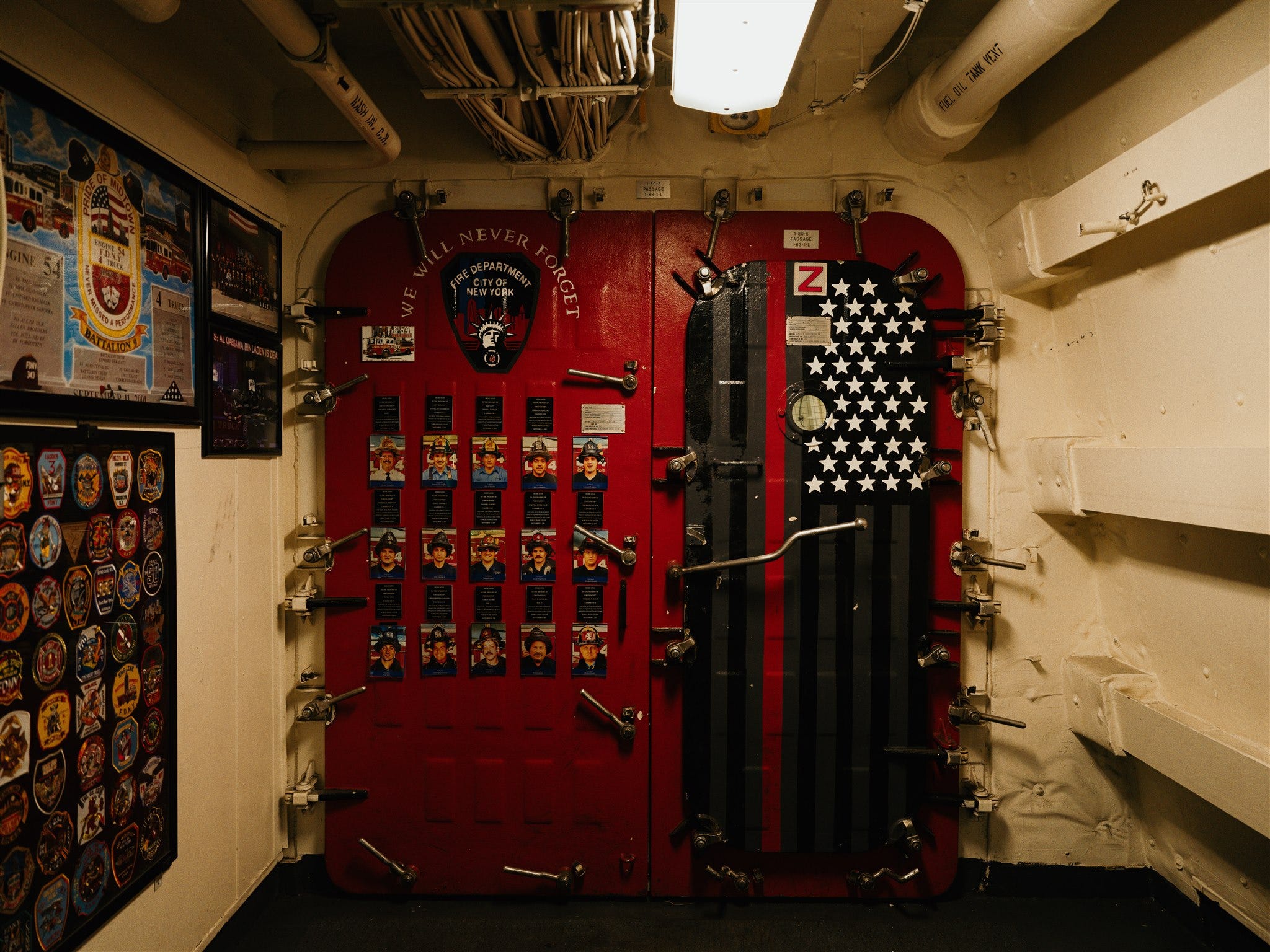
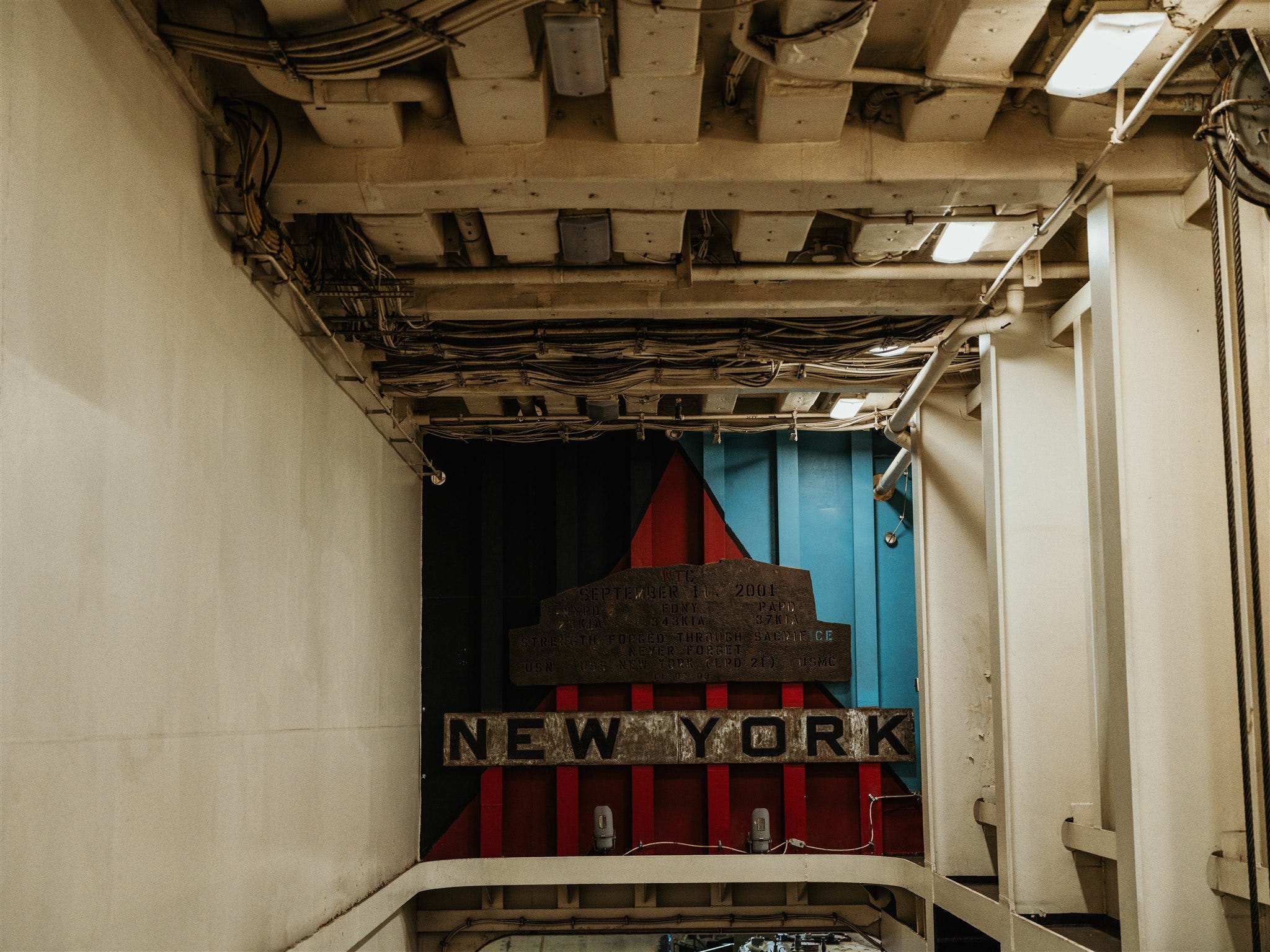
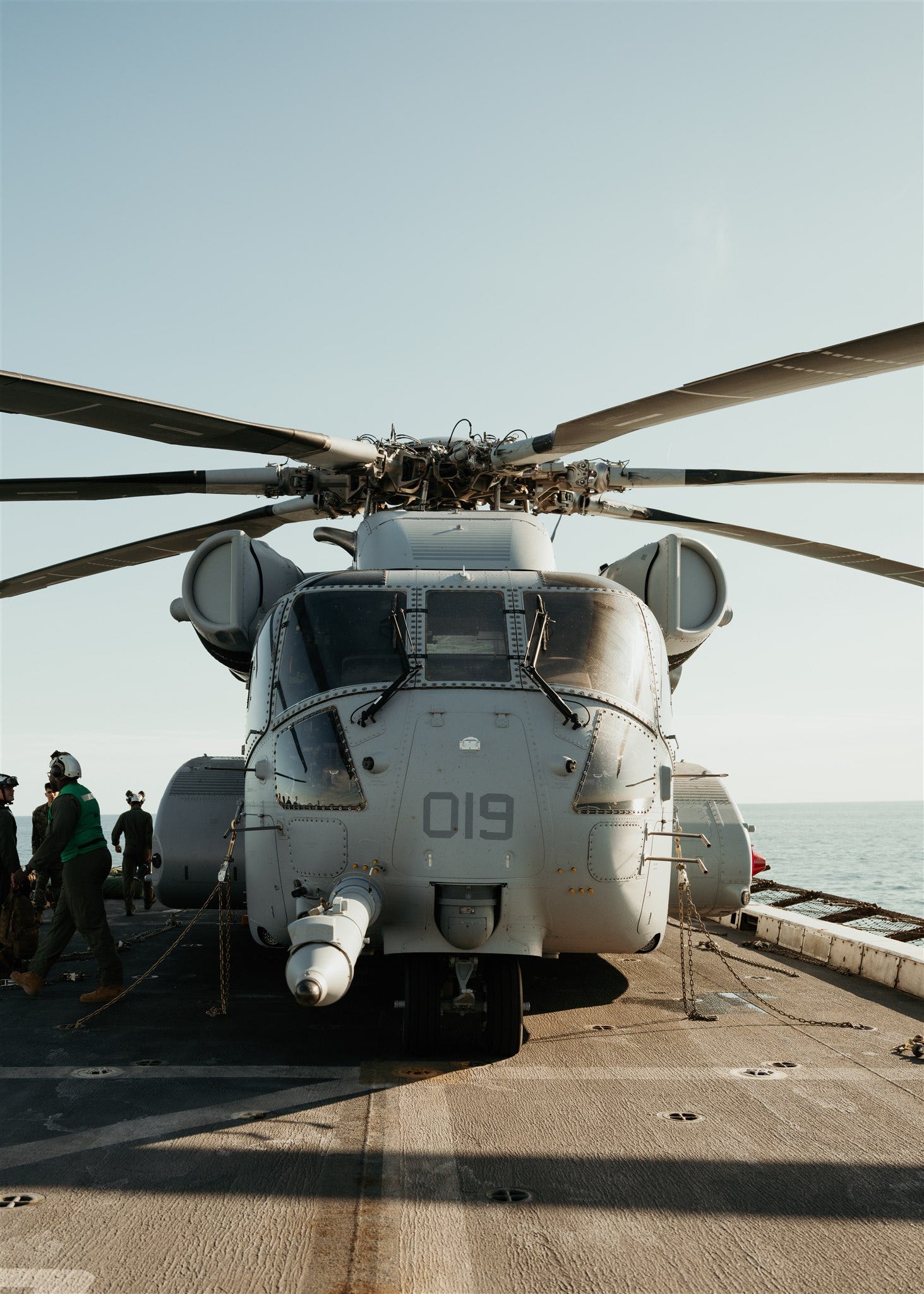
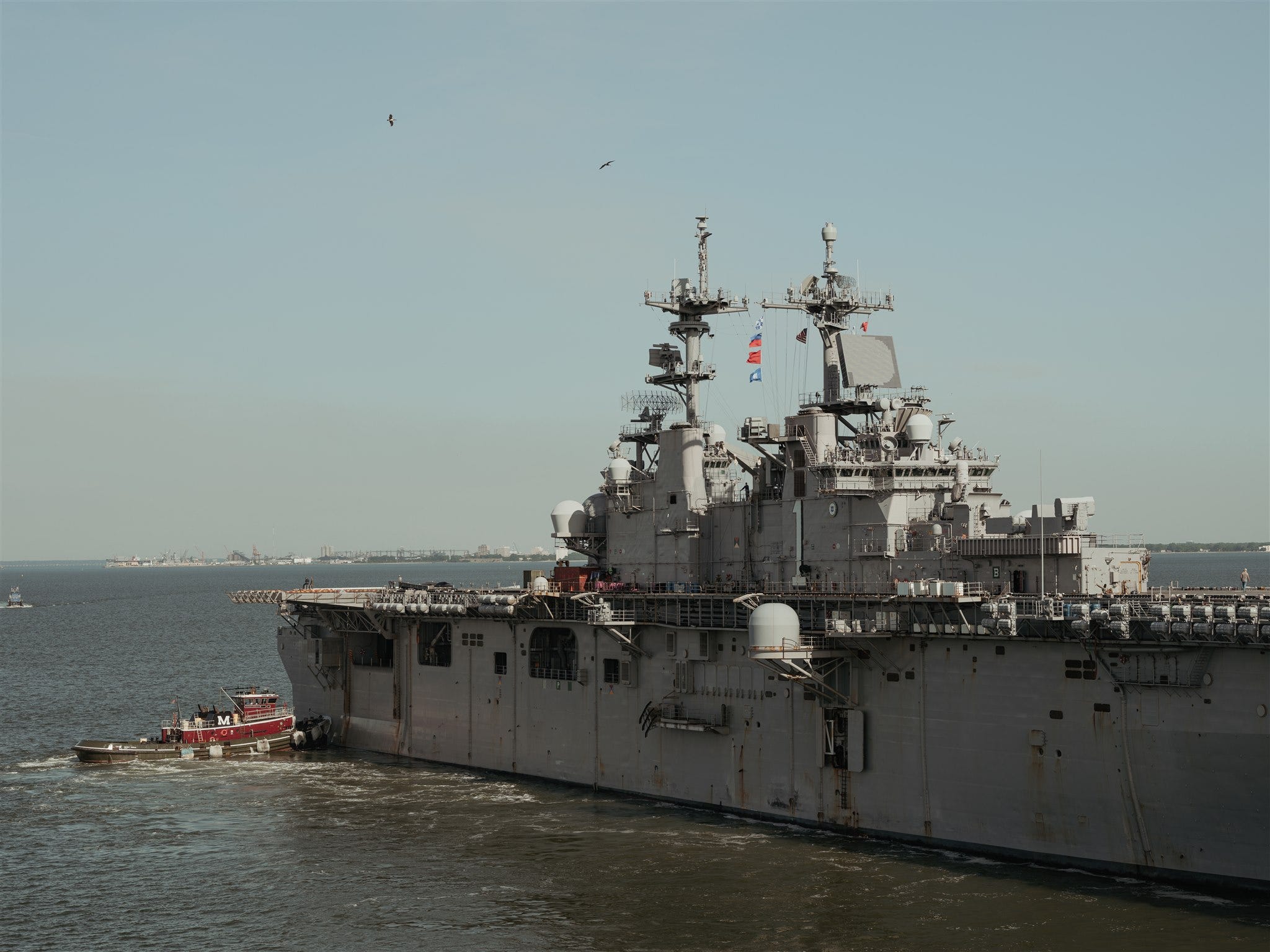
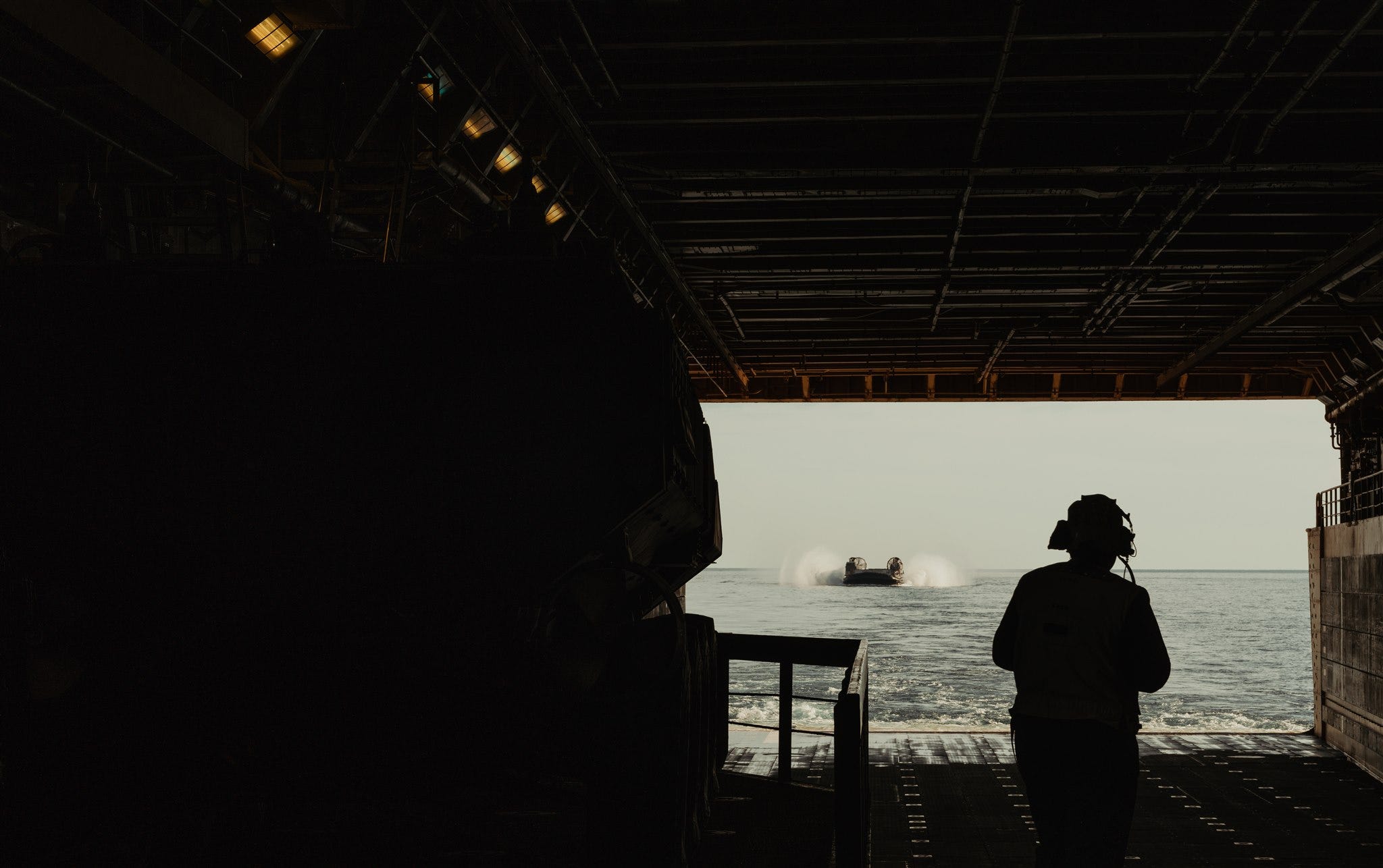
The USS New York has a complicated and storied past—as I prefer all subjects. Commissioned in 2009, she embodies strength forged through tragedy. Her bow is made from seven and a half tons of steel salvaged from the wreckage of the World Trade Center. And her interior is a tribute to victims and first responders, with murals and nameplates carved from additional steel. She is an amphibious transport, which means she’s capable of carrying Marines, landing craft, and aircraft into combat or disaster zones. Previously deployed to the Arabian Gulf, she delivered hurricane relief in the Caribbean and trains tirelessly to answer the nation’s call.
Her motto? Strength Forged Through Sacrifice—Never Forget.
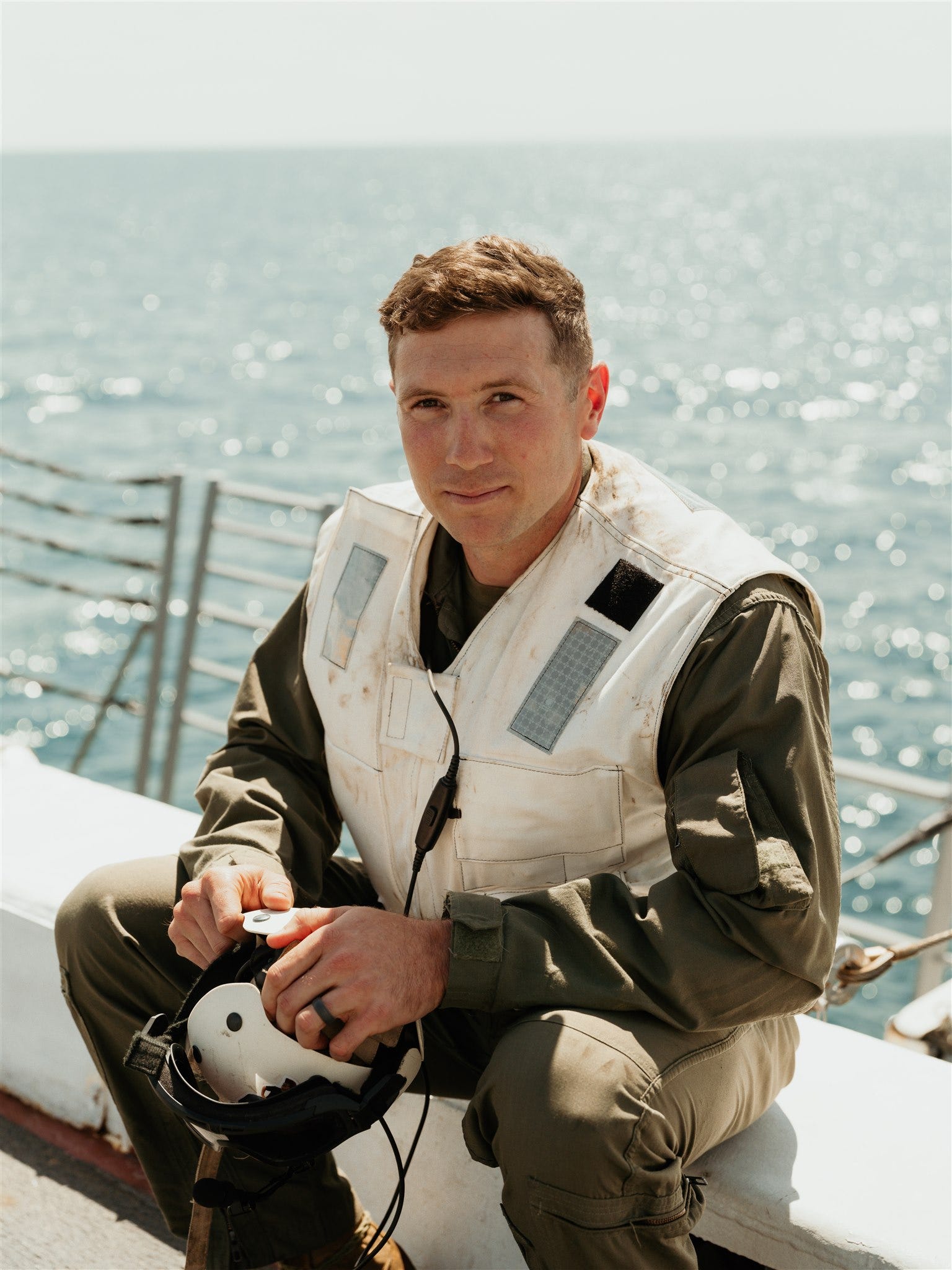
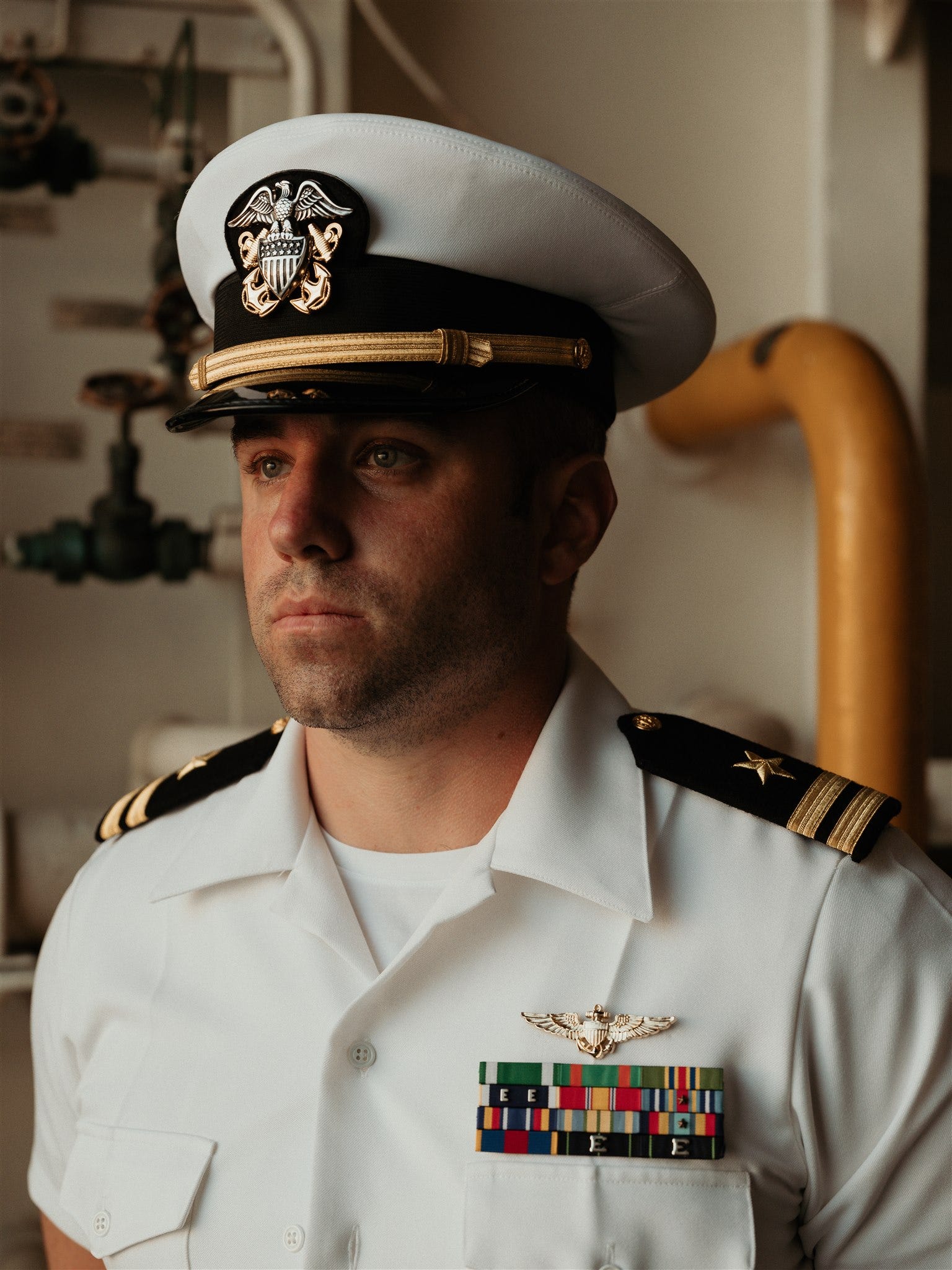
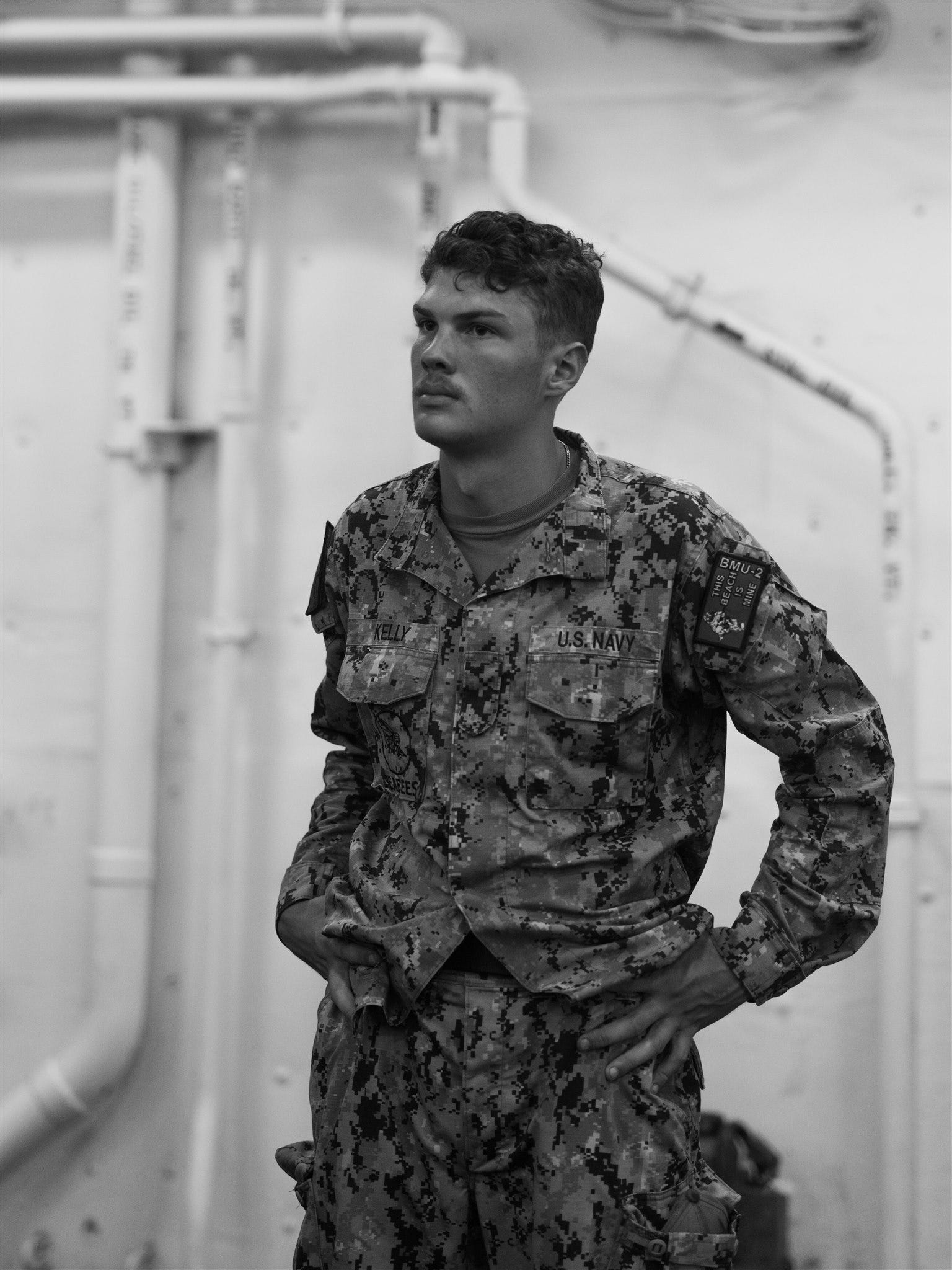
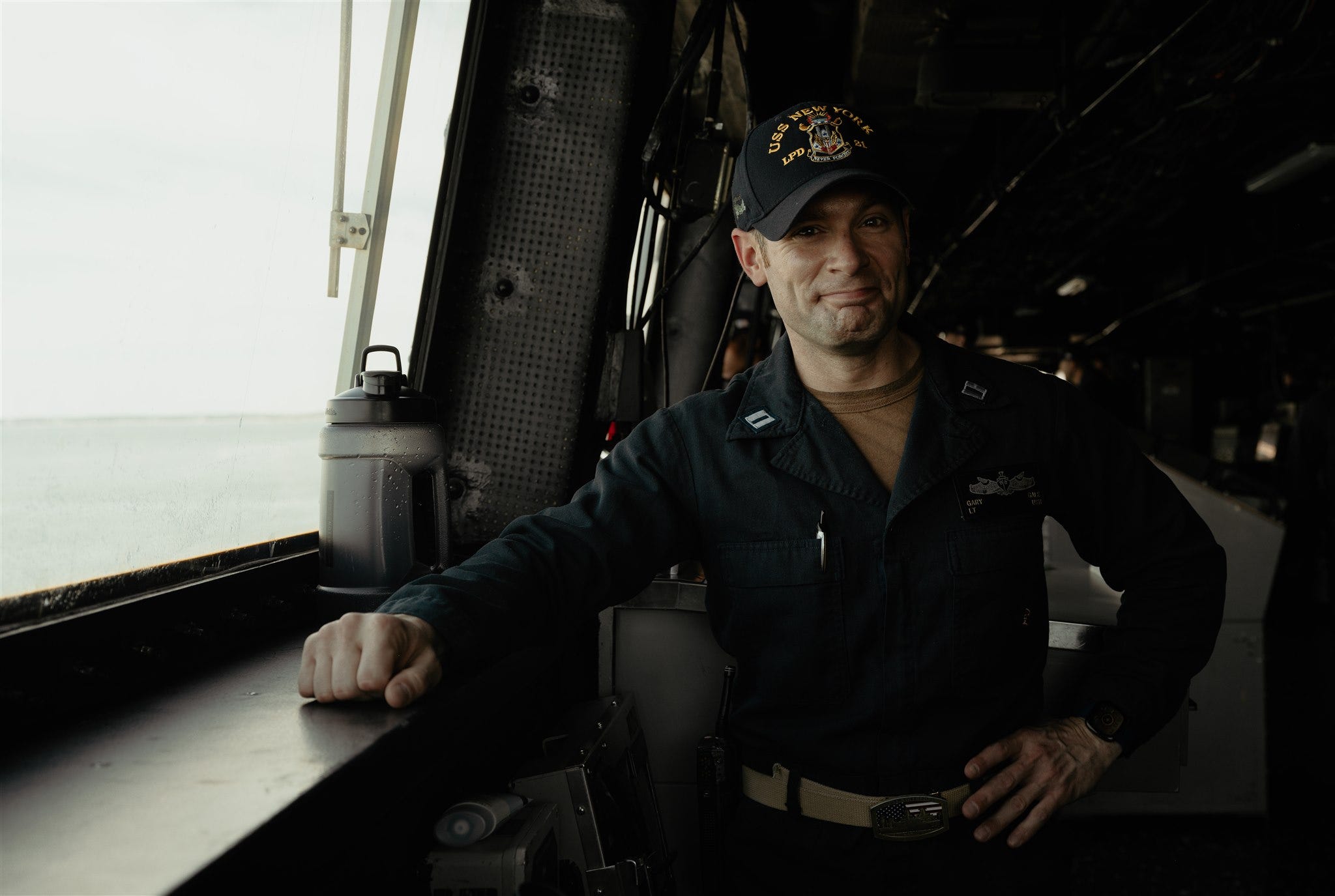
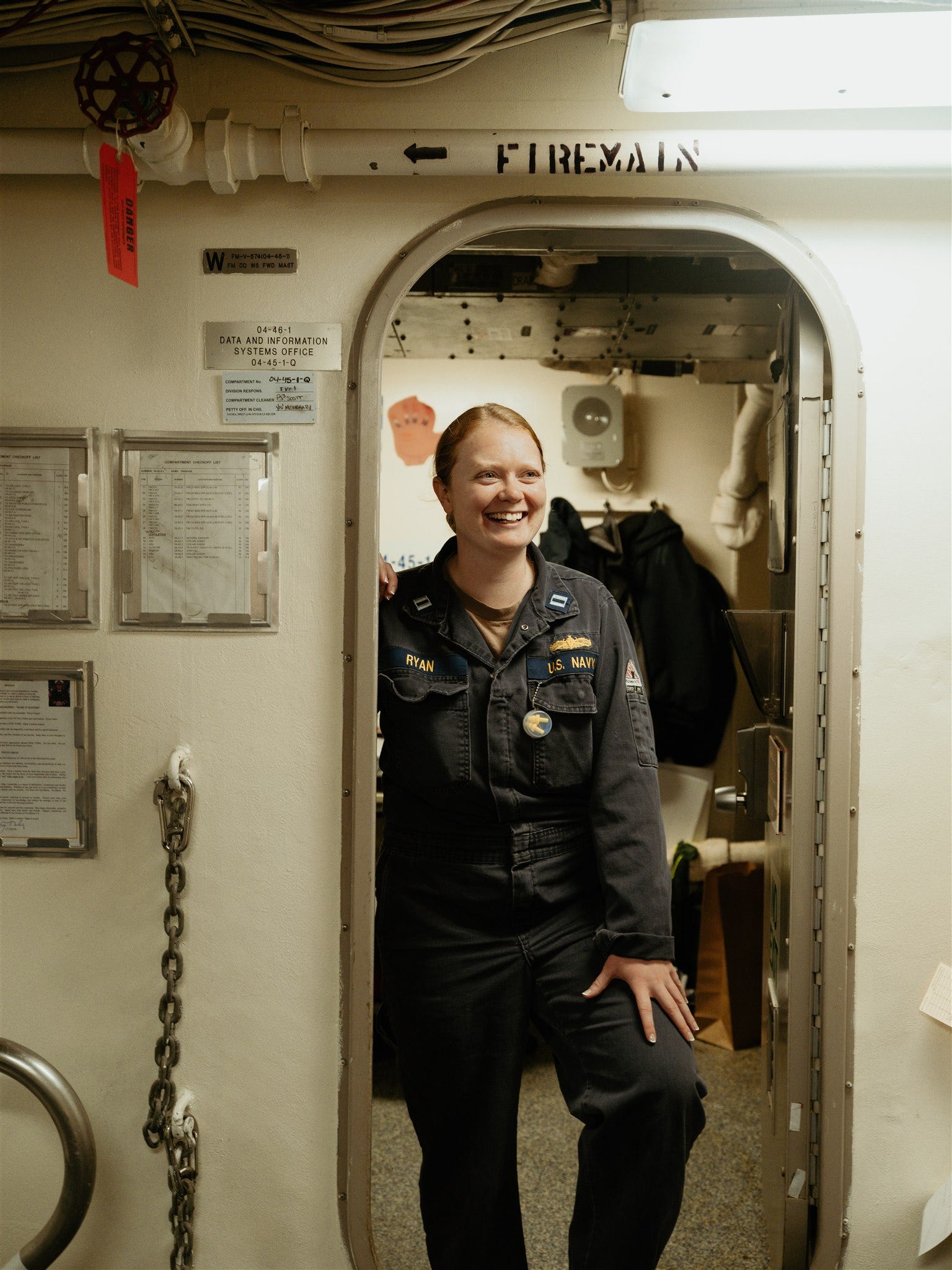
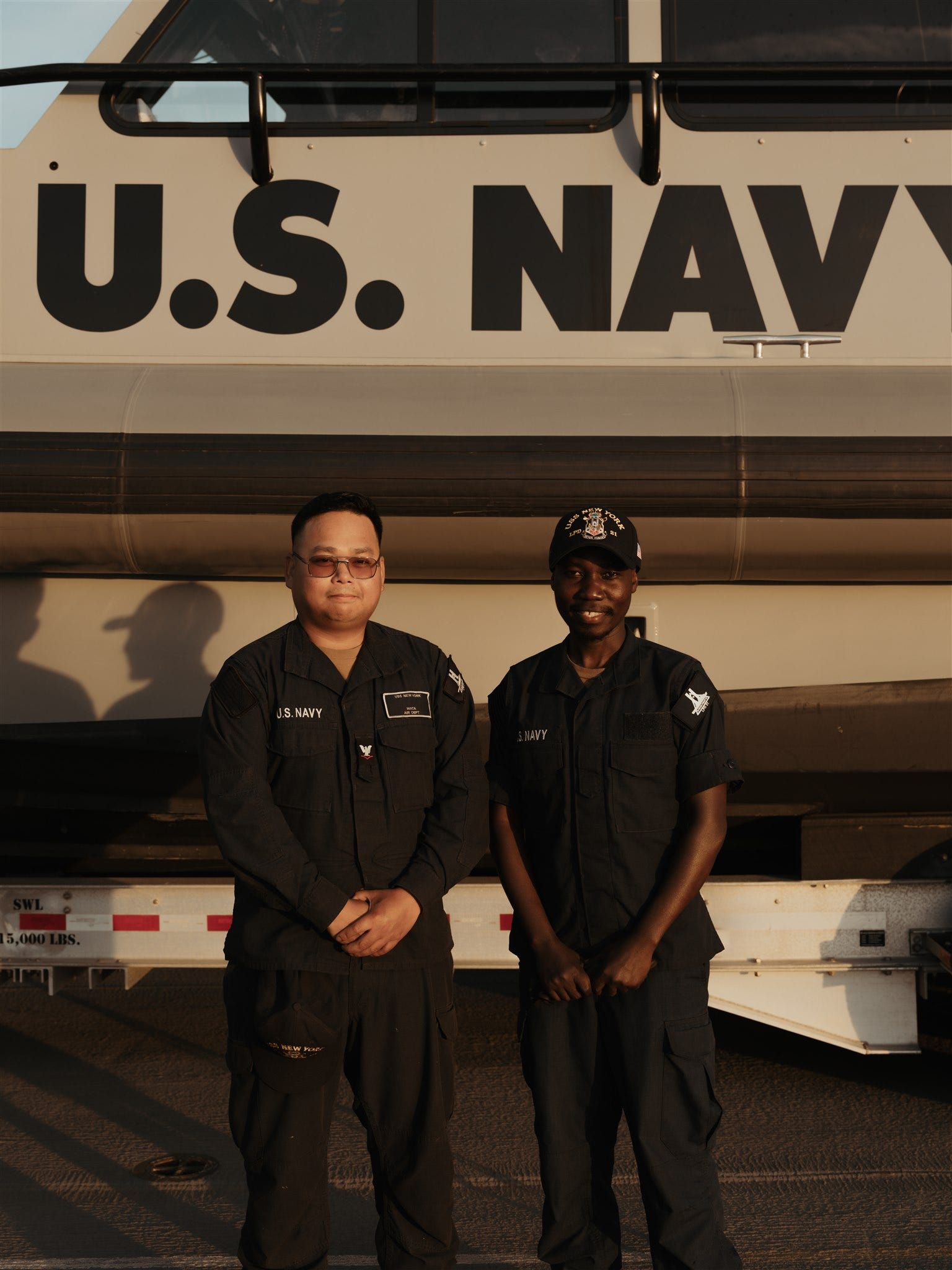
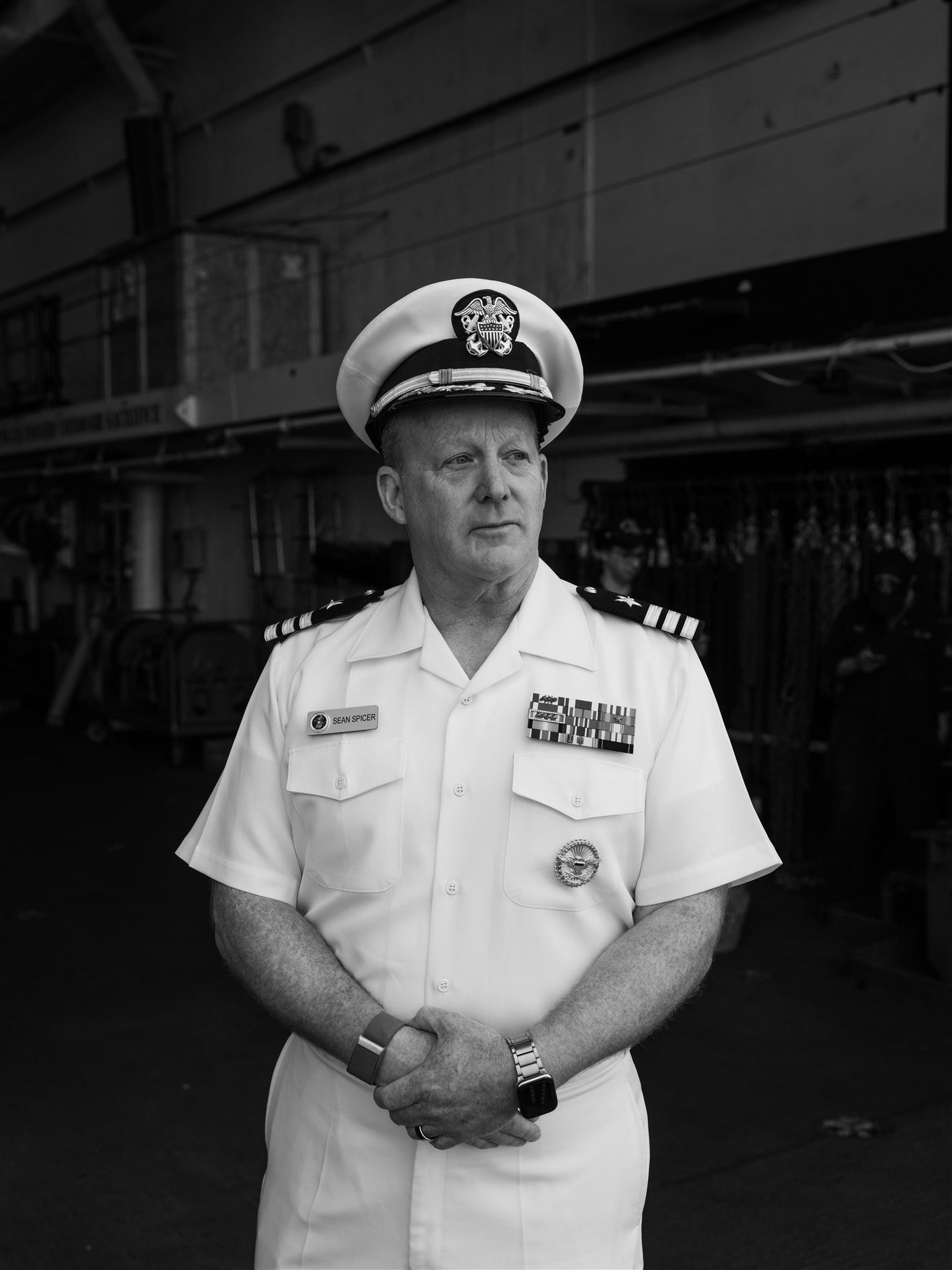
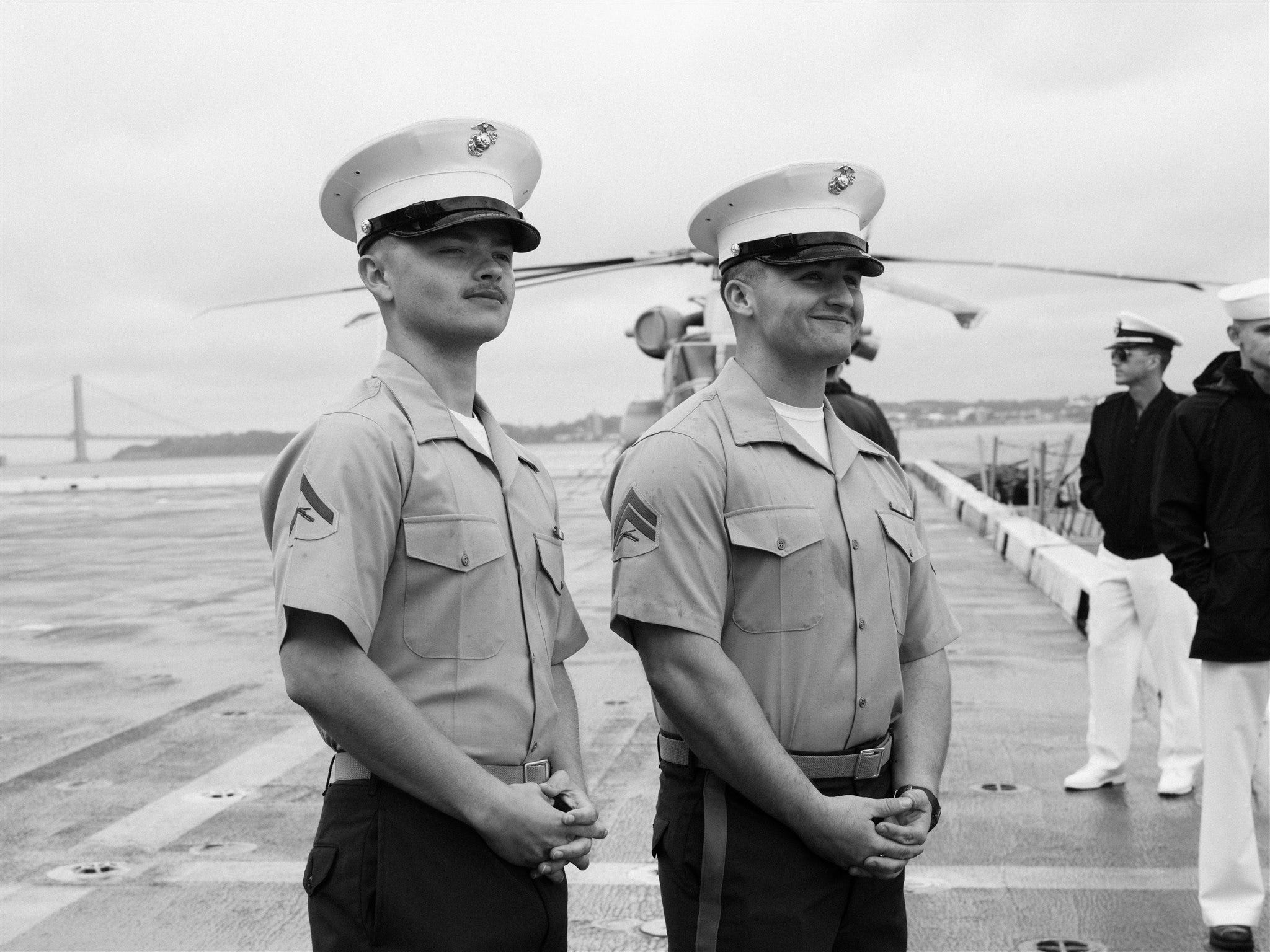
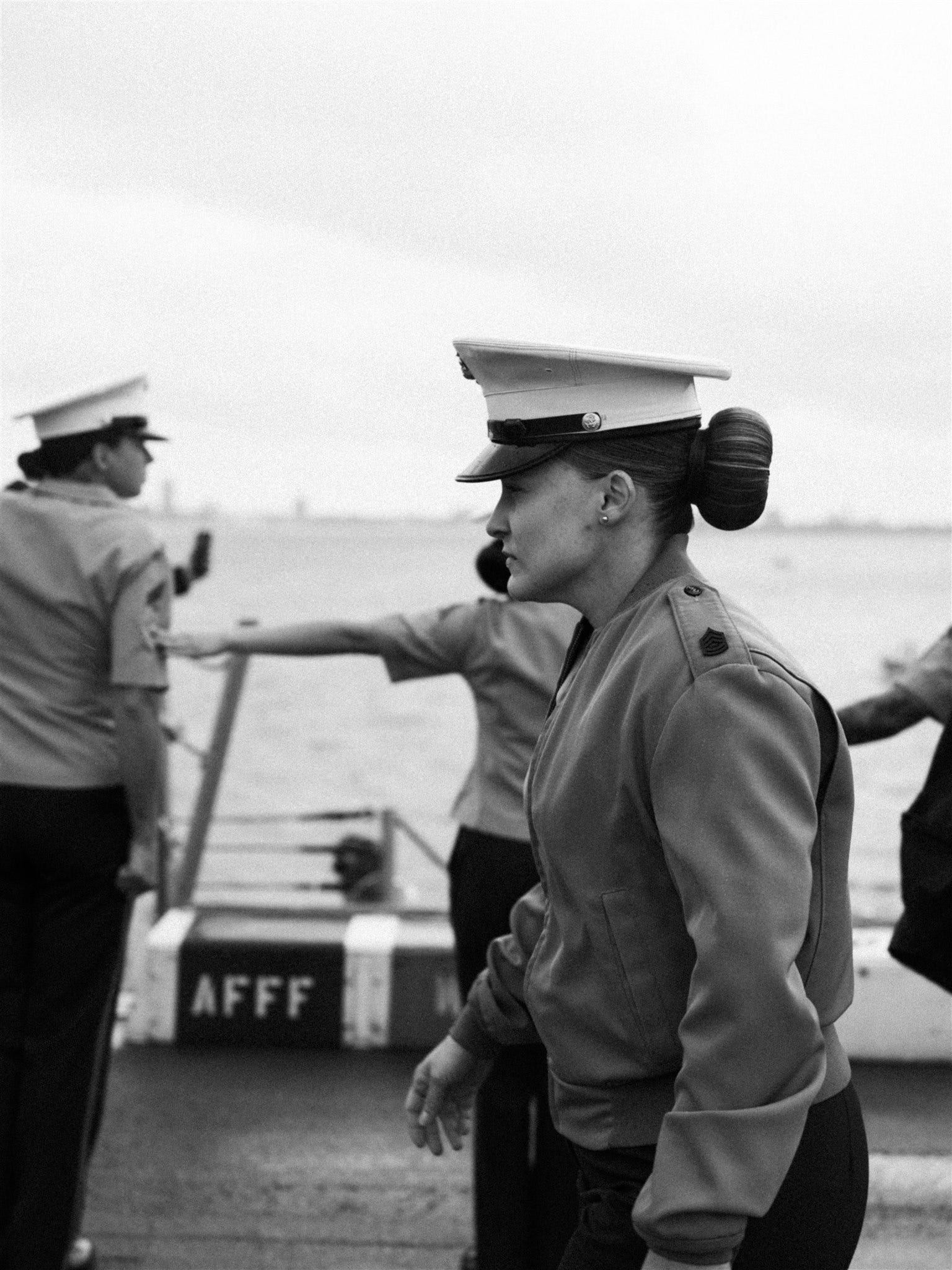
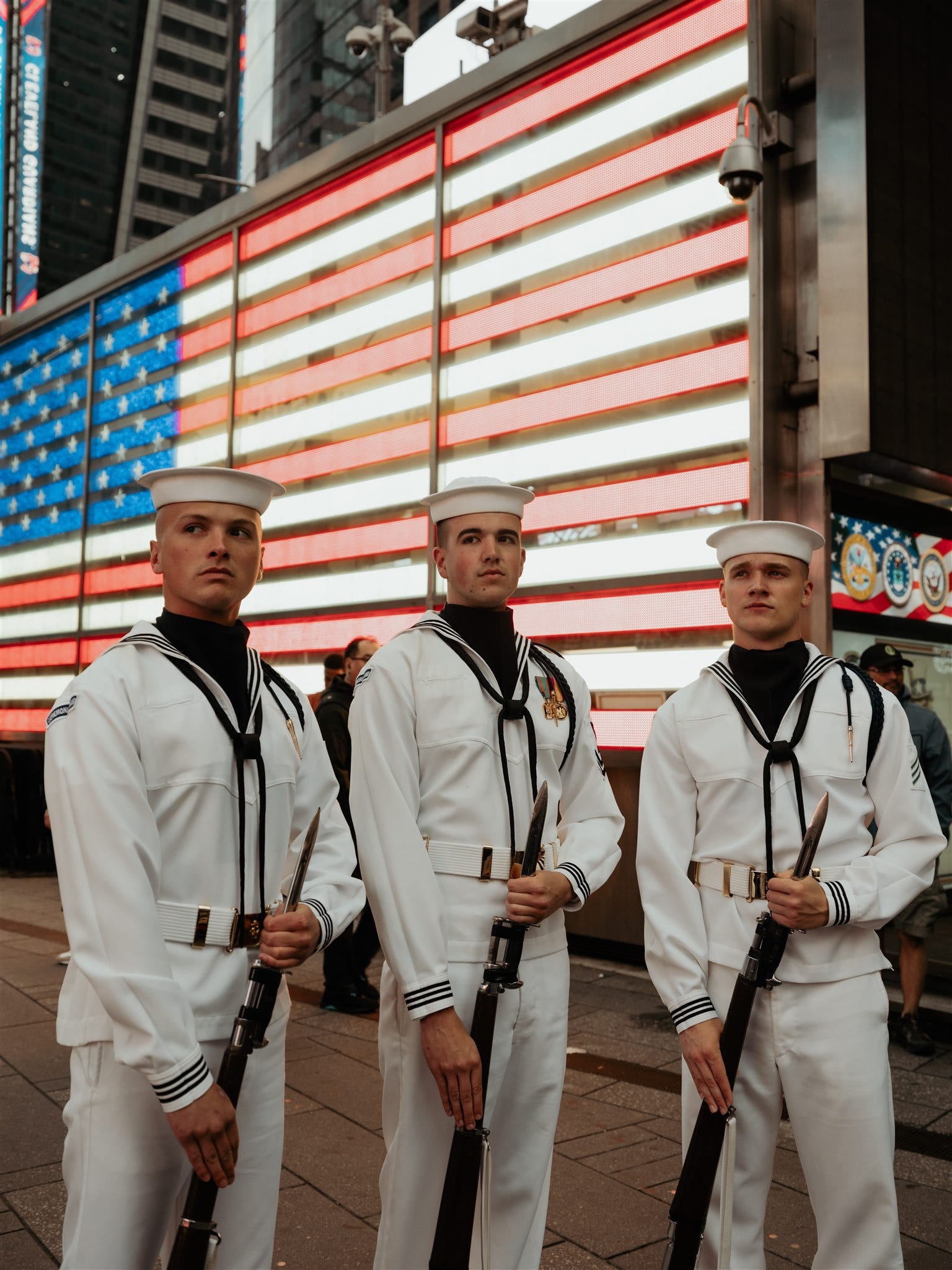
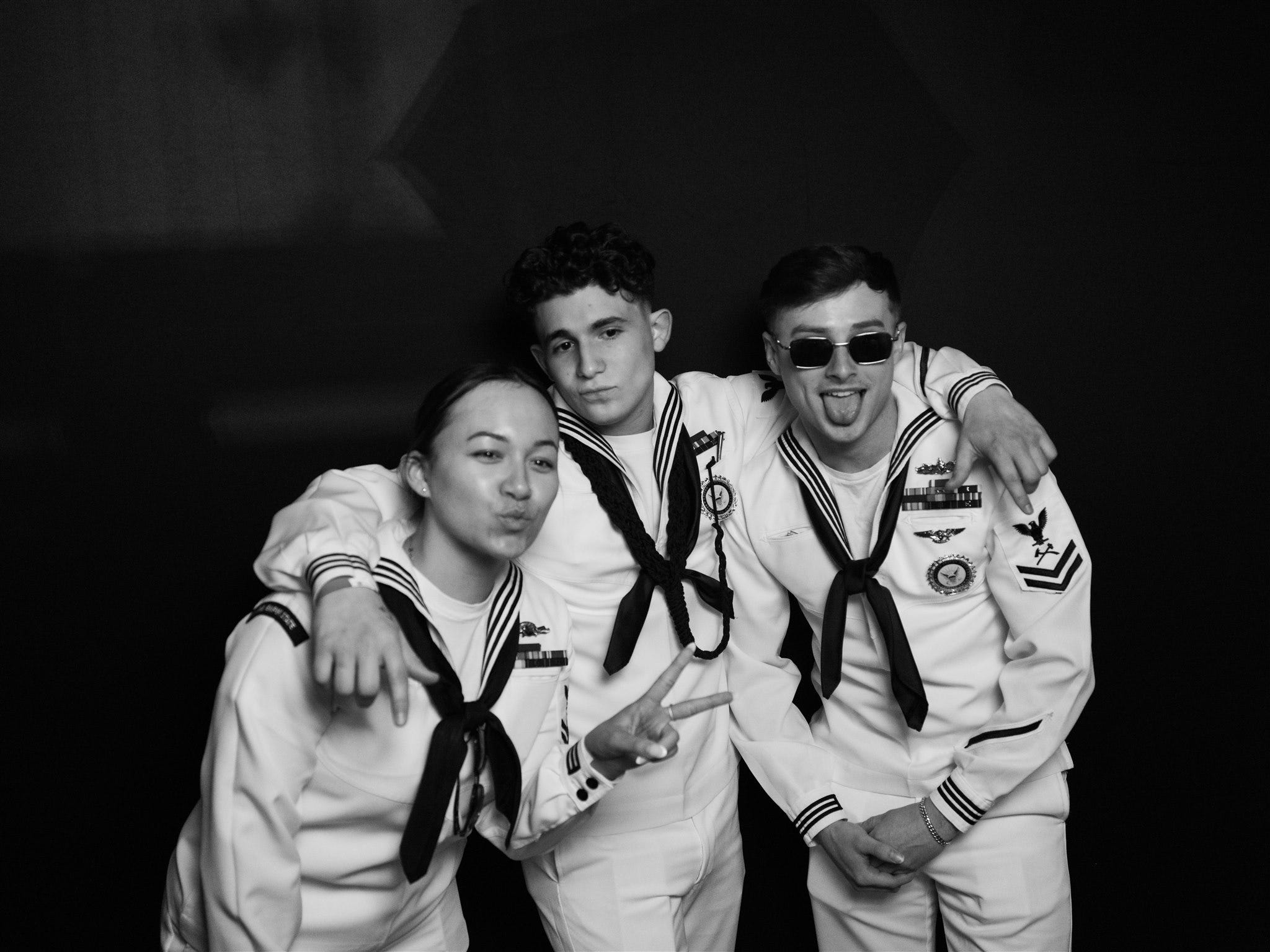
Below are fragments—notes and portraits of the USS New York’s crew, sailors reflecting on what service meant to them, captains skilled in celestial navigation. Ensign Evelyn Patten, a triplet and the daughter of an F-14 pilot, showed me a photo of her parents that could have come straight out of Top Gun. Lieutenant Phillips’ mother worked at Cantor Fitzgerald, the firm that lost 684 people on 9/11. She survived only because she had skipped her shift that morning to take him to a dentist appointment. He was in third grade. He remembers the neighborhood afterward—soot blanketing everything, his favorite park covered in ash. Community neighbors lit candles for those who never made it home.
The USS New York’s arrival in New York would be his first time back.
Lieutenant Canton Phillips
“New York is the spiritual soul of the country.”
I arrived in Norfolk after a white-knuckled flight from Atlanta and a rushed layover to catch my connection, delirious from two Benadryls and in tears from the stress of aggressive turbulence. Sean Spicer picked me up at the airport and we drove straight to the Navy surplus shop—essentially a Walmart for the Navy—stocked with everything from home appliances and linens to snacks and a dizzying array of military gear. I settled on a practical weekender bag to hold my things since rolling suitcases are prohibited, but couldn’t resist stockpiling additional merch: sweatshirts, coffee mugs, two hats, and three magnets, all emblazoned with the classic NAVY logo.
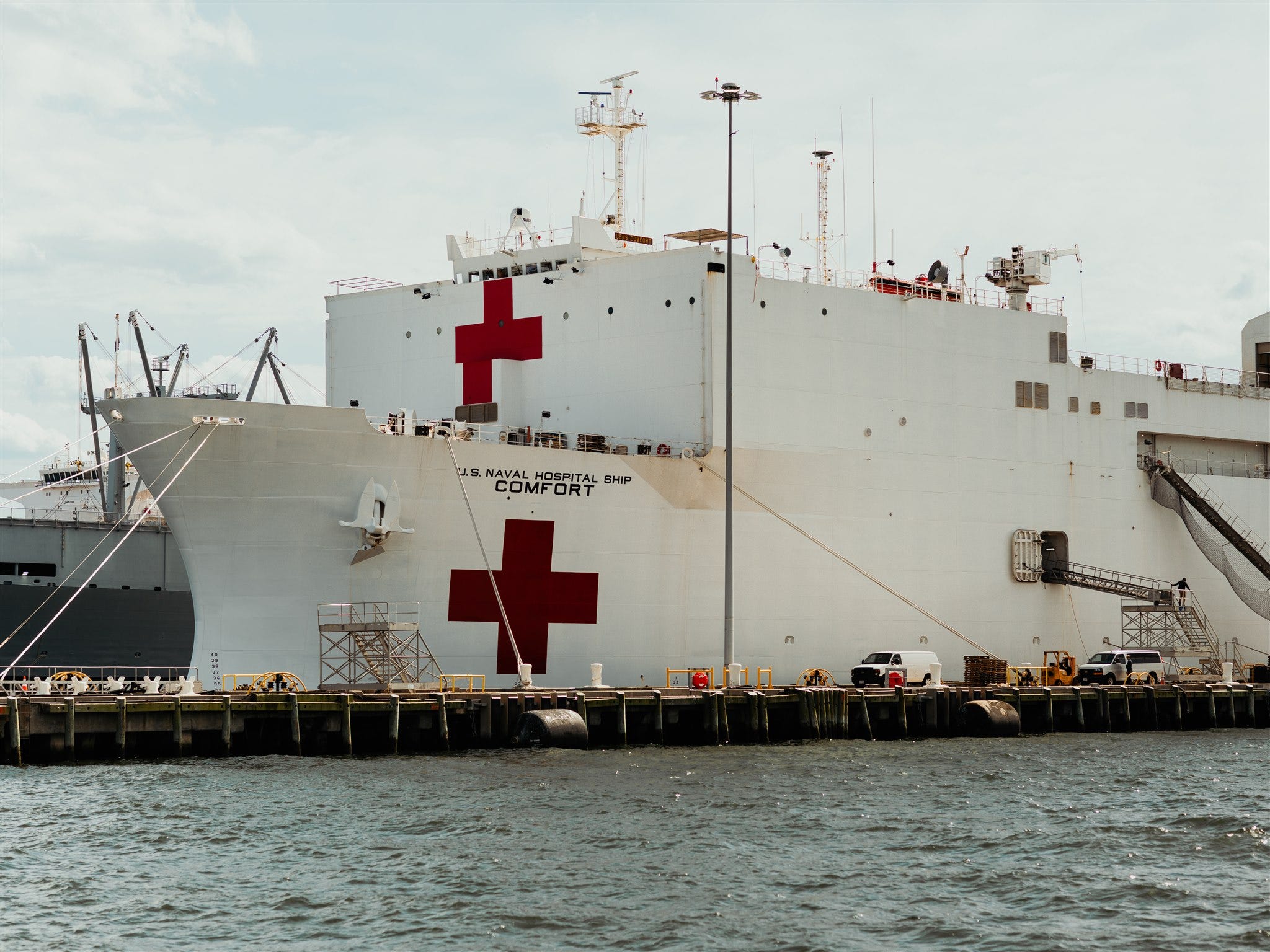
Pulling up to the pier we passed the big-name ships lined up in a row, including the white-and-red medical vessel that sailed to aid New York during Covid, the USS Comfort—ready with beds and ventilators that were never used.
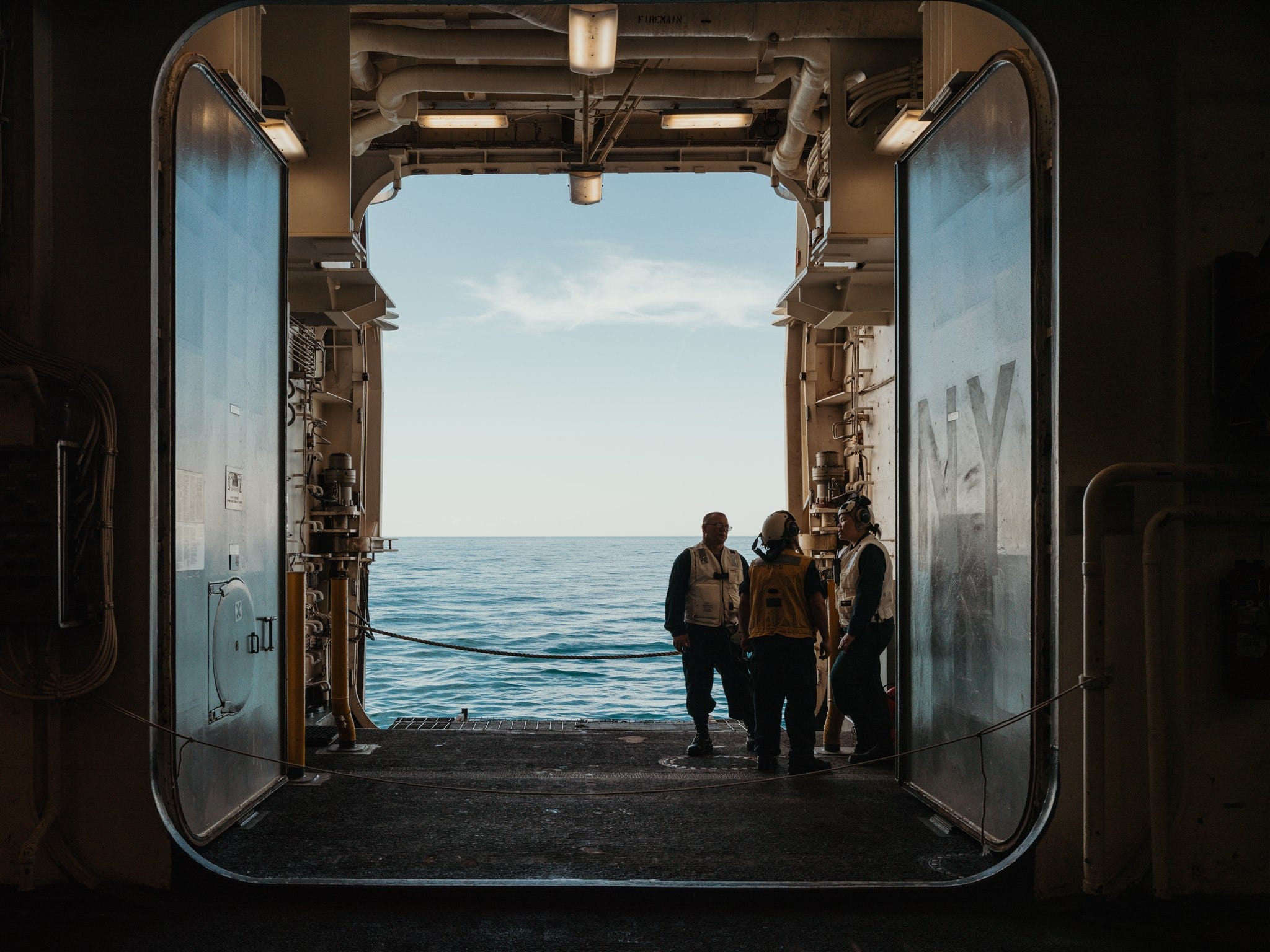
Once aboard, we were introduced and shown to our quarters: a tiny metal tin can of a room with a shower so tight that one wrong move sent your clothes tumbling to the floor, soaked.
Spicer brought us fresh towels with a friendly warning that the Navy wakes early.
“Are you really wearing a Navy sweatshirt?” he asked, eyeing me in my fully branded wardrobe. Give me any themed assignment and I will honor it.
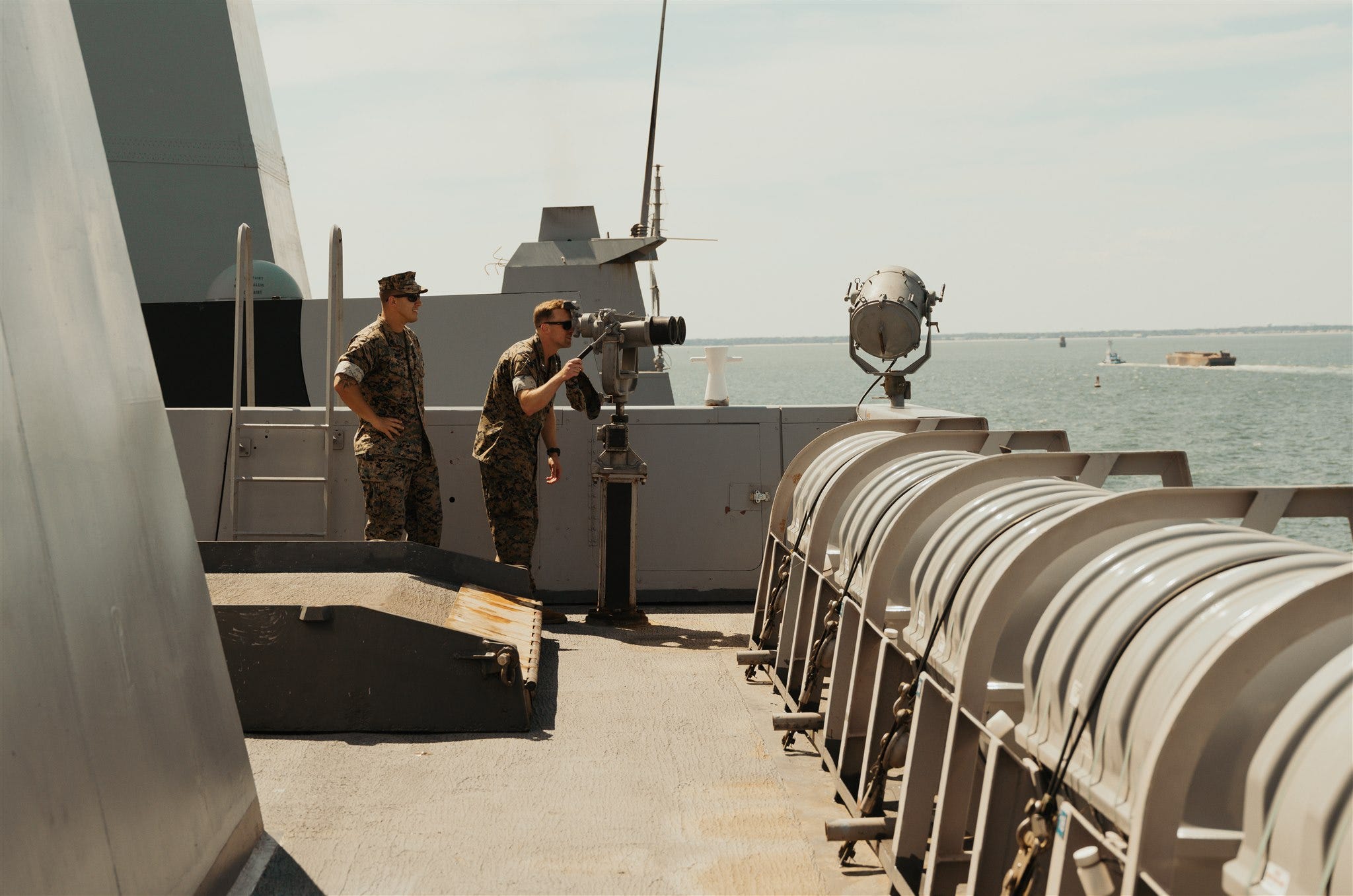
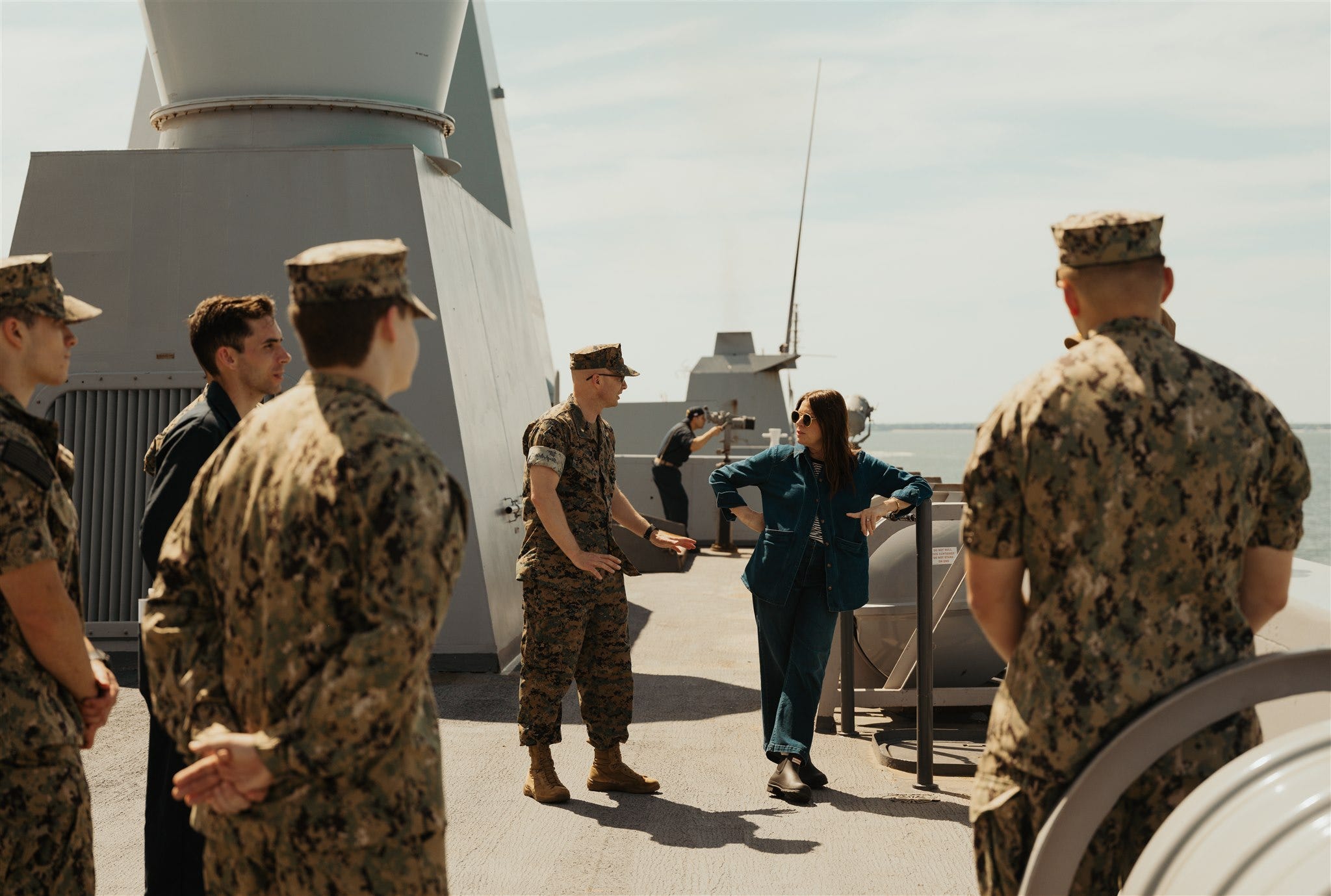
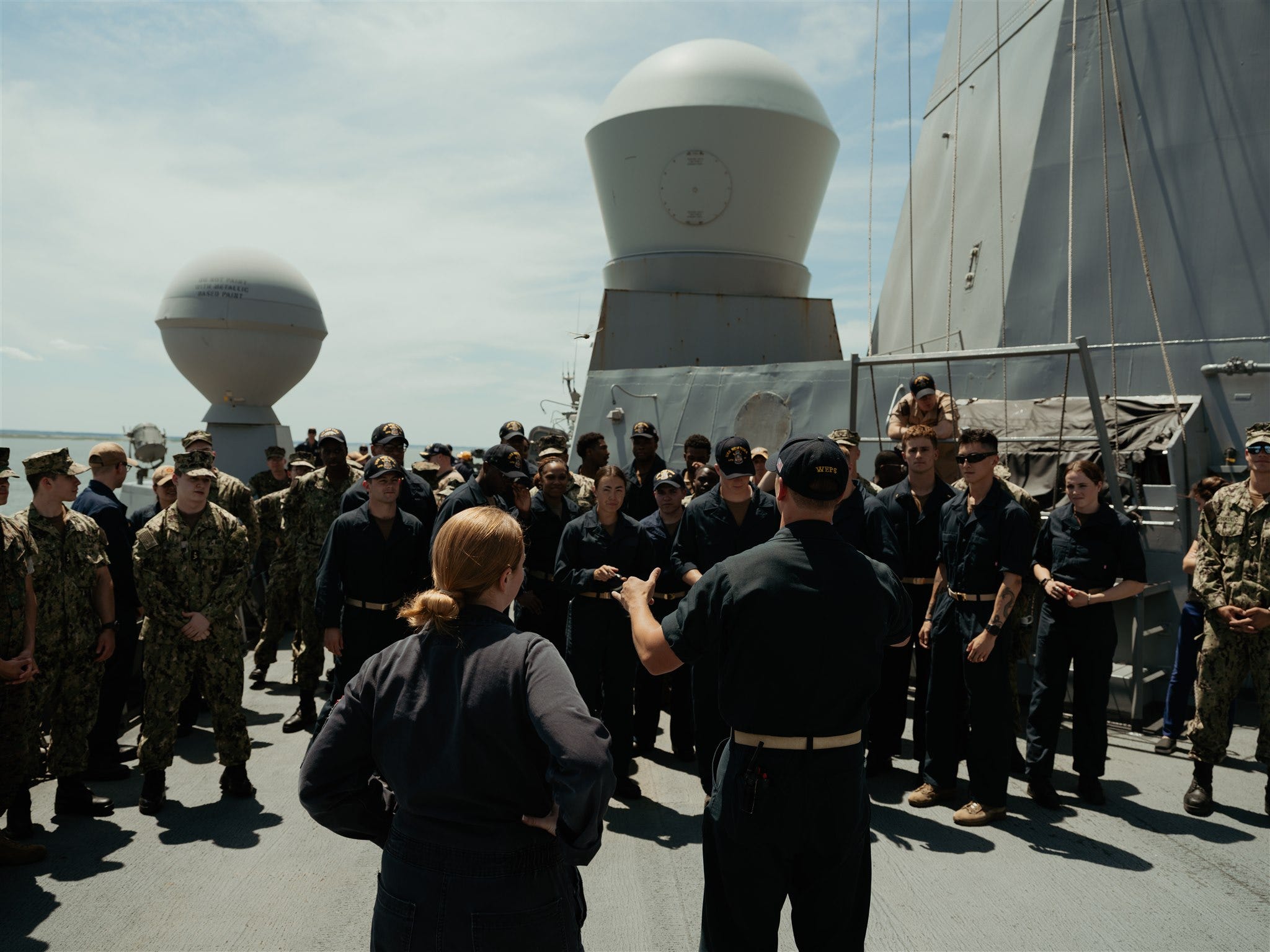
Dispatches
Day 1:
The Marines have boarded. Anytime something goes wrong, the Navy blames the Marines. A clogged toilet? It was the Marines. A broken light? The Marines. I don’t know if this is valid or just trained bias, but it was consistently hilarious.
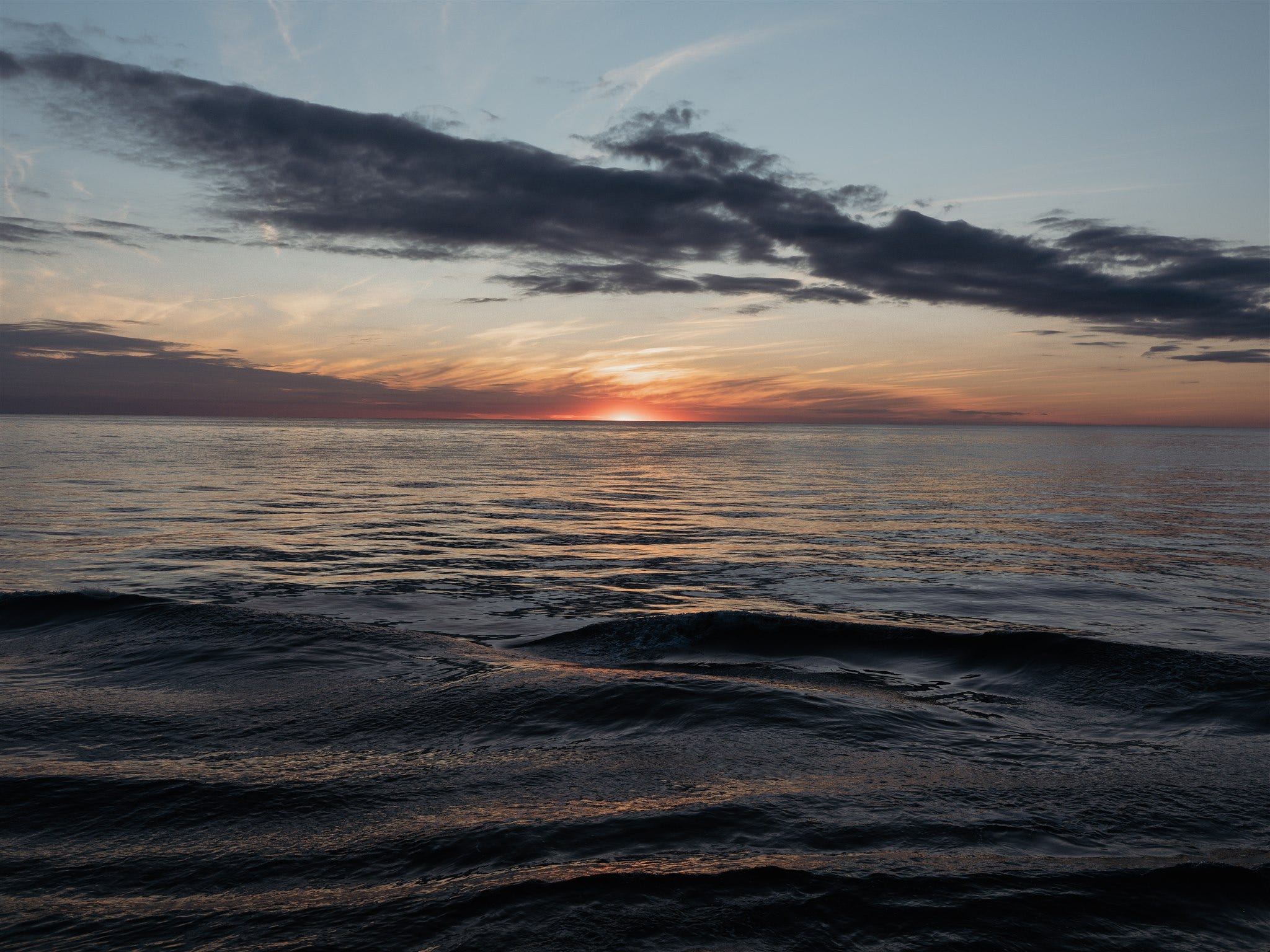
My Wi-Fi isn’t working and land has disappeared from sight. Alone with the horizon, virtual disconnect invites a lonely state. No wonder all the great writers take to sea at some point—they write better when mortality is etched in a blue line horizon they can’t escape. The ocean is hypnotic, sure. But once those ripples blur into the unknown, it evokes low level existential dread. And no matter what you meant to ponder at sea, fleeting mortality as incessant intrusion will override it. We are hardwired to confront our demise more seriously at sea.
The ship is cold at night. But I can’t complain about everything. (And no, they don’t have branded bathrobes.)
After wandering in circles, trying to escape the Kafka effect, I finally stumble upon someone who escorts me to the Starlink headquarters—a metal door tucked beneath a red light, surrounded by warning signs. Very mysterious. I knock. A face appears behind a small slatted window, like the secretive Oz of nautical cyber limits, asking what I want.
“More internet?” I ask, hoping they notice the oversized Navy sweatshirt I’m wearing.
They take my name. The window closes.
Minutes later, it reopens. The wizard grants me a few more hours—fully aware I’ll return when my time runs out again, to bother the nameless bureaucrats of aquatic signal.
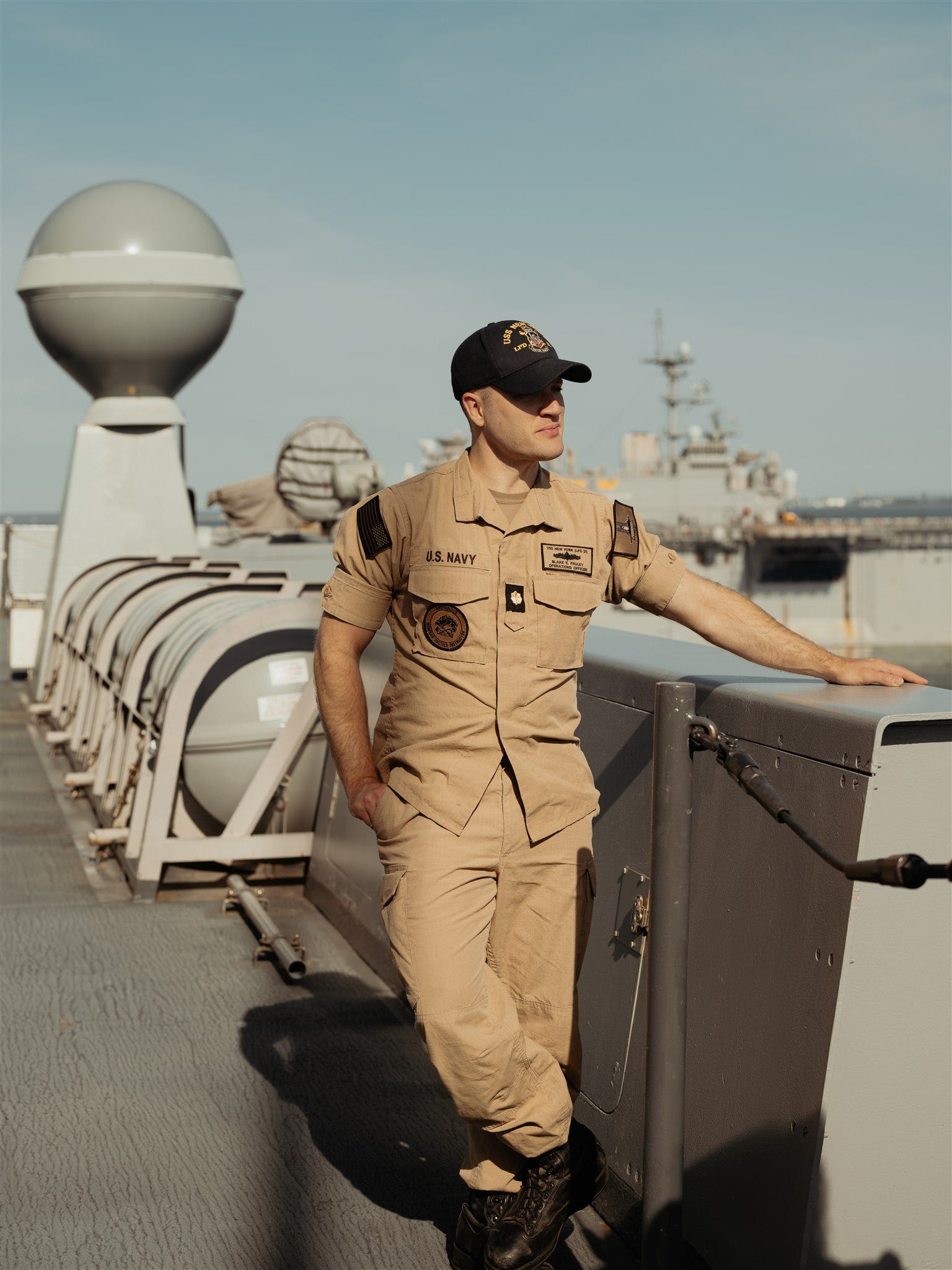
Blake Pauley
On celestial navigation.
In addition to a steady Starlink signal, Spicer mentioned a pool on board. Not wanting to miss a captain’s happy hour hosted on the top deck (where I assumed the pool would be), I asked around. Alas, there is no pool.
Same thing when I tried to hunt down a flavored latte. Spicer didn’t correct my assumption that a warship of this magnitude would obviously include a coffee shop to fuel sleep-deprived crew. He just told me I should ask people.
There is no coffee. And there is no pool. No drinks with the captains. The brutal truth: our Navy operates the high seas with mediocre drip coffee as their only weapon against exhaustion.
Shelby Soto
On what makes a good sailor.
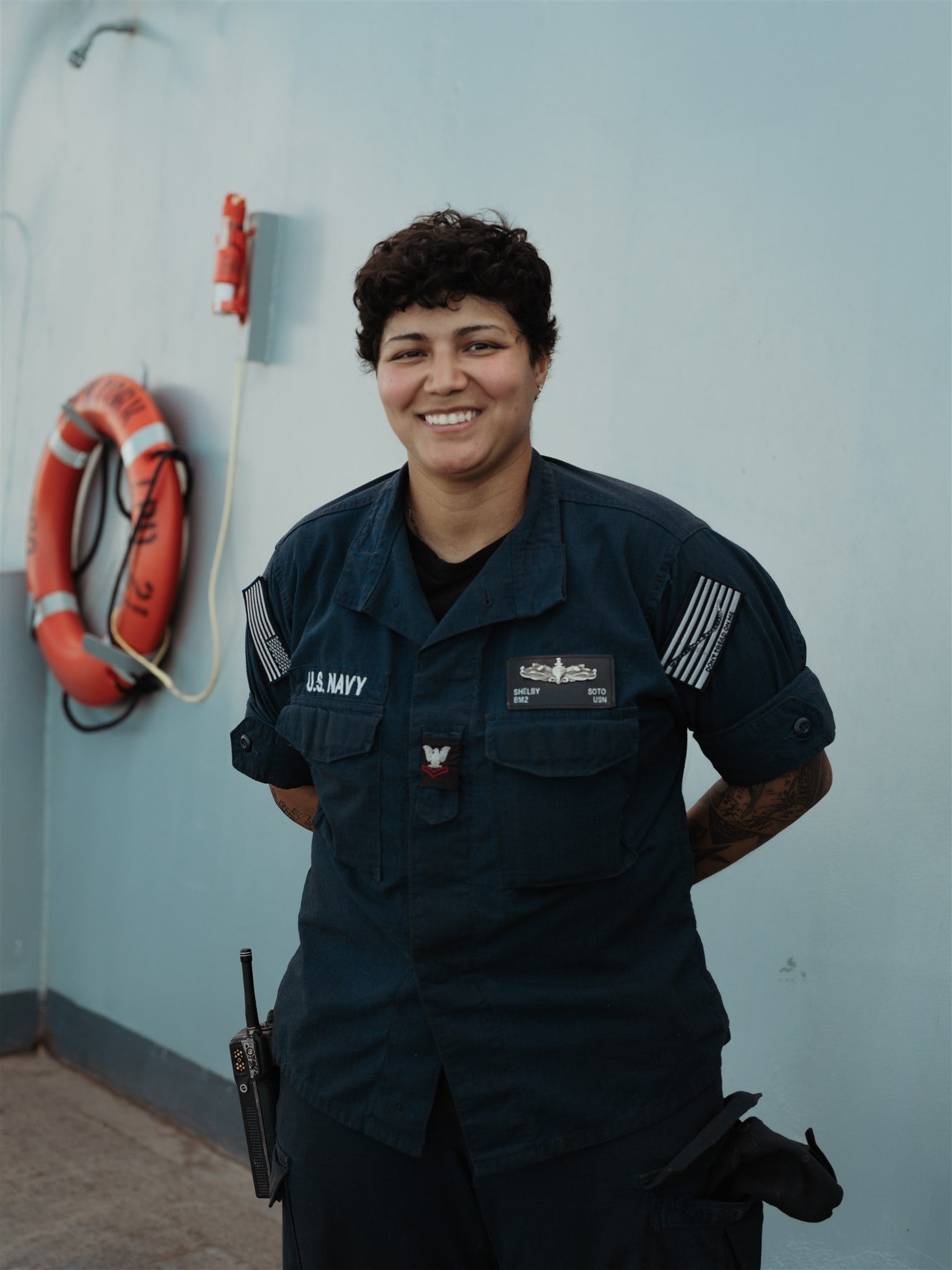
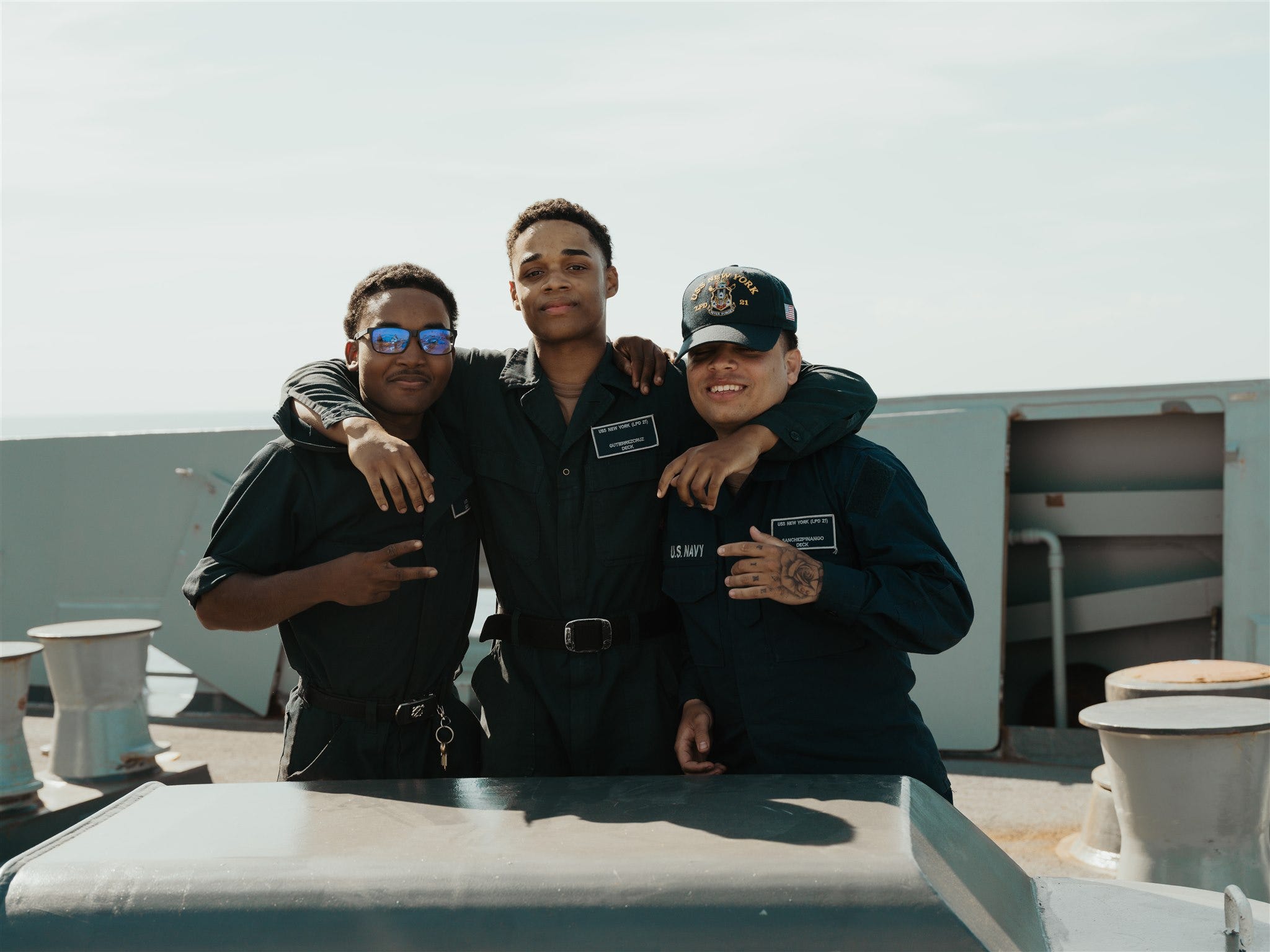
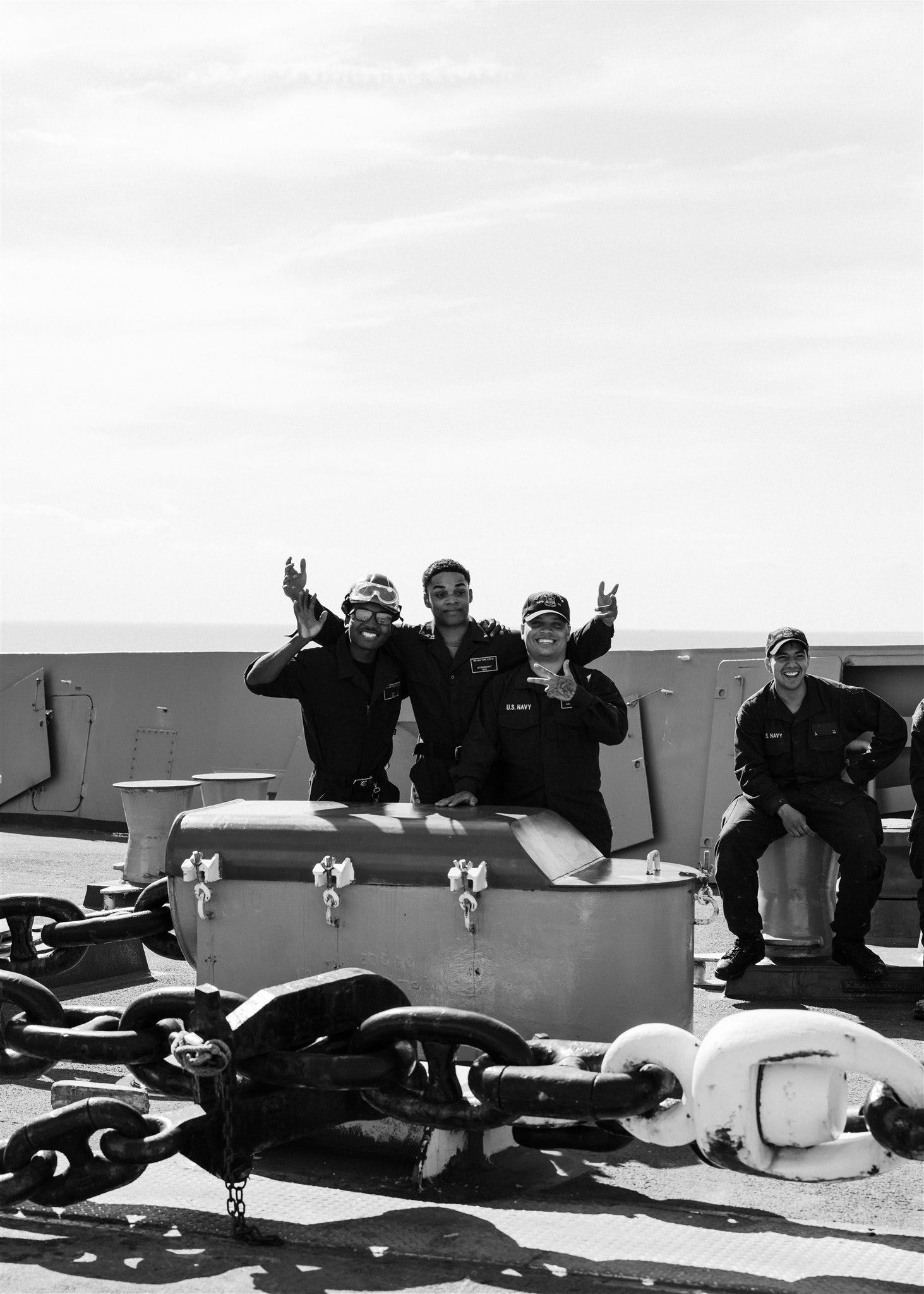
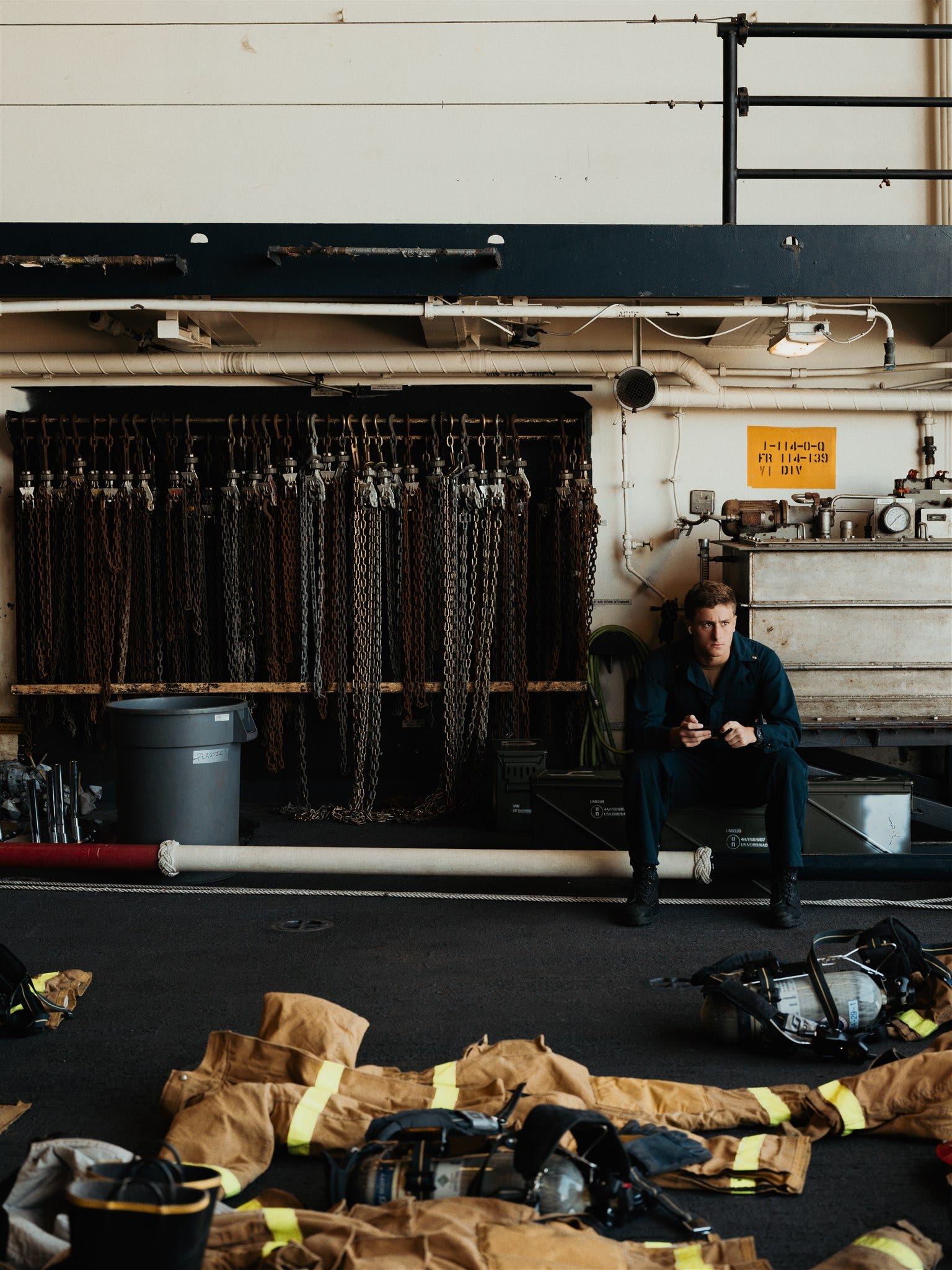
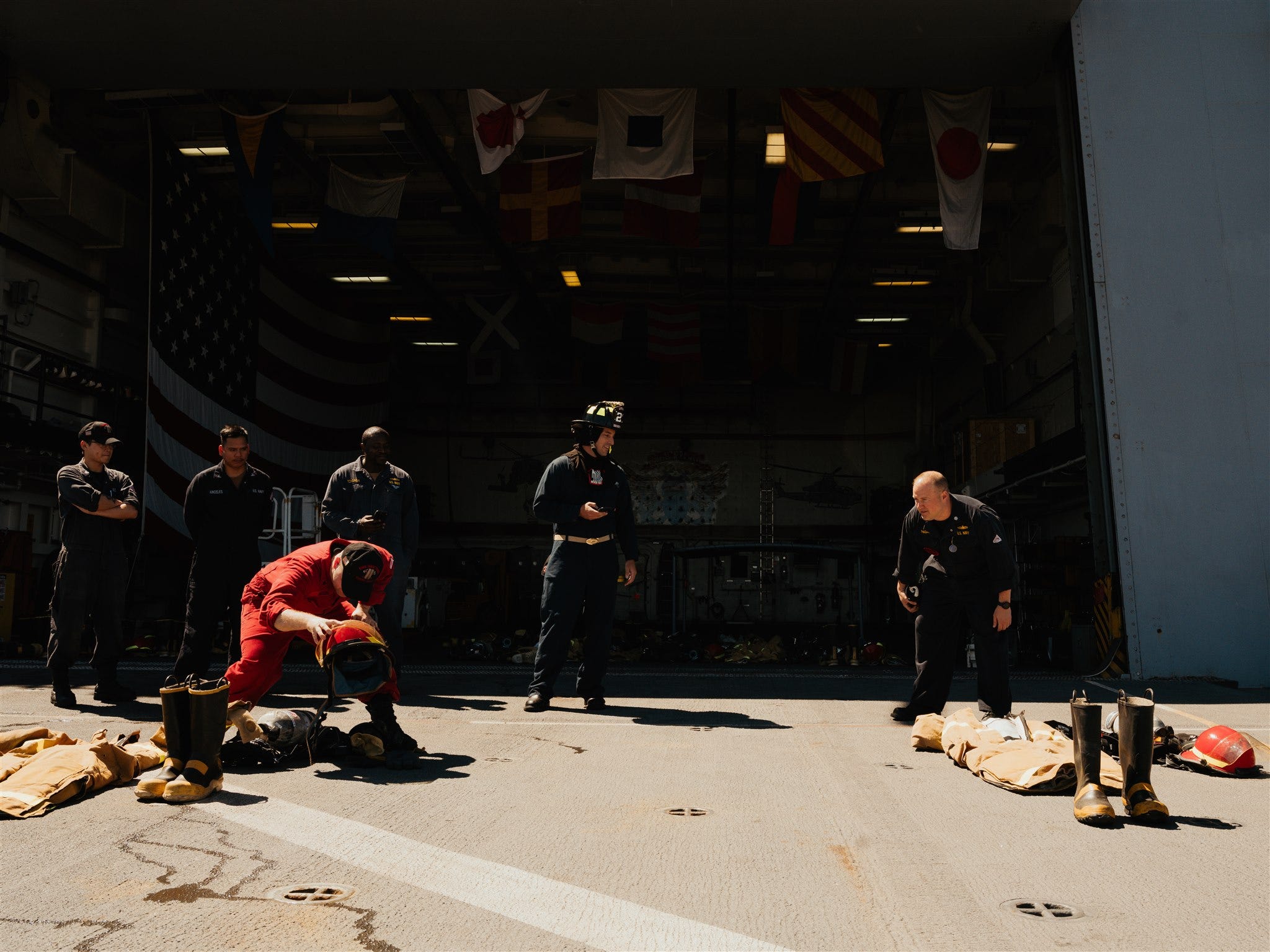
The crew moves with astonishing discipline and looks happy doing it. These are good kids. Every task, no matter how big or small, is executed with pride.
They taught me that a warship never stops moving and can disappear from radar when needed. Disposable waste is tossed into the water in big brown paper bags. Prayers are recited at six in the morning. Rank dictates everything from the mess halls to mundane tasks performed.
The lights in the main areas are too bright. I suggest dimmers to a few of the captains.
I overhear a sailor say he lost his appetite after finding slugs in his salad. As a result, I lose mine too. Another brags about a fling with a 35-year-old woman. This impresses everyone around him.
These kids navigate life on the ship without phones, powered by daily purpose. They are young and passionate. I want to cry watching them because they are babies—many the same age as Arlo. We send our babies to war. And people still have the nerve to wake up and trash our country with habitual rage online.
The Star-Spangled Banner plays at eight in the morning, followed by a series of khaki briefings.
On deck at dusk I ask when the lights go out. “We actually don’t turn them on,” is their reply.
We head out to photograph the Navy at sunset. They play football, sing, and dance. We film an arm-wrestling match between Army and Navy.
At sea, conversations drift between the mundane and the philosophical. I overhear someone say, “Liberty is a right, not a privilege.”
A few snap selfies. Some are lucky enough to catch dolphins in the distance in their shot.
Our sleeping arrangements are in the Captain’s headquarters: two sets of metal bunk beds crammed into a space so tight they almost touch, yet charming enough to amuse Wes Anderson.
I get lost constantly, panicking during one harrowing trek through a high-voltage corridor, begging a sailor who finally appeared to “please bring me to sunlight.”
Day 2
I’ve grown suddenly resentful of my own spoiled children and consider cutting Arlo’s Amazon access once I’m home. He should learn how to work a warship if he wants nice things. Deliveries at his doorstep on demand is offensive. Gourmet coffee whenever he wants? Outrageous.
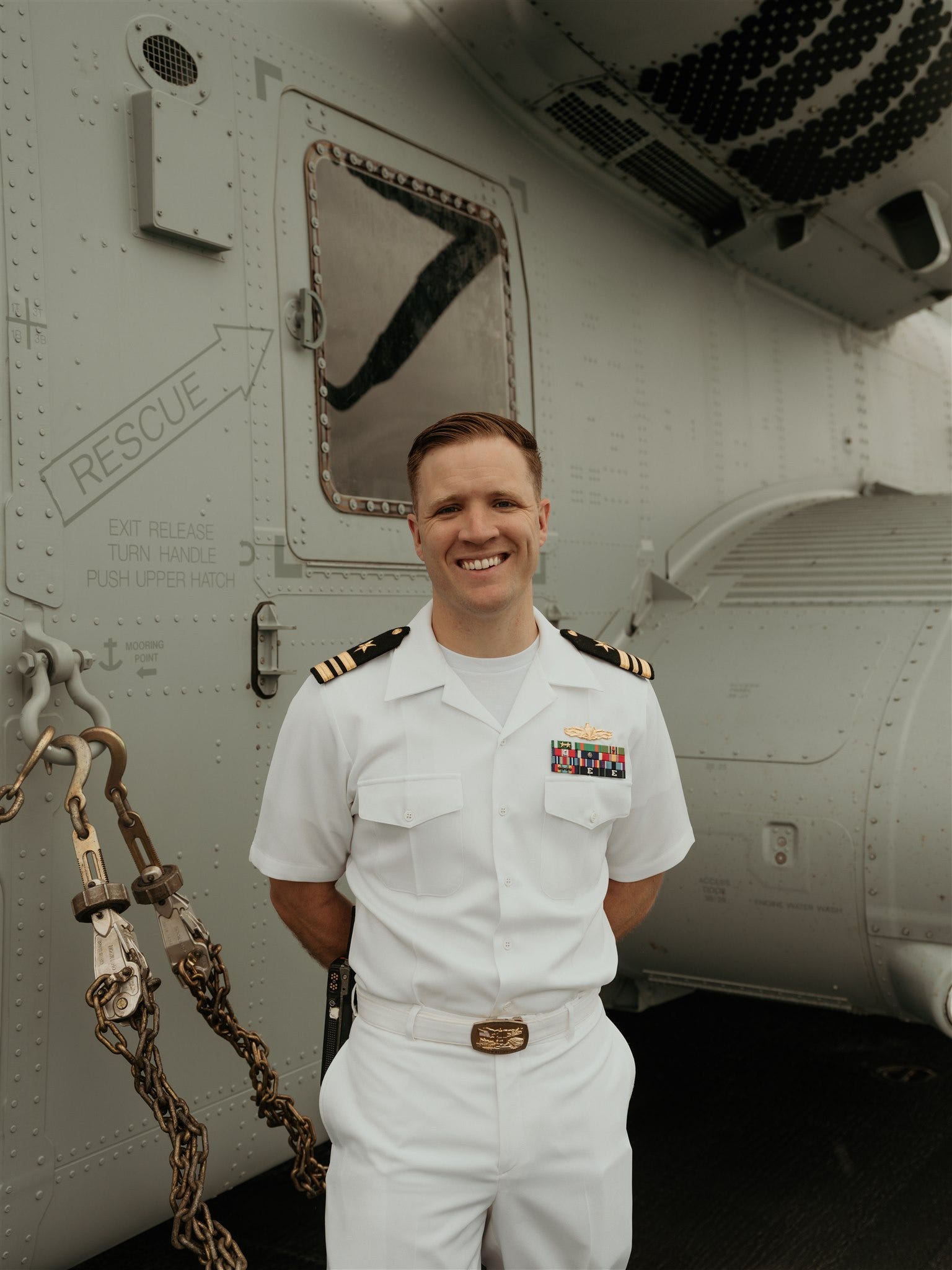
Everyone is eager to show me the ship’s functions. Wyatt Smith is clean-cut, friendly, in charge of rescues at sea. He offers to heat ramen at midnight when he finds me alone in the mess hall nursing bad coffee.
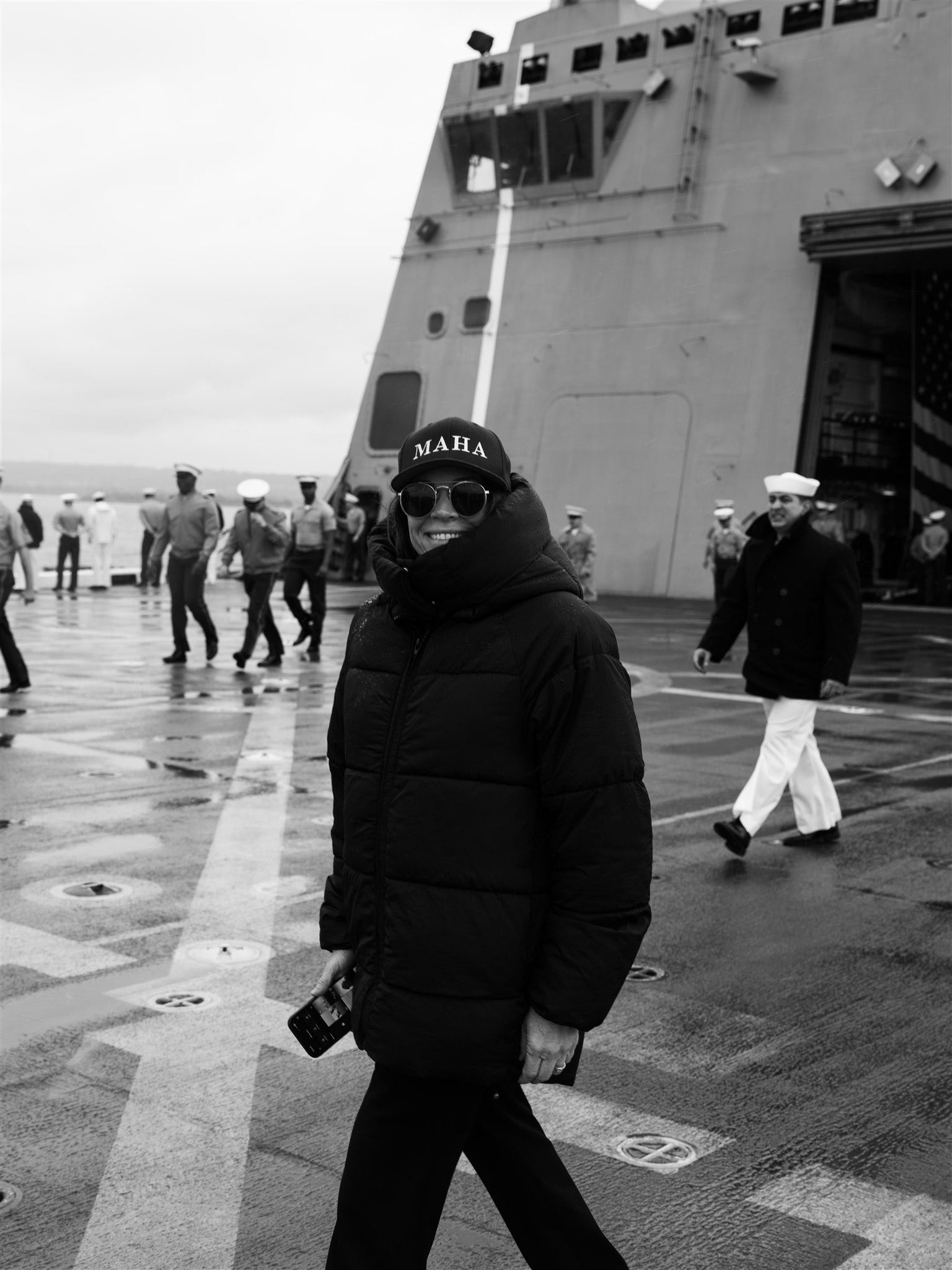
He’s a fan of RFK. He talks openly about his affection for Kennedy but steers away when the conversation turns to Trump. They all do. Bobby is a safe spot. Trump is too loaded a topic. Their allegiance to service is nonpartisan. MAHA, on the other hand, is a popular topic.
Another sailor carrying a tray full of processed items asks if I can talk to Bobby about cleaning up the ship’s food. I promise I will.
Wyatt mentions my campaign coverage, complimenting my work. He asks if I know the story of JFK saving PT-109 during WWII. I do, but I pretend I don’t, so I can hear it from him.
He sits down and recounts the heroic tale with animated reverence: JFK’s patrol torpedo boat rammed by a Japanese destroyer, slicing the hull in half. Amid oil-slicked water and wreckage, JFK swims tirelessly, towing injured crew members to safety with the life jacket strap clenched in his teeth, improvising shelter and rationing meager supplies for days. With no communication available, he carves a message into a coconut and sends it to nearby islanders, who relay it to the U.S. Navy. In the end, his crew survives, and he is awarded the Navy and Marine Corps Medal as testament to heroism in dire circumstances.
The story is better told by a young man in uniform who’s memorized it, and who might have to do the same thing under similar circumstances.
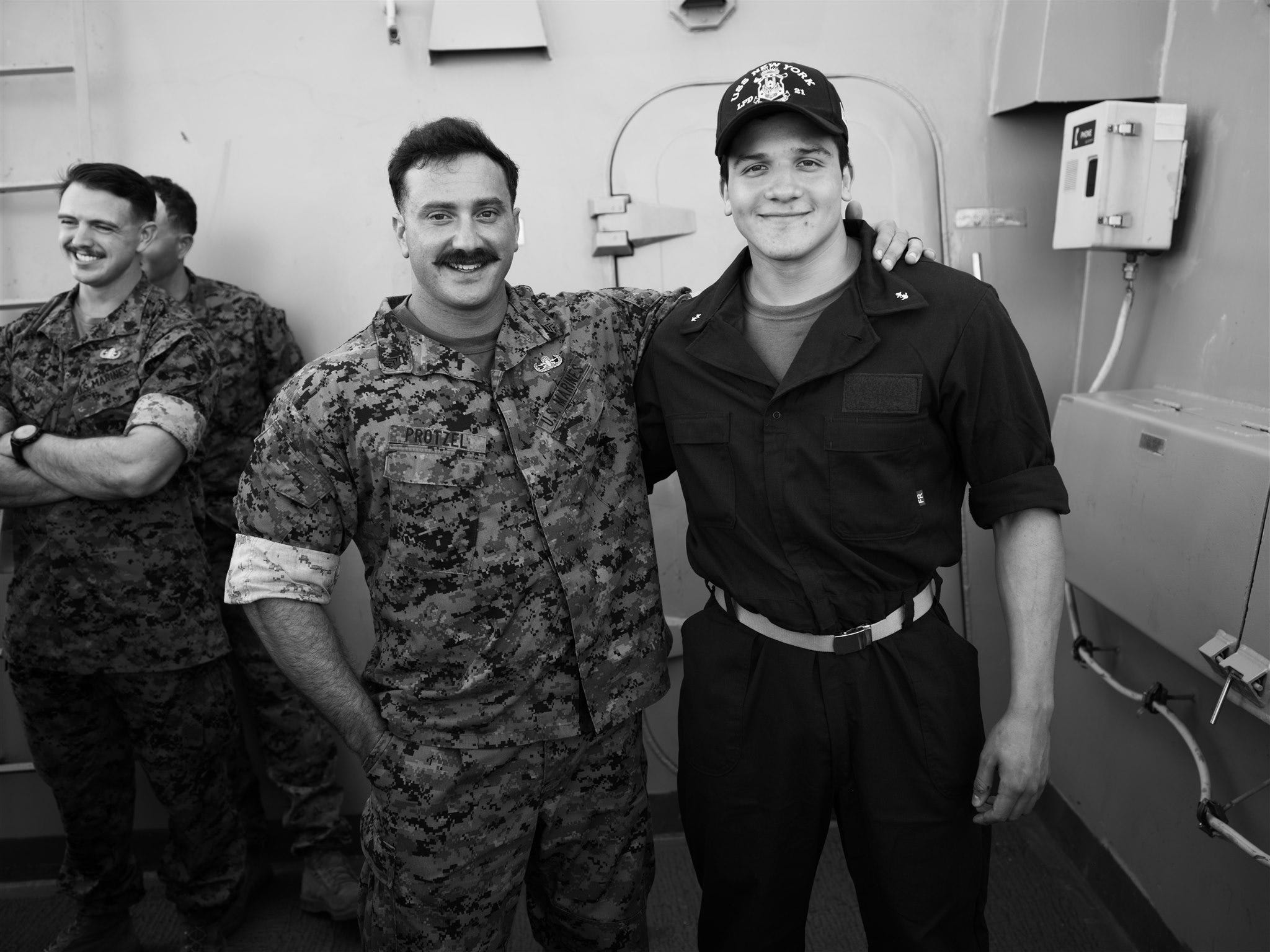
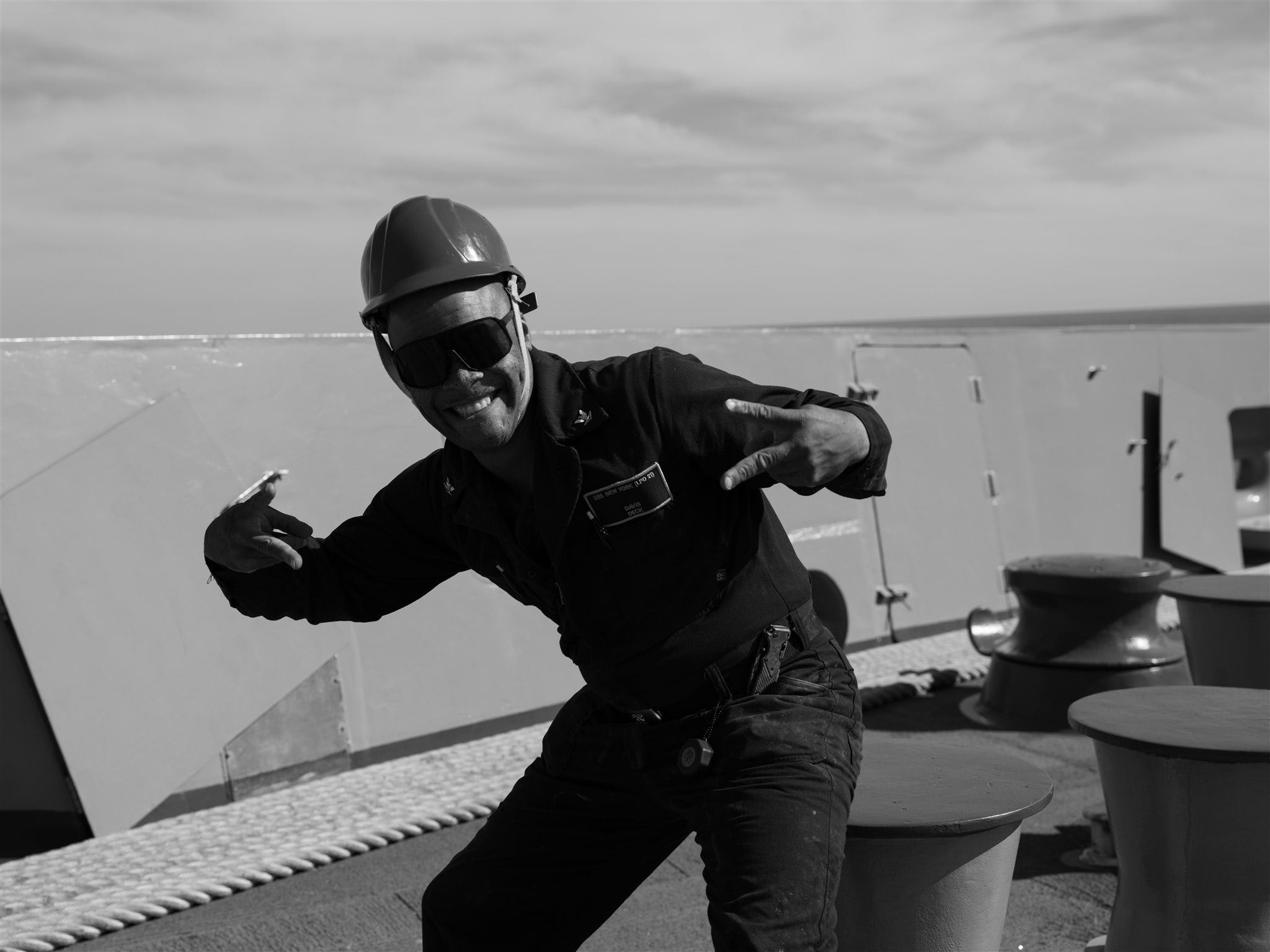
Afterward, he asks if I want to see the control room.
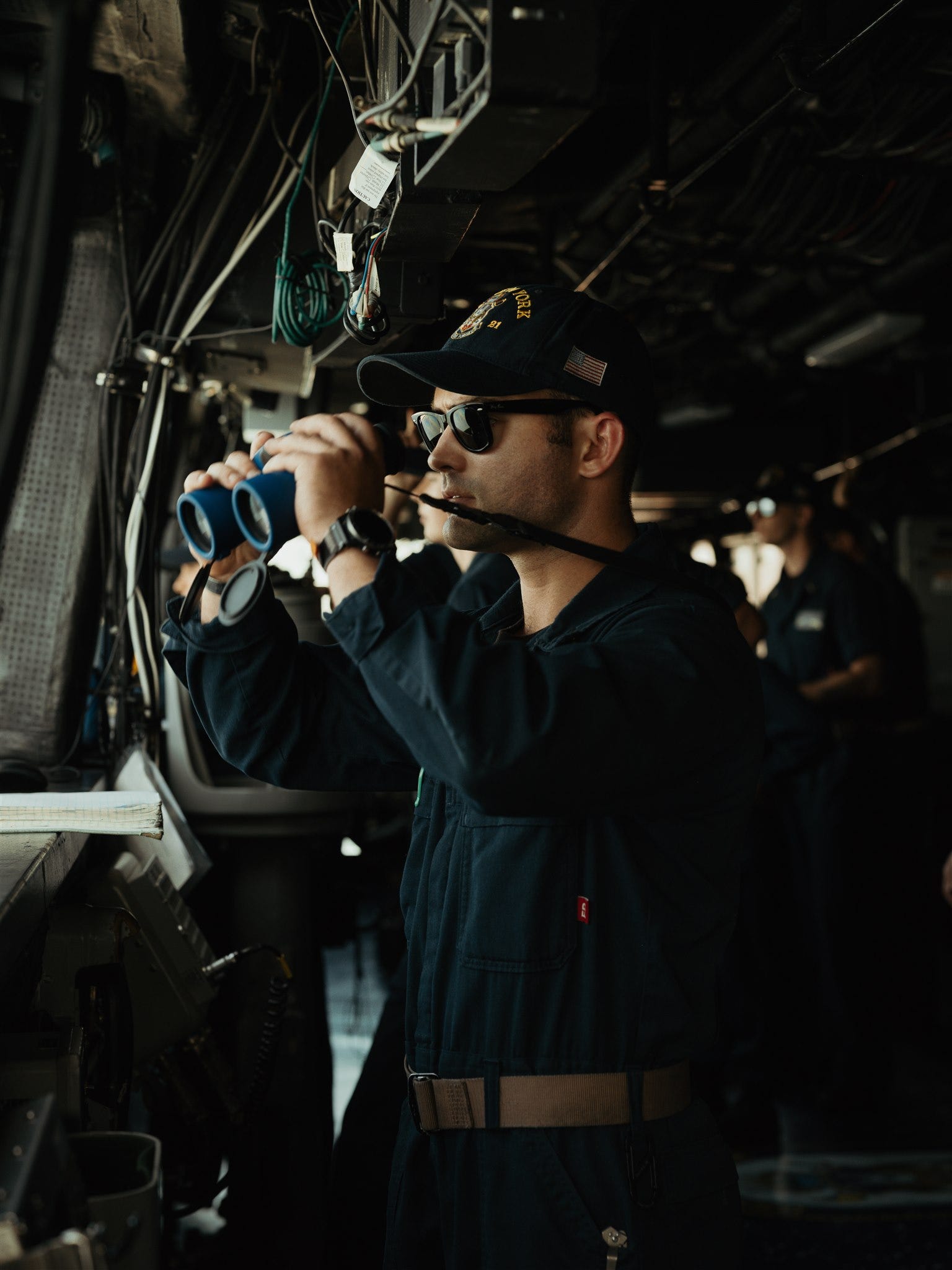
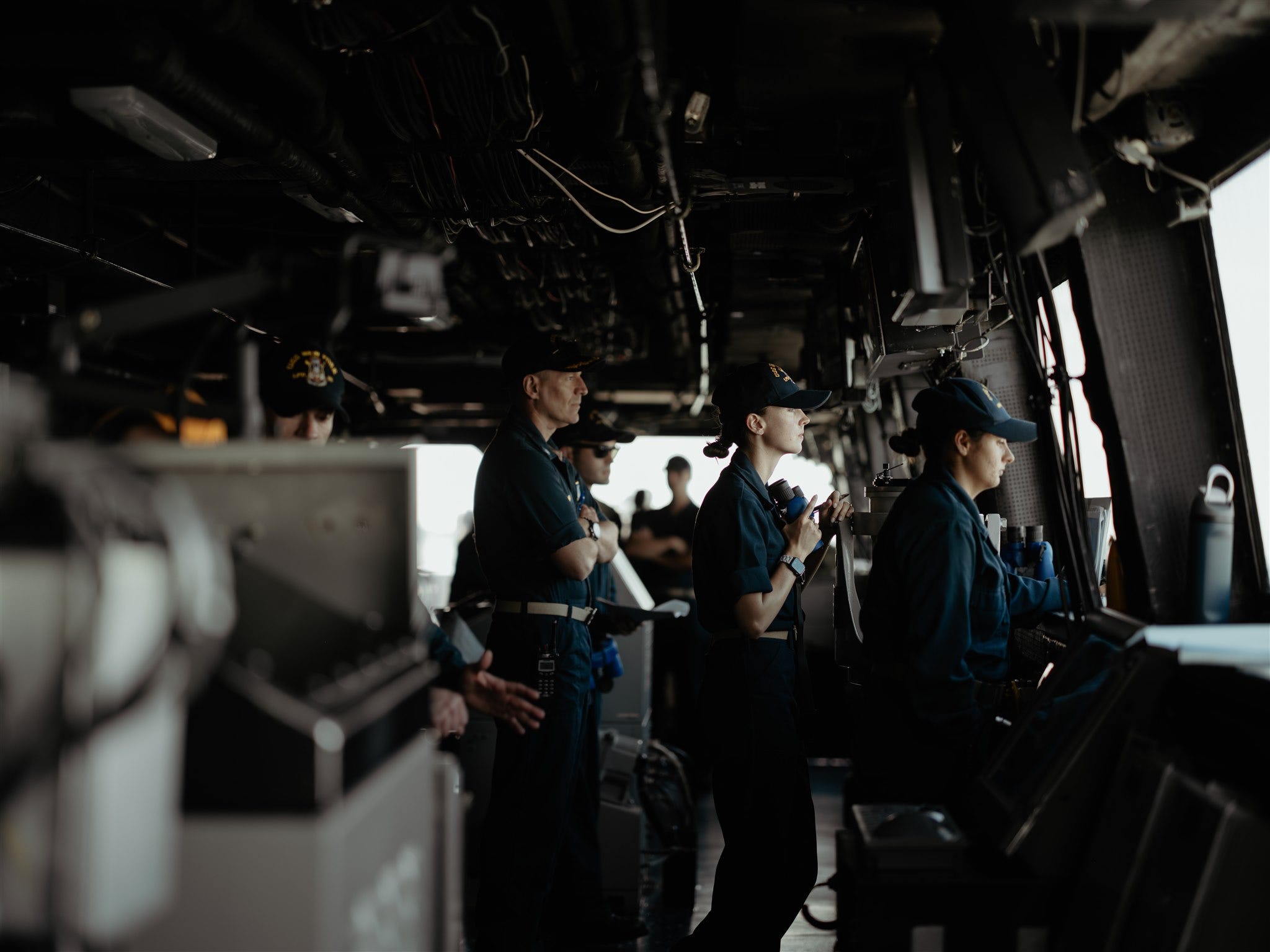
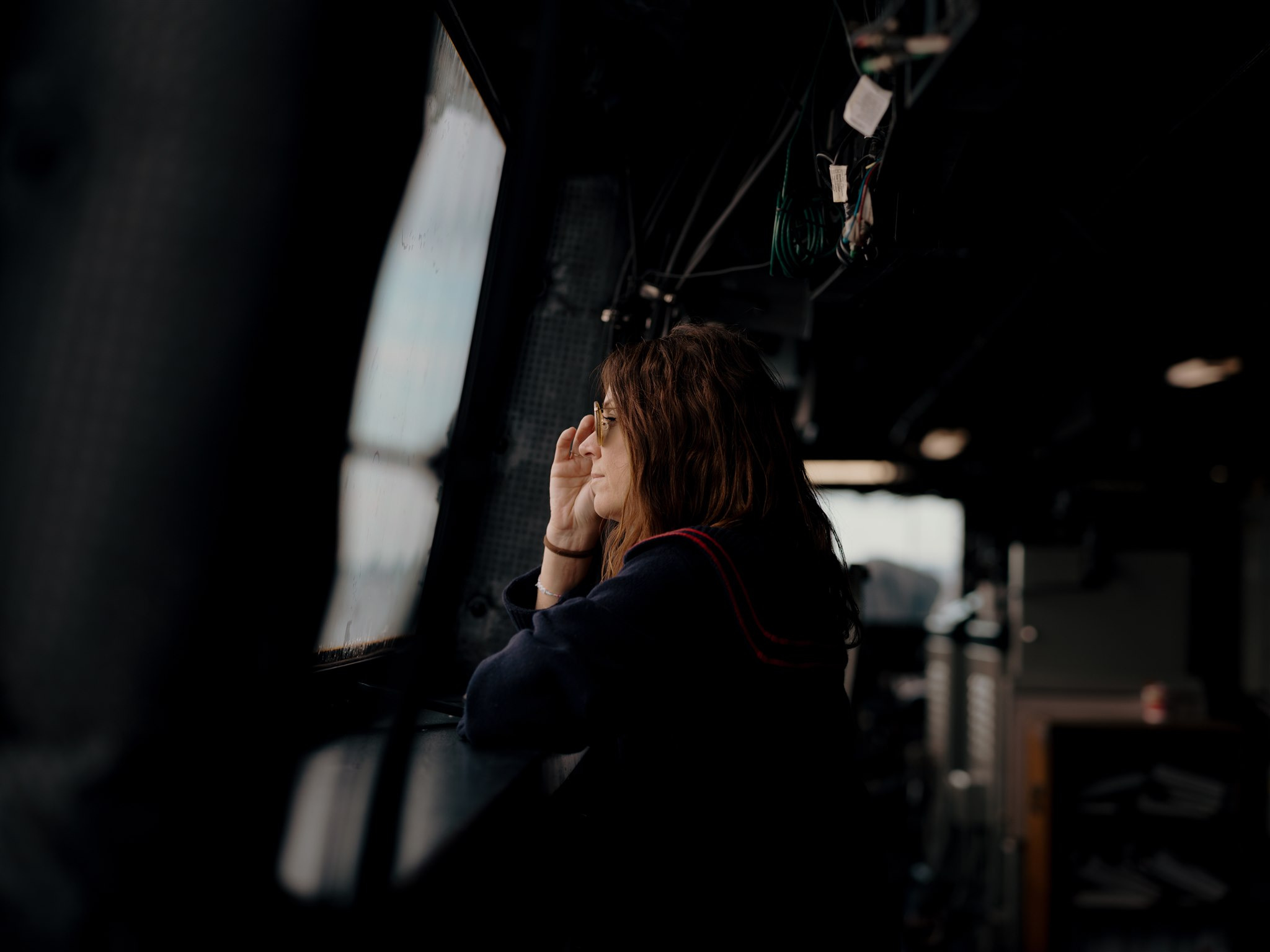
We navigate a maze of tunneled hallways and arrive at the central control rooms at midnight bathed in an eerie red light. The bridge is navigated in complete darkness so the crew’s eyes can adjust to minimal illumination, allowing them to gauge long distance at sea. It’s jarring at first. But gradually, the lights of New York City flicker far away on the horizon.
Wyatt demonstrates high-powered night-vision goggles and introduces me to a young woman steering the ship. Her hands wrap around a tiny wheel—steady, precise, commanding the massive vessel with the slightest tug. She looks no older than 15. I am as horrified as I am impressed.
Before we turn in, I send a message requesting RFK pick up a FaceTime call from a supportive sailor at the end of this voyage. I include how much he admires his uncle and how meaningful it would be for the crew to hear from him.
RFK on FaceTime
Pulling into New York, RFK talks to Wyatt Smith.
Chaplain Eliud
“My hope comes from the lord.”
Mornings are ceremonial. They read personal stories about a victim of 9/11.
Intercom announcements remind everyone: “It’s a great day to be a New Yorker.”
I spot two girls relaxing in the Signal Shack and overhear sailors talking about advances in satellites.
The air traffic control tower is remote and hard to access—it’s where lovers sneak away to “watch the sunset.”
At meals they dish about pets and loved ones. One night at dinner, they interrupt each other’s stories to discuss dream interpretations.
Seasickness hits later in the day, usually during cafeteria meals.
By bedtime, my equilibrium has synced with the rocking of the ship. On the top bunk I close the curtains and wait for it to pass. I fall asleep before it ever does.
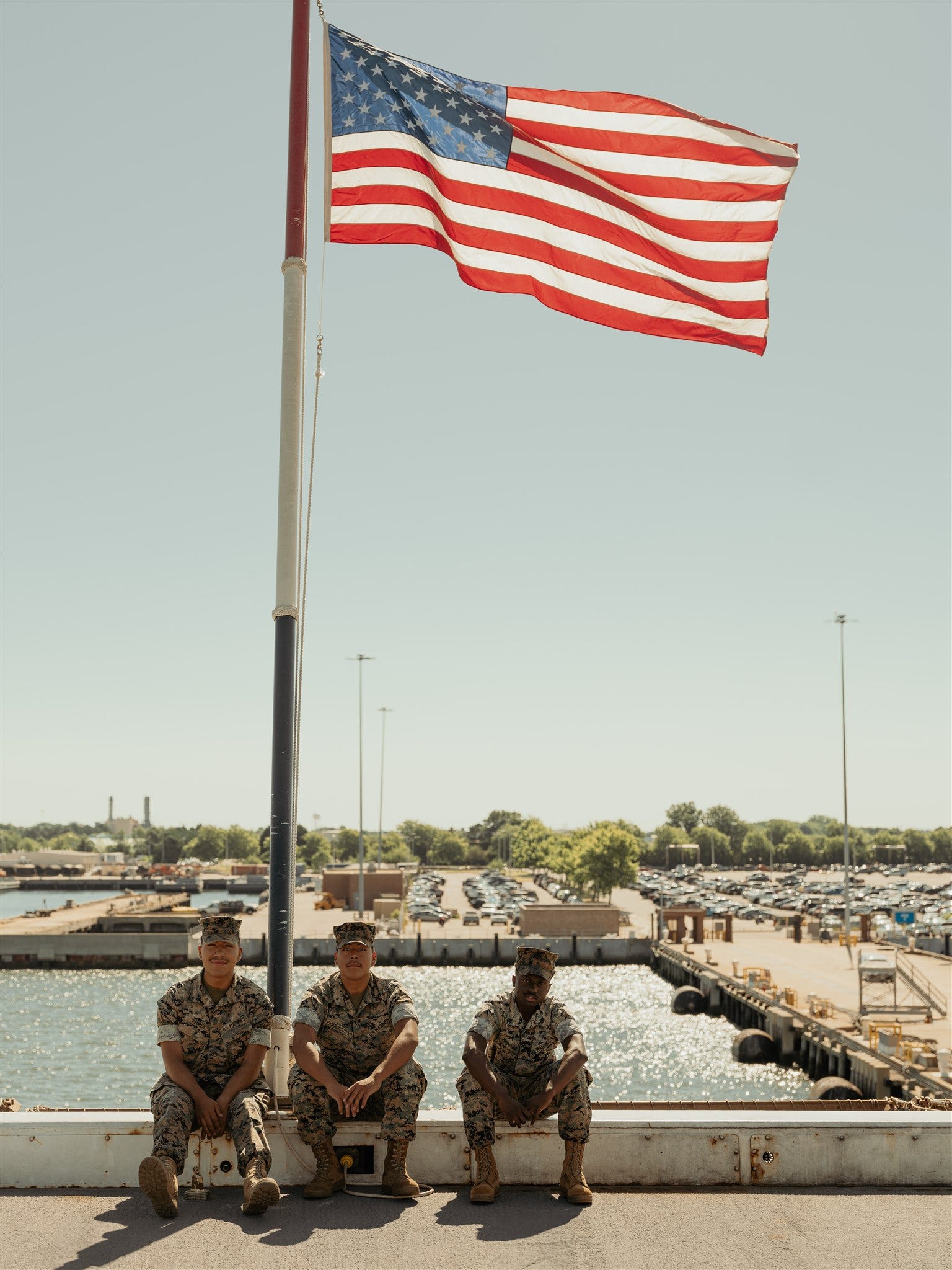
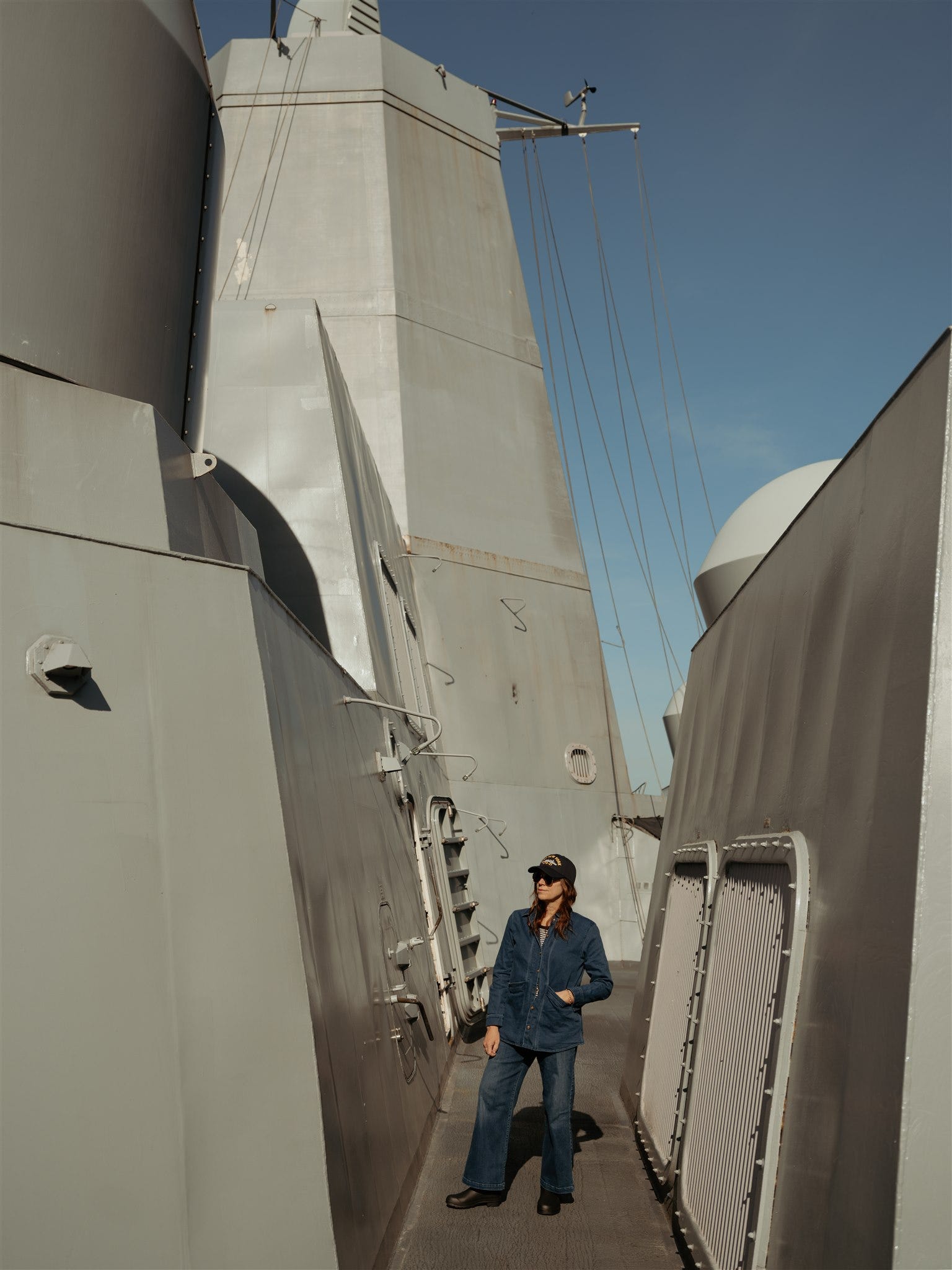
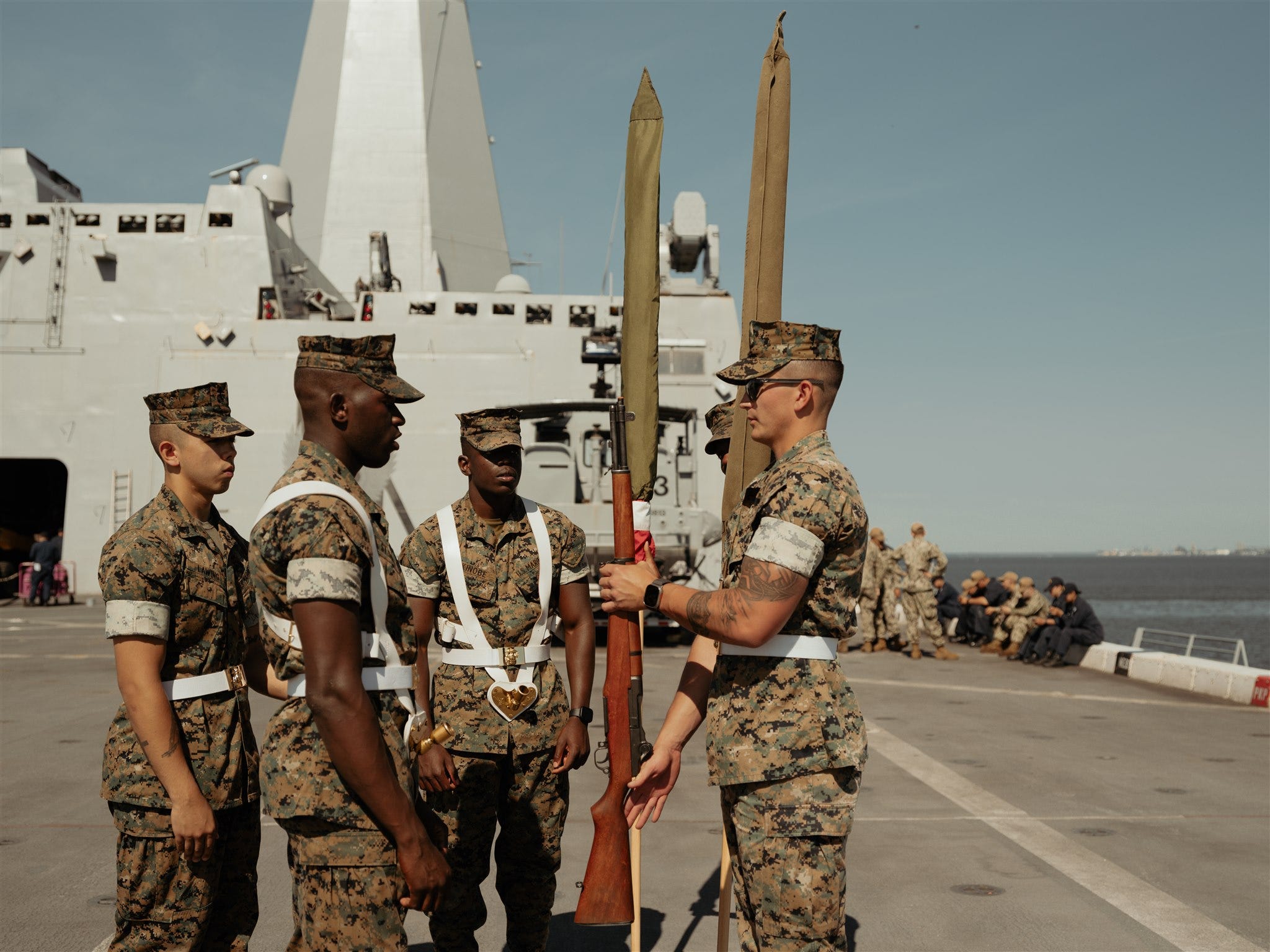
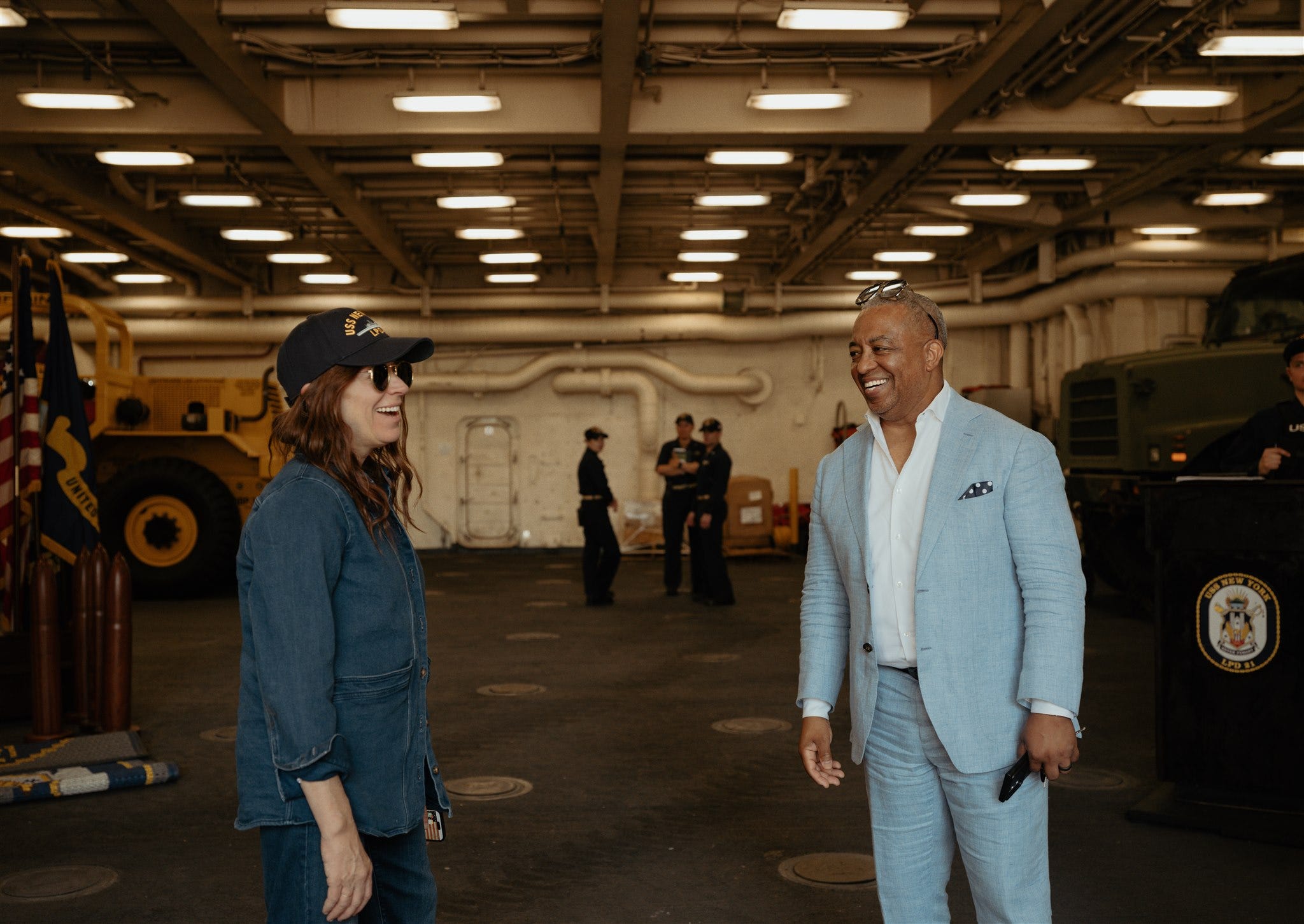
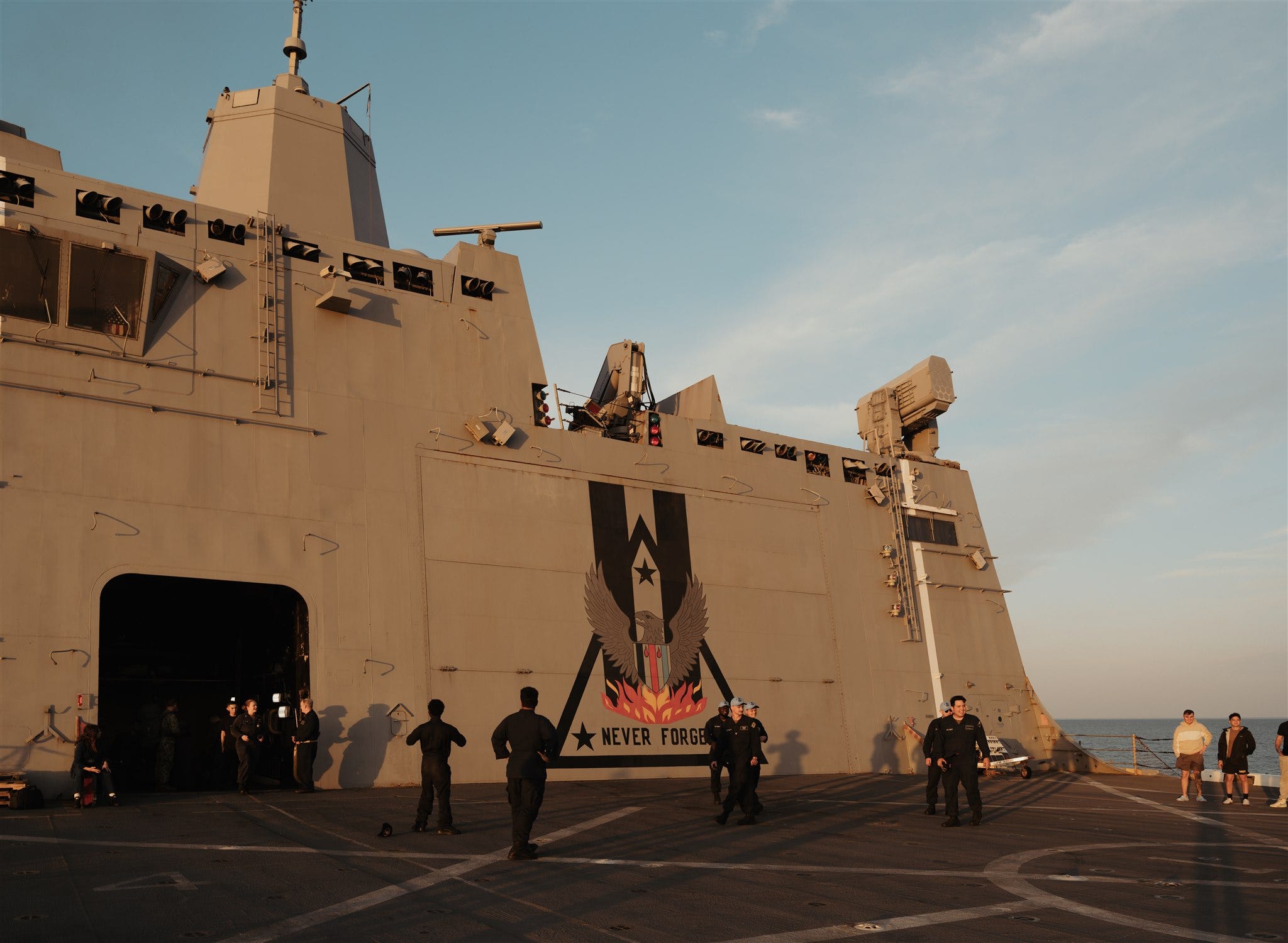
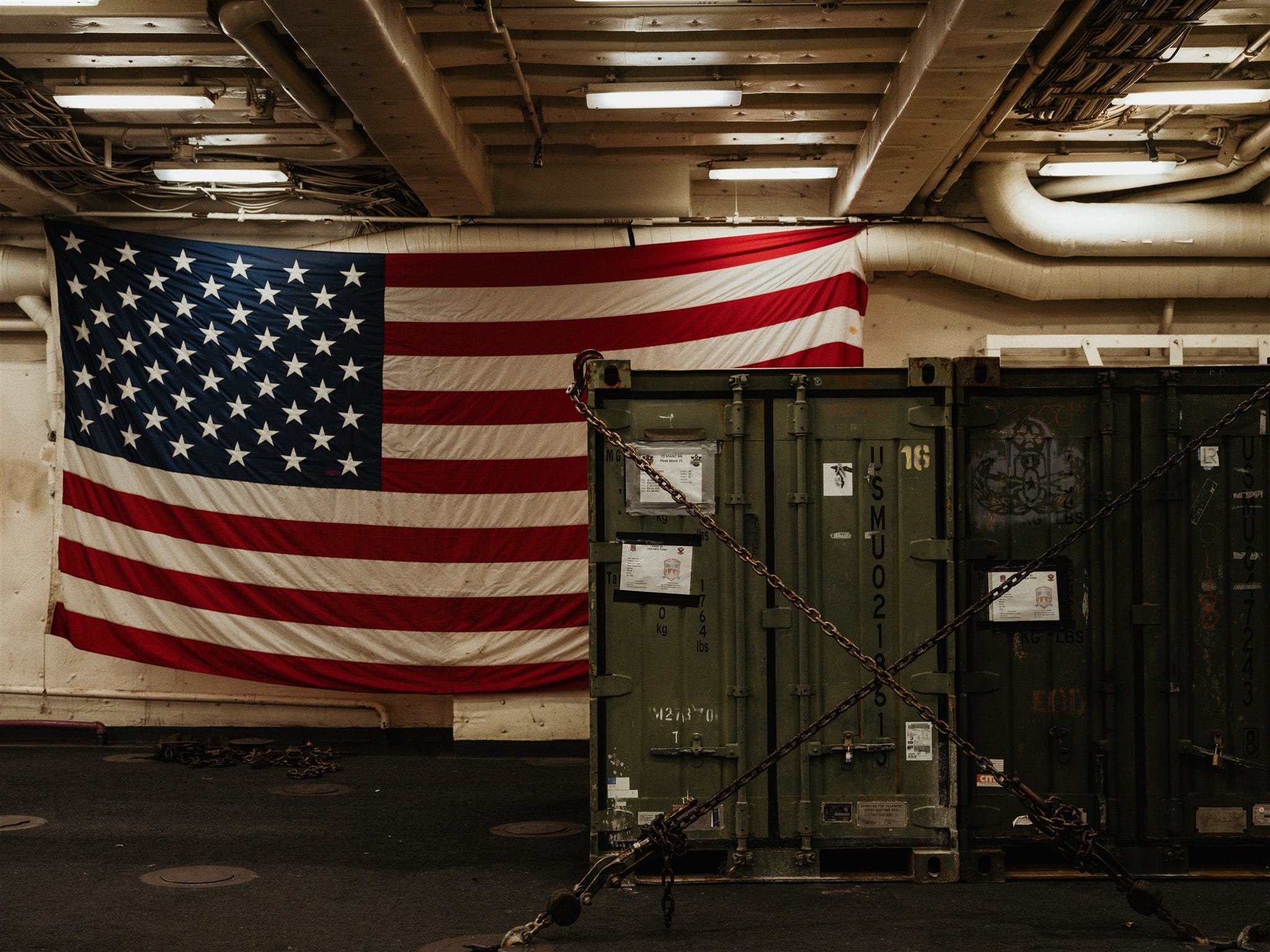
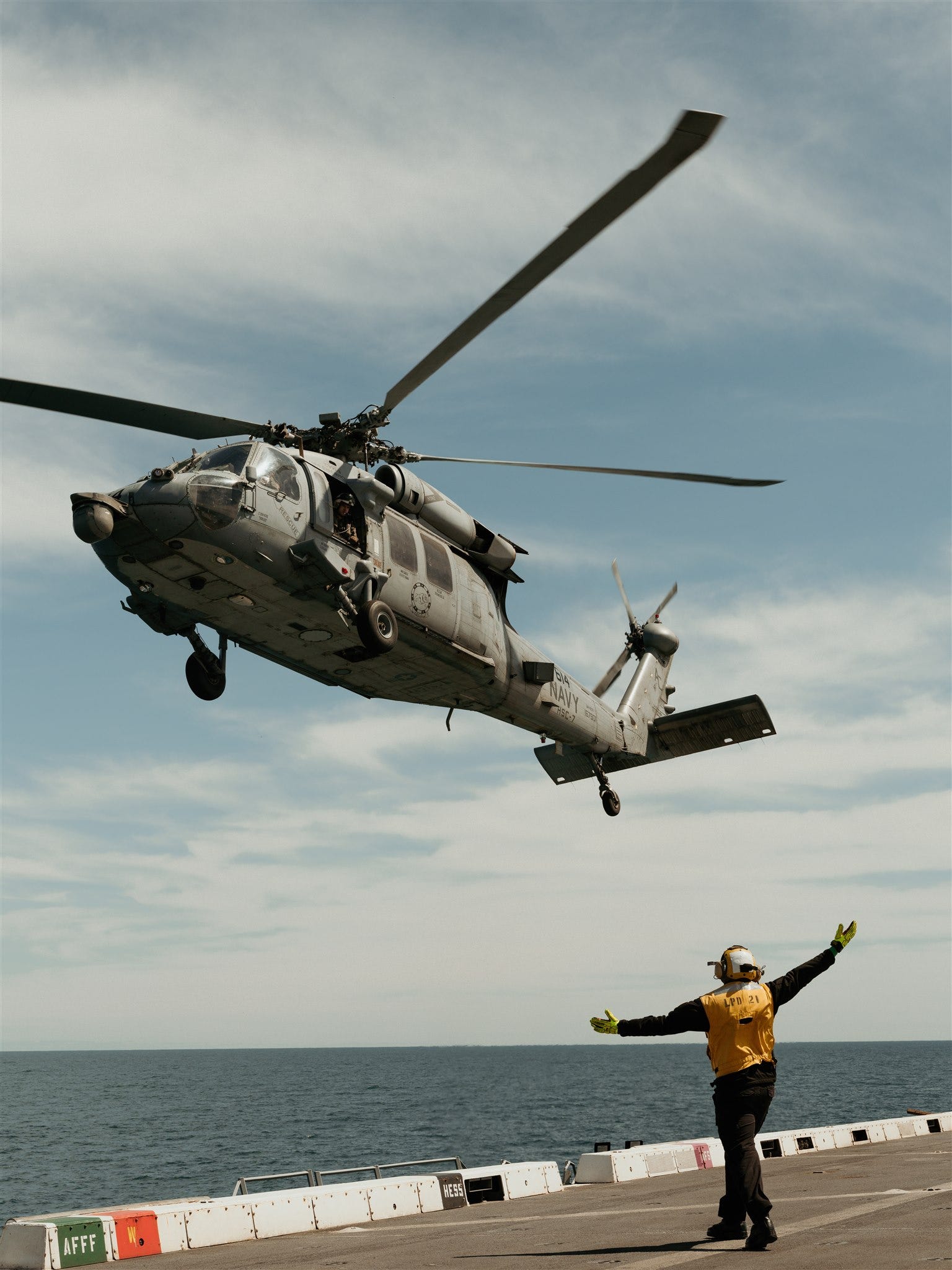
We watch helicopters perform rescues in rough mountain terrain whenever needed. The ship is built for amphibious missions; without Marines it functions as a cargo vessel. Marines are a separate branch but share civilian leadership with the Navy.
I overhear someone say, “The dark web has a deeper layer where anyone’s info can be found.”
Dinner is oxtail.
Fishing poles sitting in the mess hall are props from SEALs used in a famous mission.
Gun salutes as practice are quite poetic to watch.
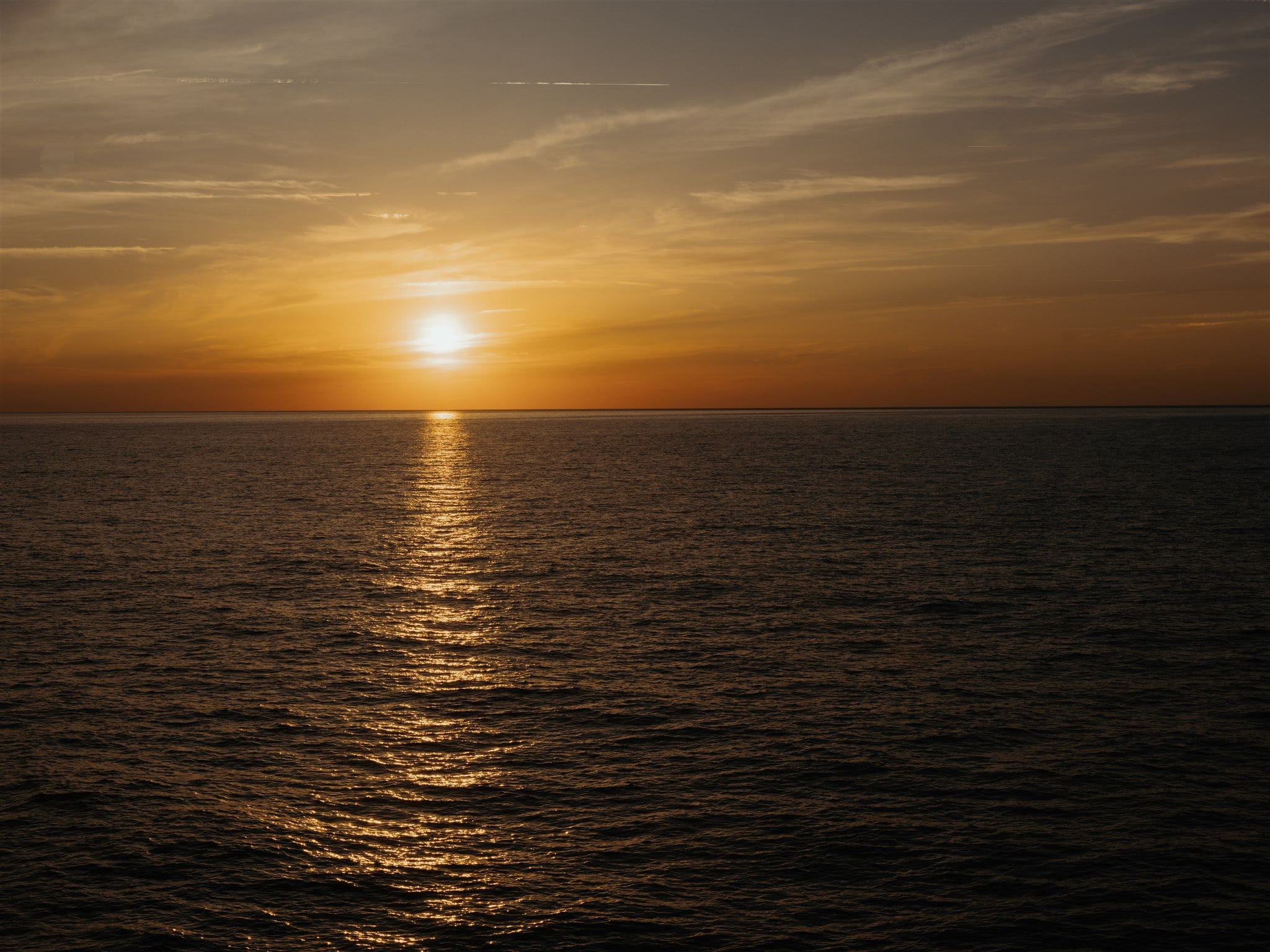
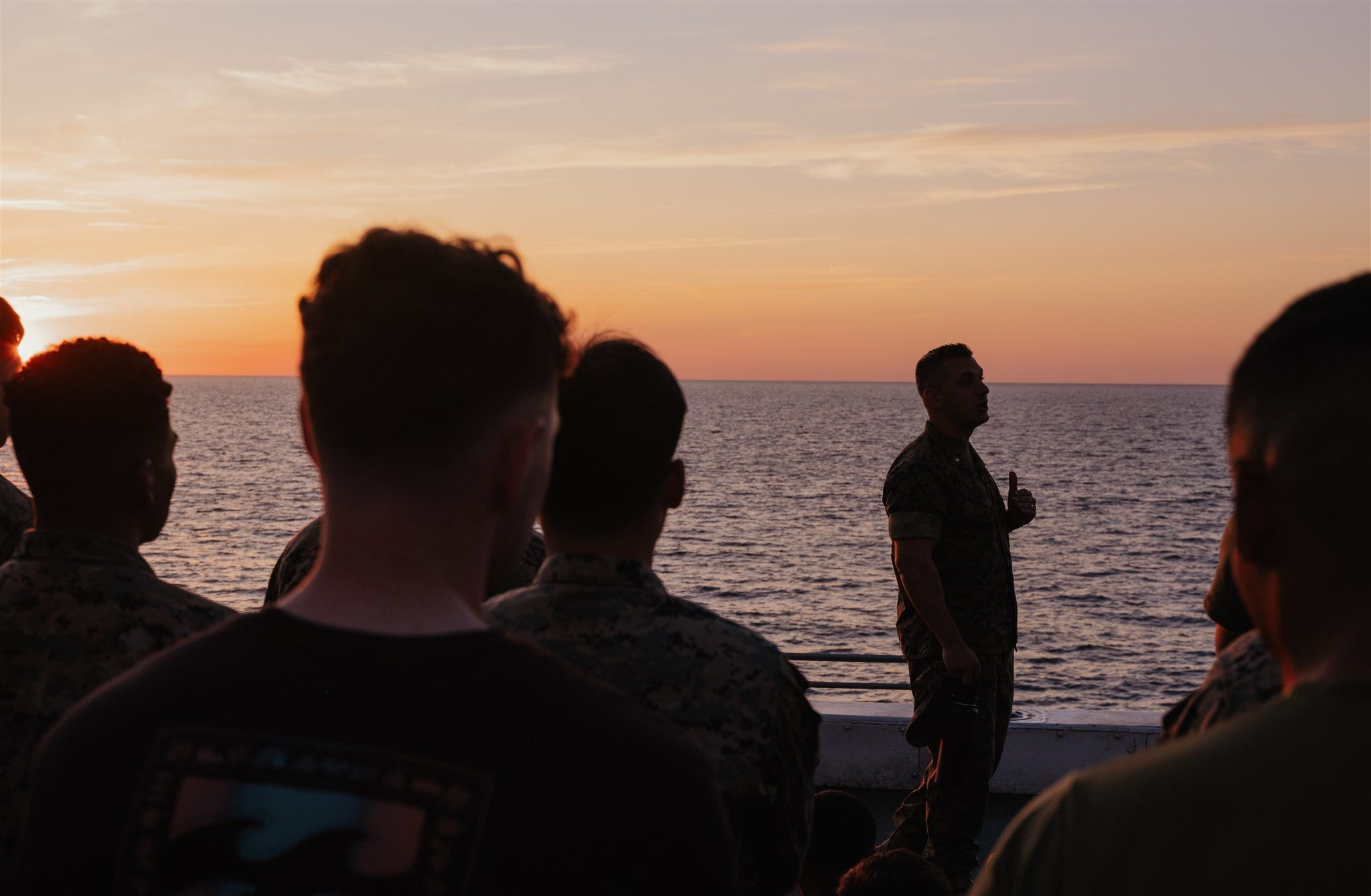
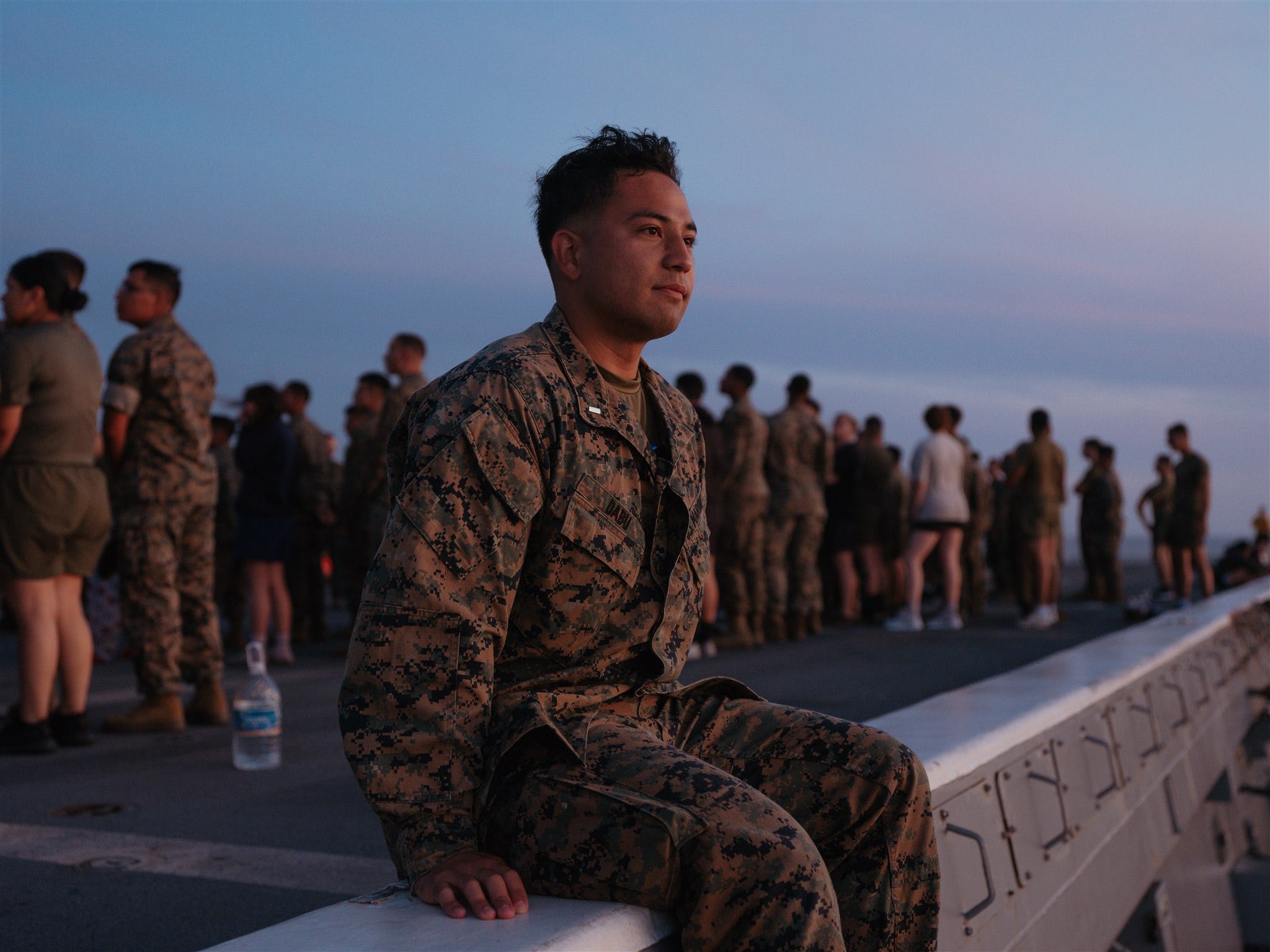
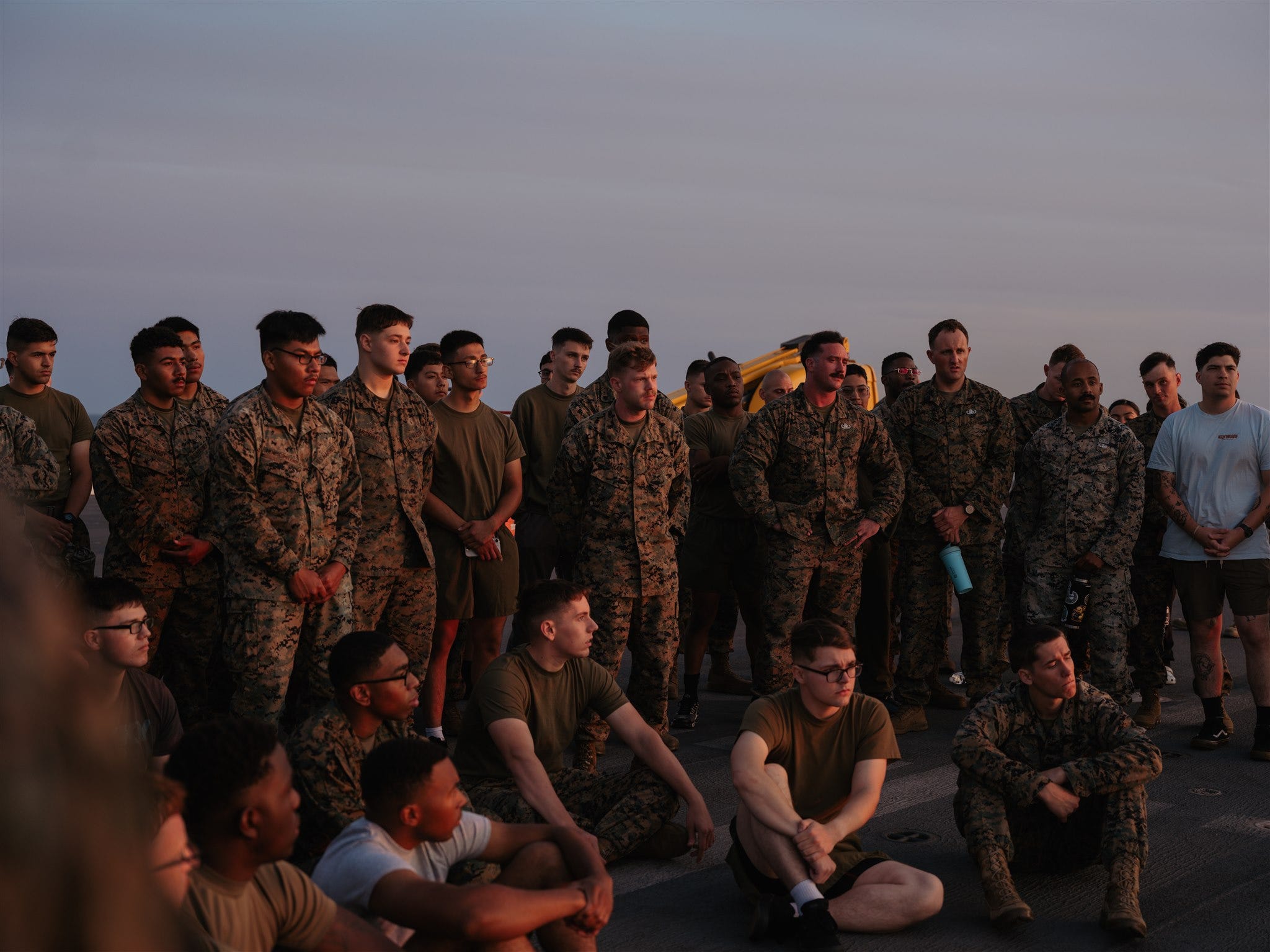
On our last day, preparing for their arrival, I oversee a captain instructing eight Marines on celestial navigation, cloud formations, and how to confidently explain their roles, ribbons, and accomplishments to anyone who asks. Part instruction, part pep talk, he encourages them to get out and enjoy their time in the city—to make friends with locals, take them up on their recommendations and invitations, and create memories they will “be proud of.” Memories they will want to share with their grandchildren. He reminds them this is all part of “their story,” so embrace all the love that awaits them.
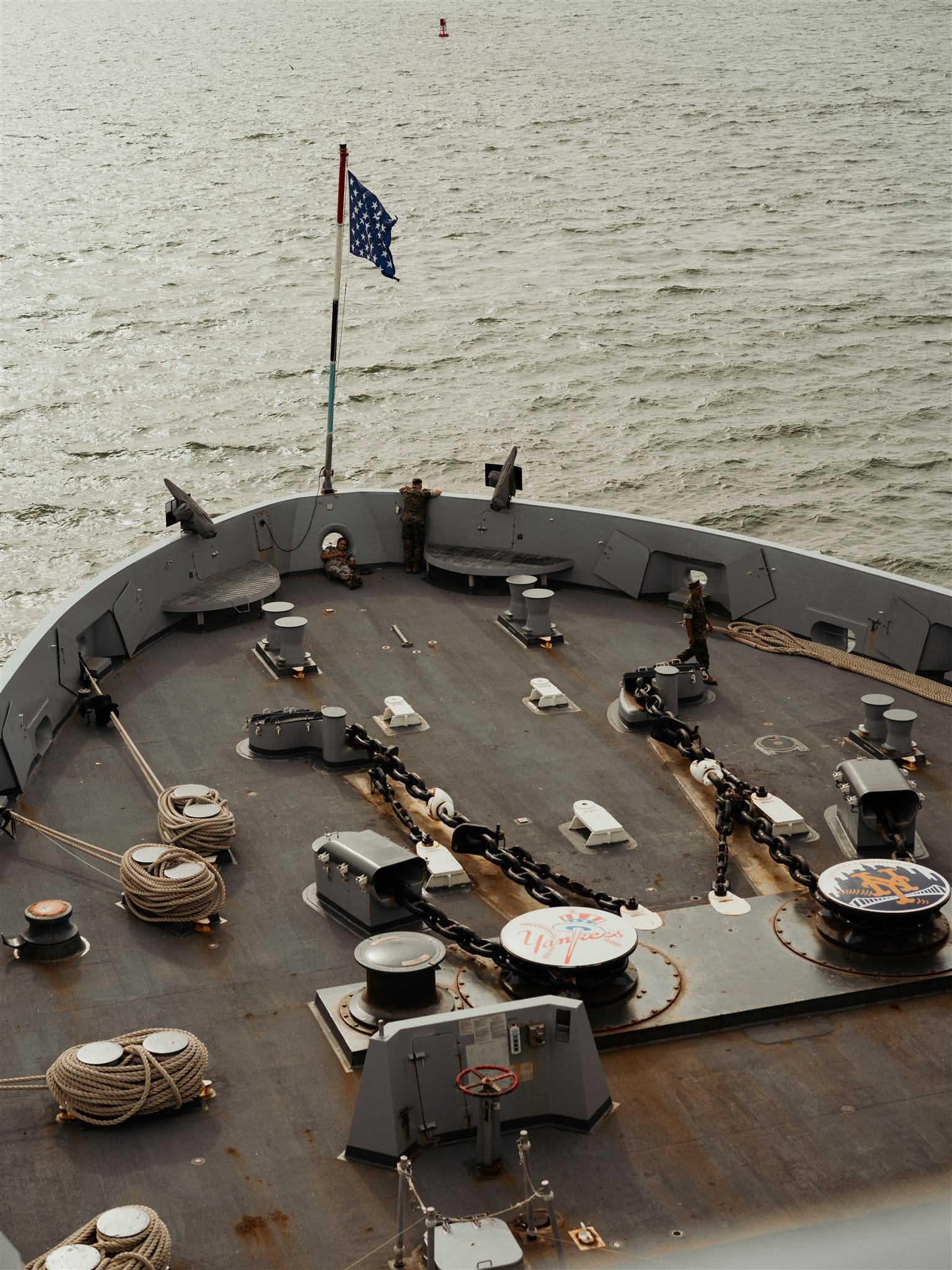
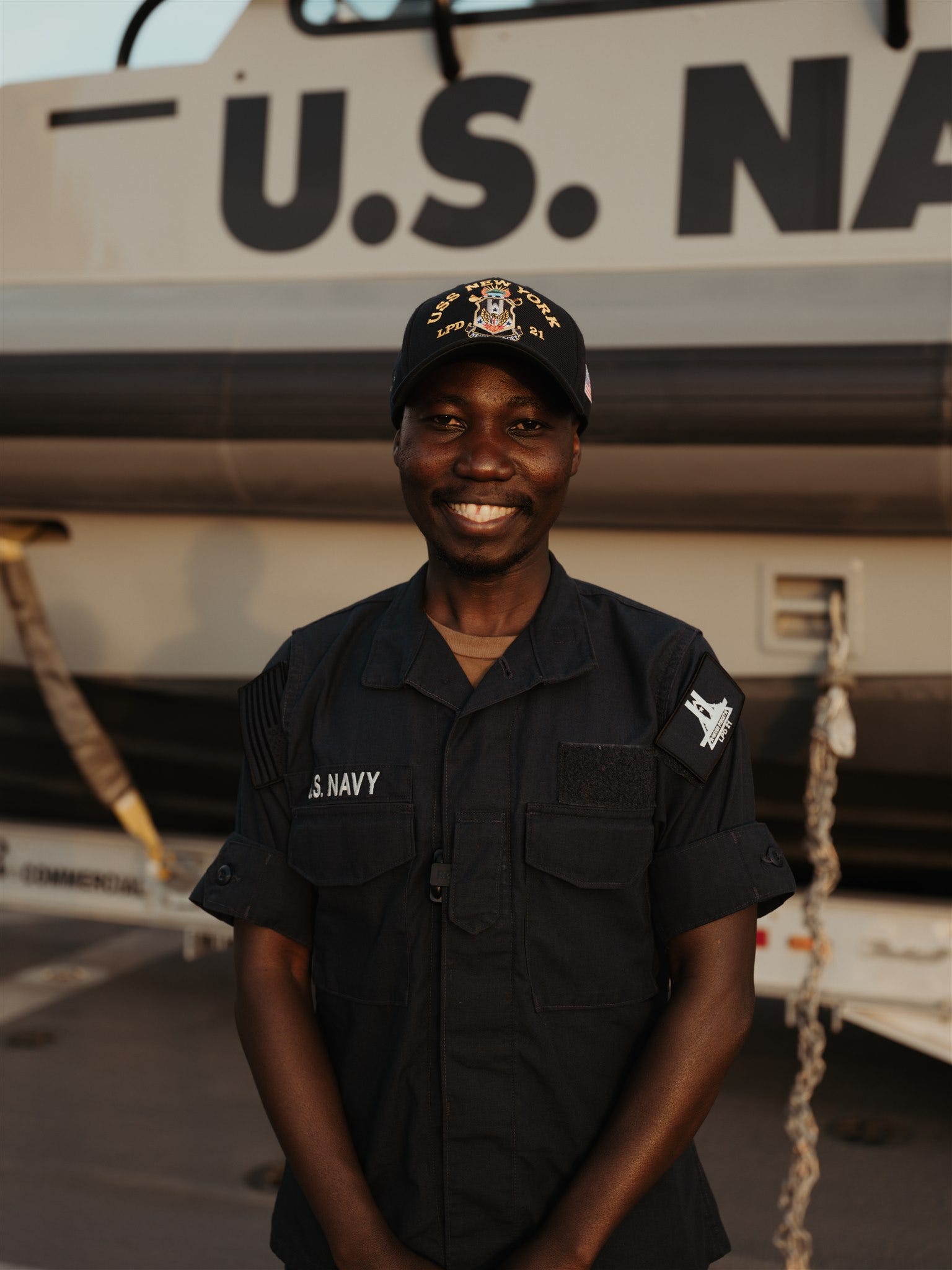
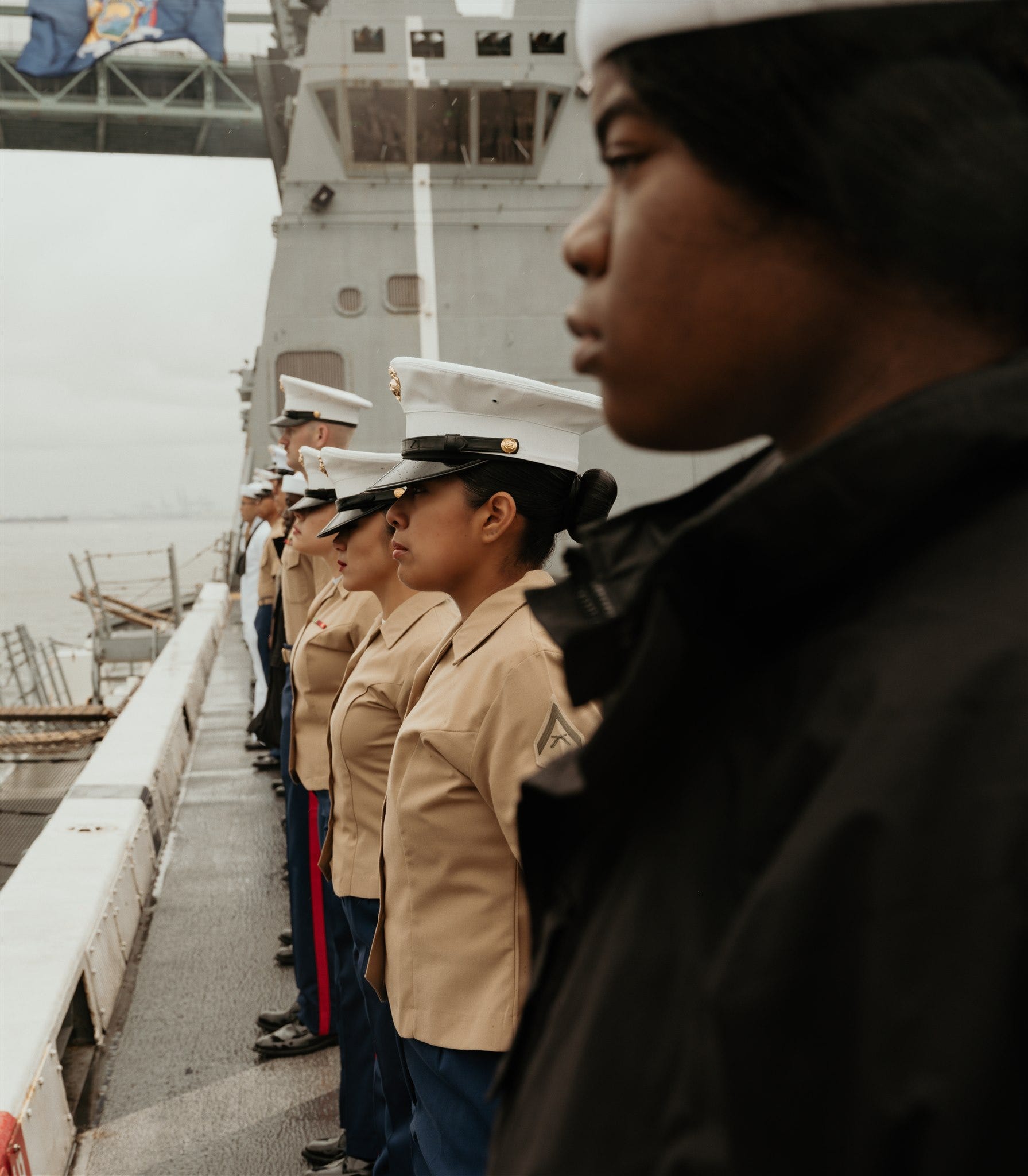
On the morning of our final destination, the rain comes and temperatures drop. It’s freezing. Everyone frets about staining their white uniforms, but the weather doesn’t dampen their excitement.
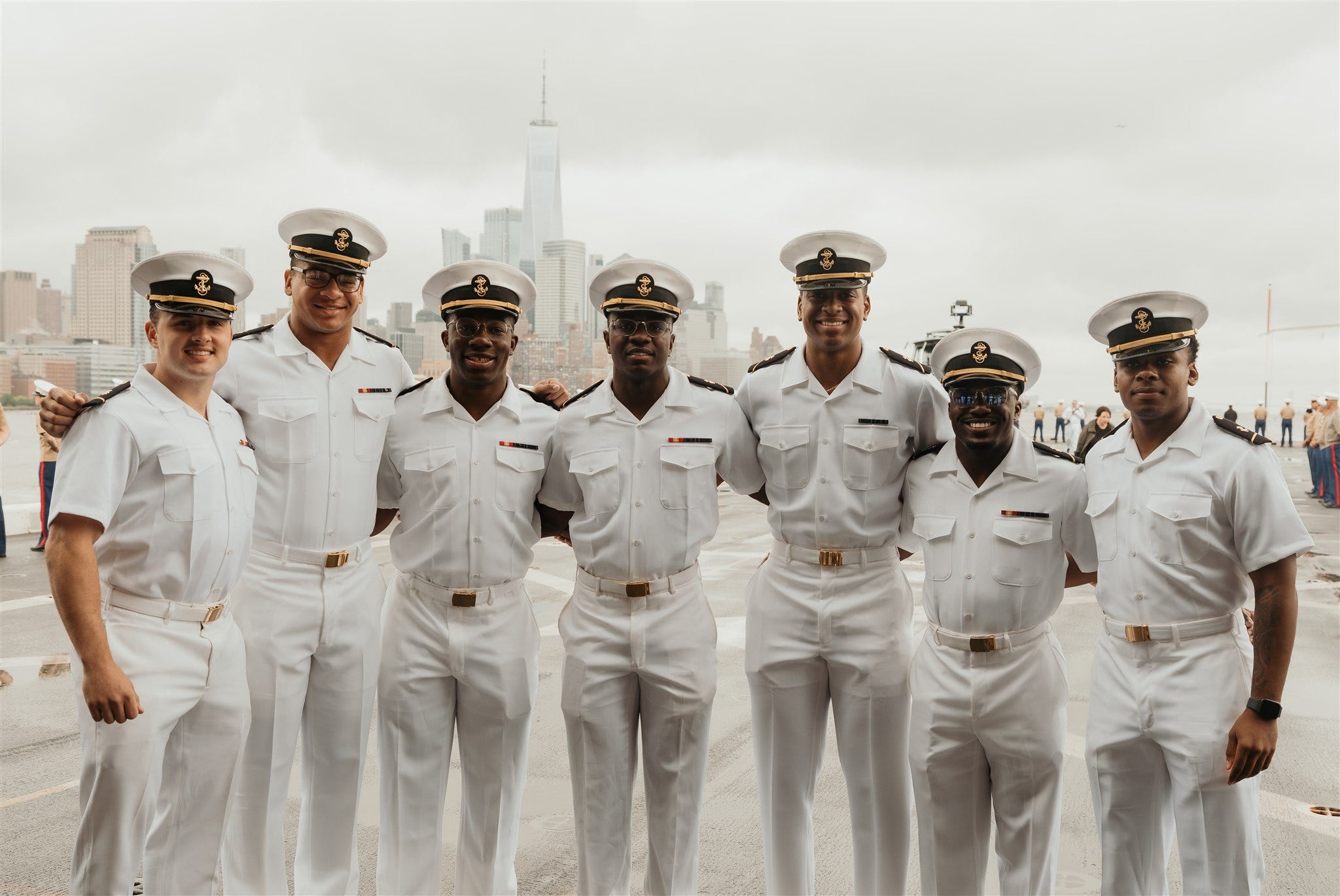
As we near the site, the crew forms a precise line to salute where the twin towers once stood. A gunshot salute cuts through the morning air, and we watch in silence as the ship slows. It feels like stepping into the center of a movie, amplified by such a surreal vantage point. Everything seems larger, expanding as we approach. Through the fog, New York’s skyline emerges.
Inside, news crews set up to interview decorated guests, while outside bridges are lined with people and children waving. Rain-smudged signs of thanks flutter in the wind. When the new Secretary of the Navy boards, a bell will ring before his title is announced.
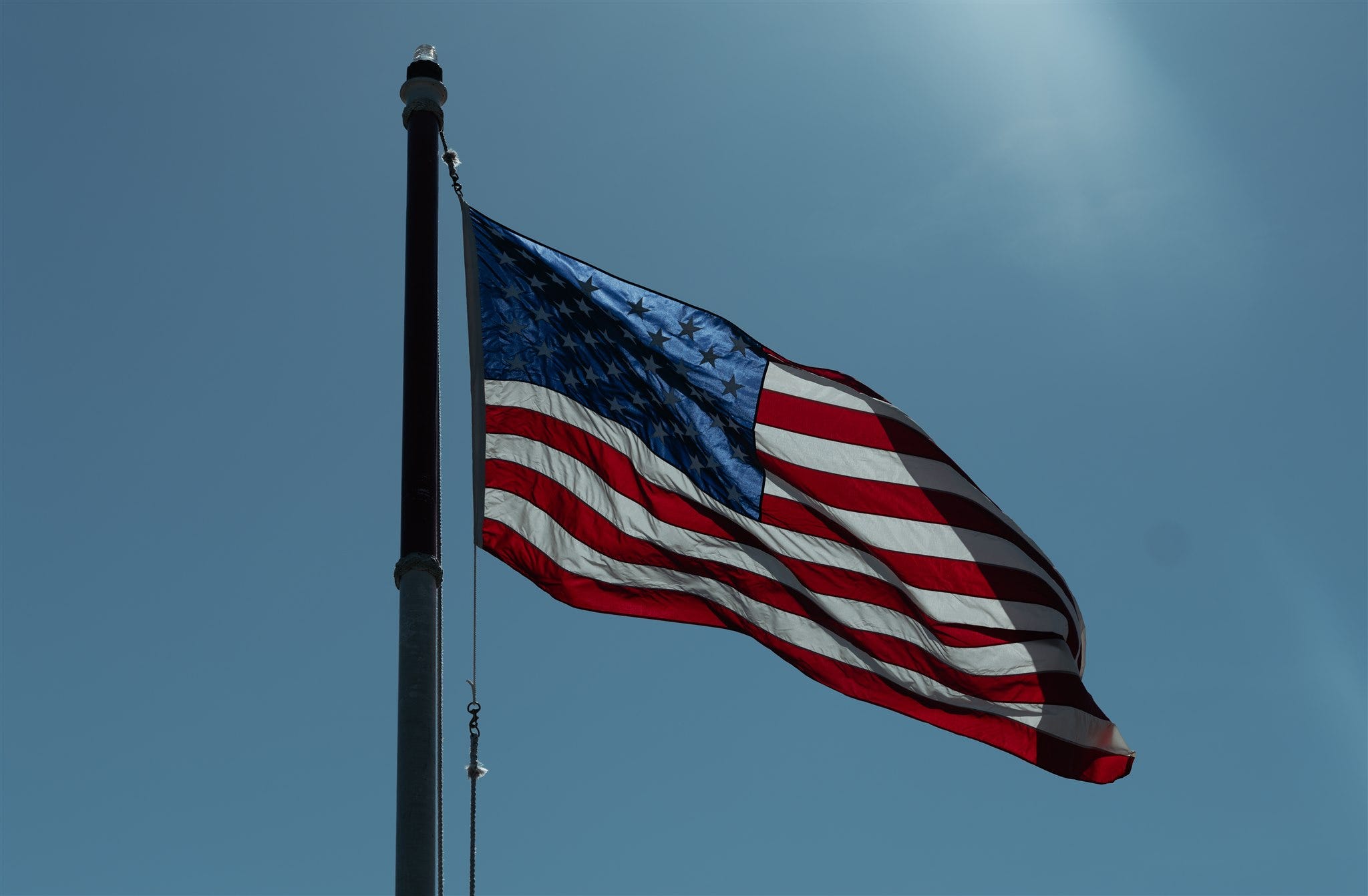
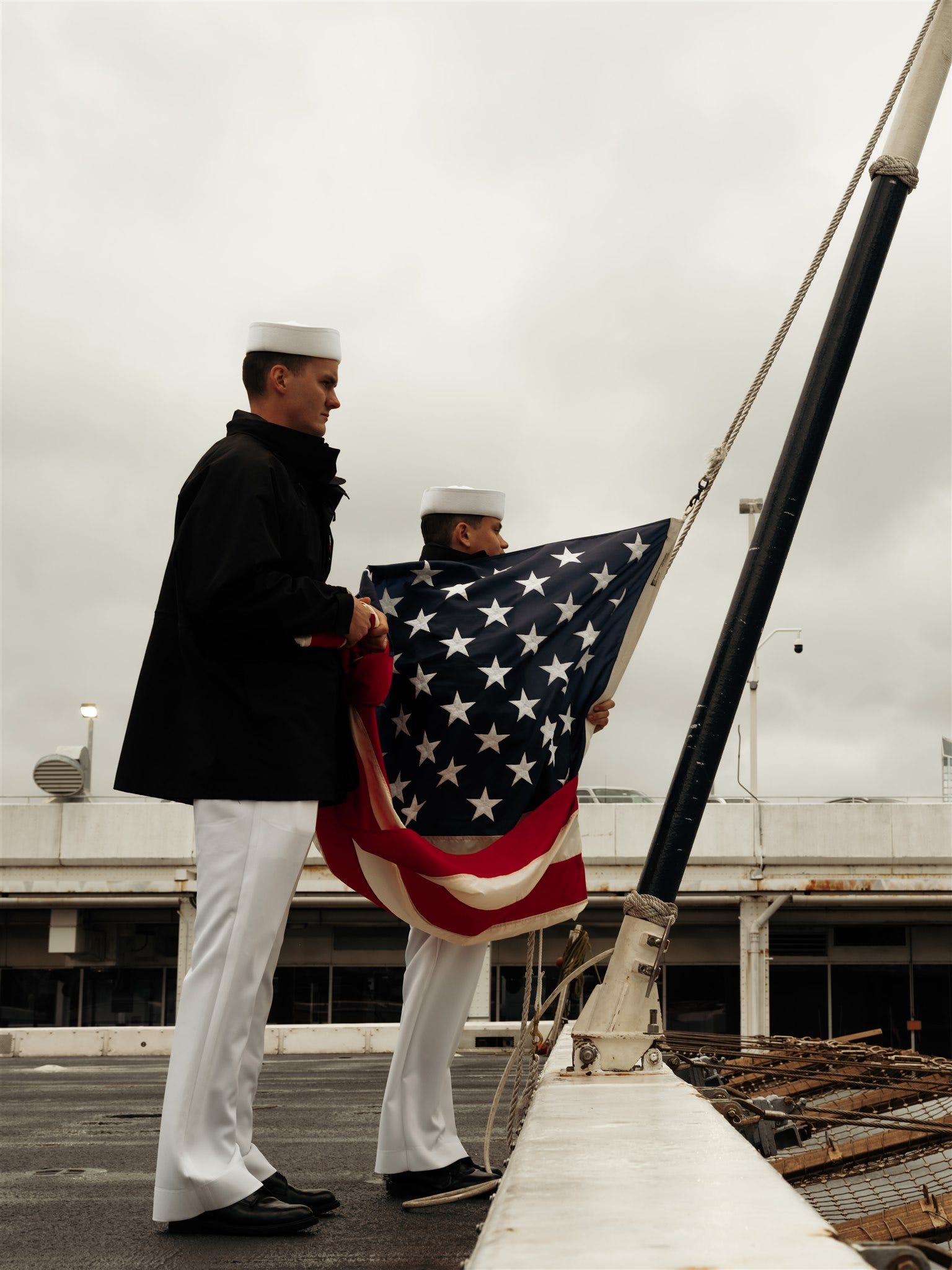
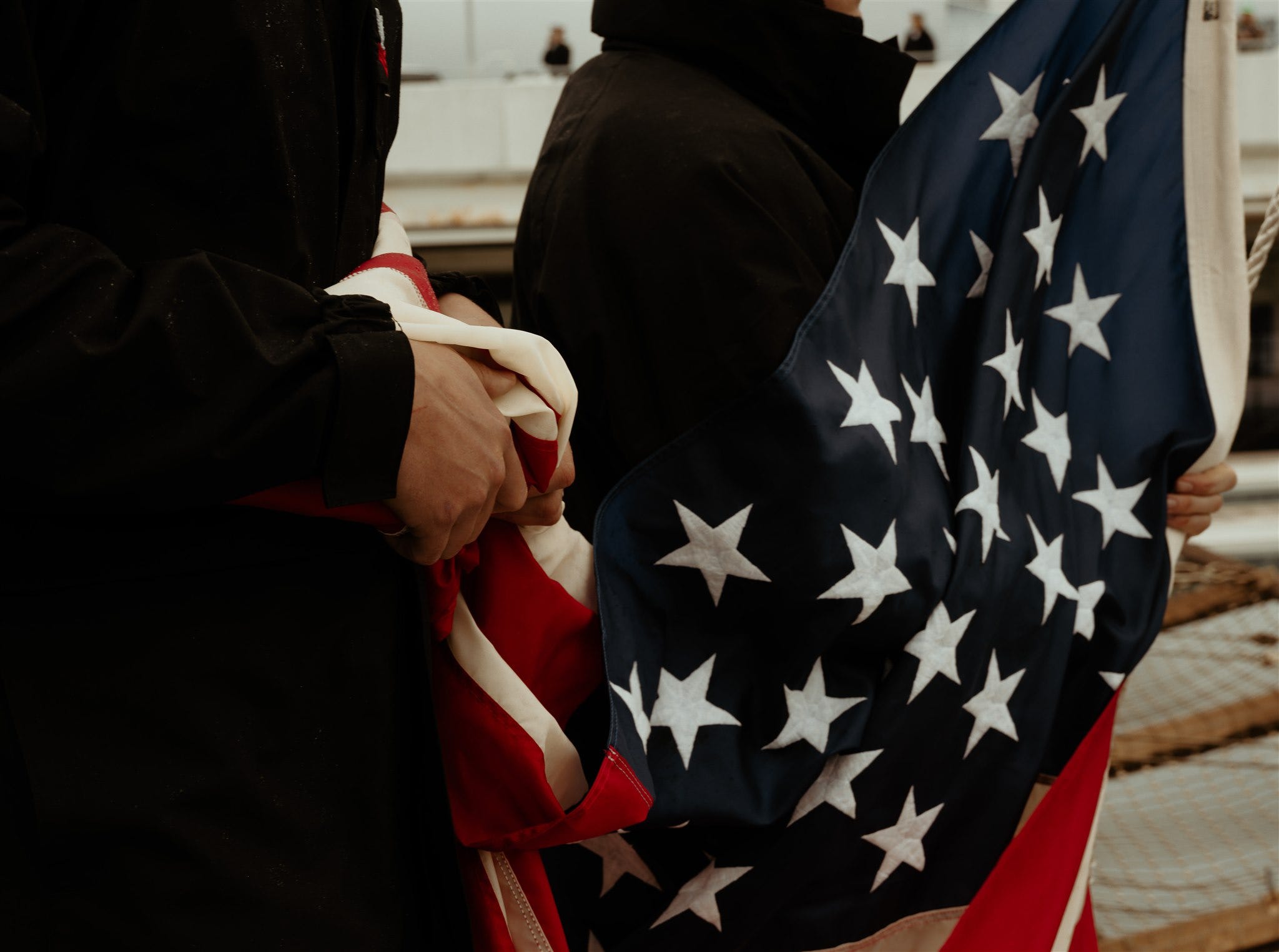
The crew prepares to dock. Once anchored, two sailors step forward to raise the flag. After the formalities, the crew begins to disperse, ready for a brief taste of freedom.
I ask one of the young men I befriended what he plans to do with his three days ashore. He has relatives waiting, meals with friends, a girl he knows, free tickets to a game.
I ask if he’s relieved to have internet again.
He smiles. “It’s hard out there sometimes. People forget about you when they can’t see you. It’s like the world just keeps going and you aren’t in it that way.” Coiling ropes at his feet with precise, deliberate movements, he straightens his hat before facing the crowd outside.
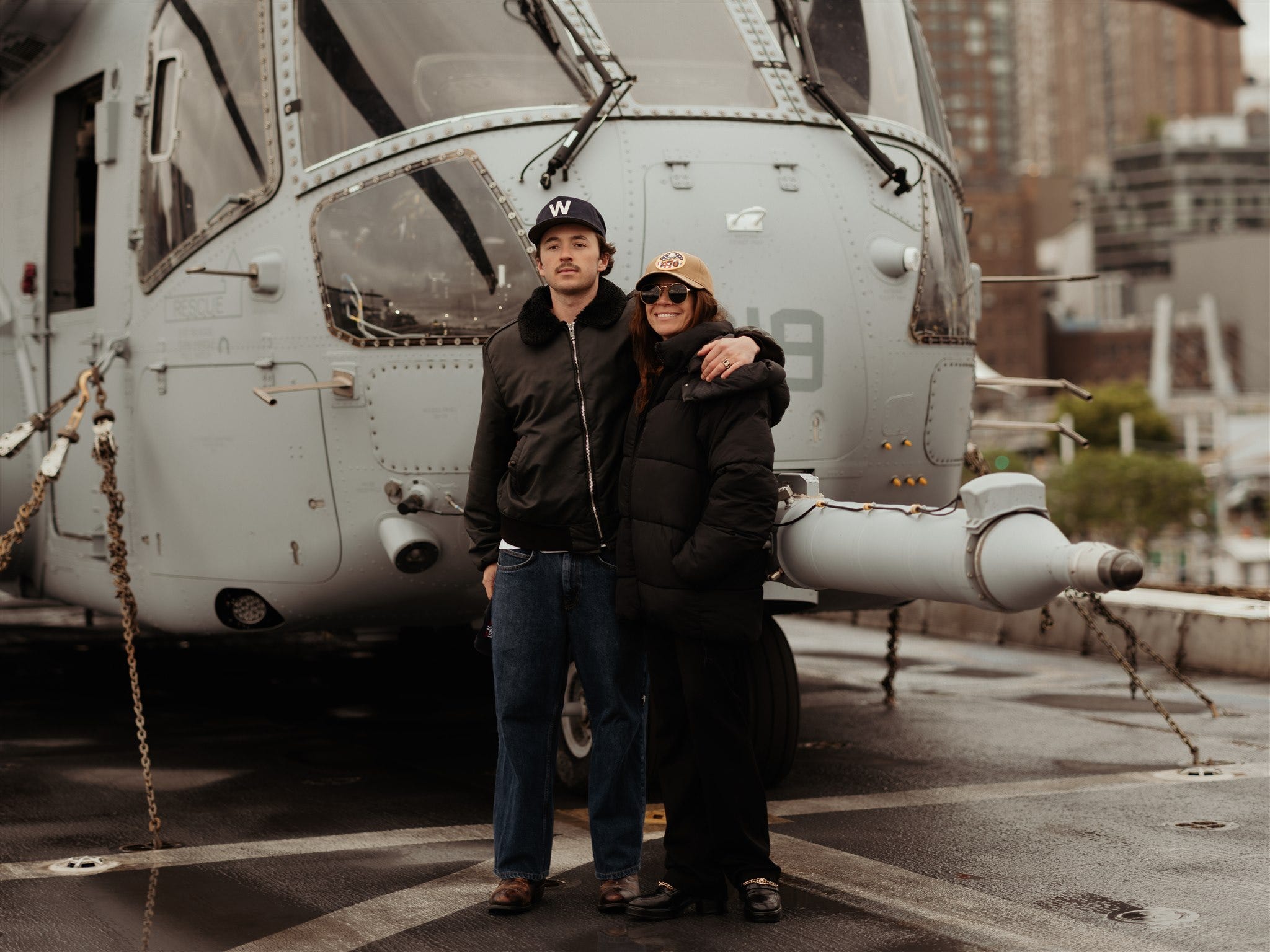
A slice of sunlight cuts through just as Arlo appears to retrieve me, asking me how it went.
“I’m glad I did it,” I tell him, hugging him tightly.
Superb photographs. It’s so wonderful to hear individual stories. Media has obsessed over the conglomerate and statistics instead of individual stories. It’s so important to be reminded of why people love America as individuals.
I really enjoyed this read! Thanks!