

RFK: Legacy
A new film by Sean Stone is a beautiful work of art that brings comfort to a troubled mind after a terrible week in America

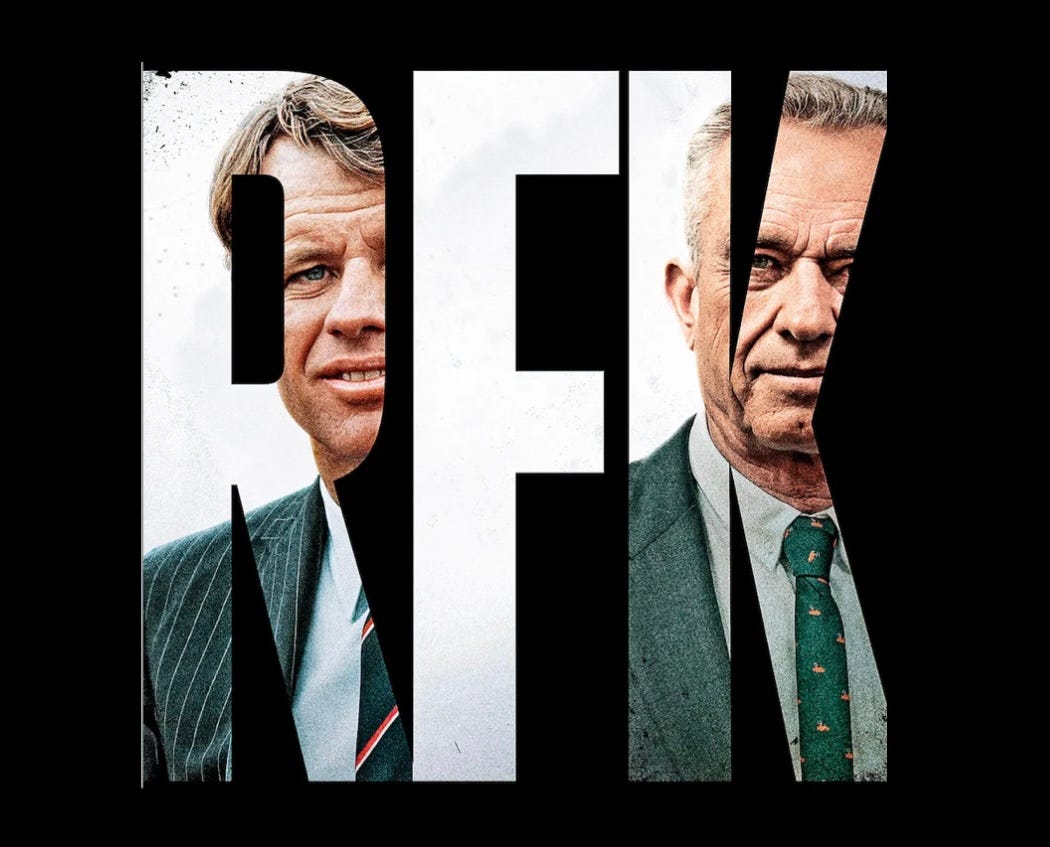
“I saw something in RFK Jr. that I had not seen in politicians before. He had a conviction that ran deep within and seemed to come from somewhere other than the typical political motives or donations.” — Aaron Everitt
Up Ahead: Shooter’s Texts Examined
Aaron Everitt
I can’t remember the first time I really listened to RFK Jr. My wife had been telling me about his podcasts and talks all through the Covid debacle, and on the odd occasion I would listen, I agreed with what he was saying. But ultimately, I had dismissed his leadership in the “cause” because of my predisposition to distrust the Kennedy family. I had grown up in a home where the front seats of our cars were engulfed in the humor and politics of Rush Limbaugh. The Kennedy family had always been dismissed by the conservative commentator, and in predictable American political fashion, I chose my team and sided with Limbaugh, dismissing anyone with the Kennedy name. Rush made fun of Ted Kennedy relentlessly and disagreed with his politics outright. The name was a poisoned brand in conservative politics and thinking. RFK Jr. was an “environmentalist wacko” and in Rush’s opinion, should be relegated to the sidelines by any serious person who wanted a smaller, less intrusive government. As is typically the case in America, once sides have been selected, the lines are drawn, and all listening stops. My case was no different.
By 2020, however, much in my mind had changed about the ideas behind conservatism and the version presented by Rush. I was tired of the endless foreign wars, the unmitigated corruption in government, and the strange reality that no matter who you elected, you always seemed to get the same outcomes in Washington. I dismissed the Red and Blue team rivalry as theater, and was willing to listen to anyone who would talk about the needs of the American people, over the needs of Wall Street or Washington.
“There are people in every time and every land who want to stop history in its tracks. They fear the future, mistrust the present, and invoke the security of a comfortable past which, in fact, never existed.” — Robert Kennedy
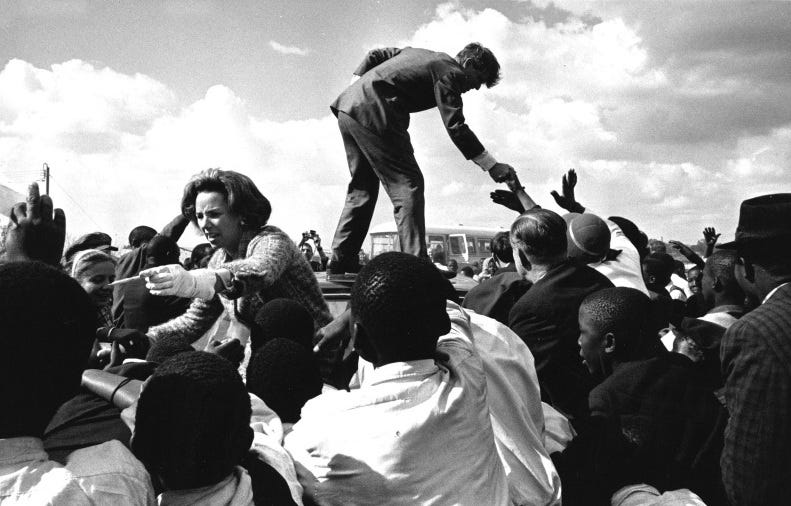
“Every generation inherits a world it never made; and, as it does so, it automatically becomes the trustee of that world for those who come after. In due course, each generation makes its own accounting to its children.” — Robert Kennedy
In the spring of 2023, a rumbling began to make its way through the political world about Robert F. Kennedy Jr. running for president. I was curious about his ambitions. He had become a very compelling figure to me because of his convictions about government overreach in the pandemic, and in my mind, the politics of the 2024 presidential race were looking strangely similar to 1968. History seems to always rhyme, and I remember learning about his father running against LBJ in the late 60s. It was widely accepted in historical commentary that RFK Sr.’s candidacy was the primary cause for the end of the Johnson presidency — a much-needed change in an era plagued by war, corruption, and an out-of-control government. By April of 2023, the rumors of Bobby Kennedy Jr.’s run for president seemed to be gaining a lot of momentum, and when he declared his intentions to seek the Democratic Party’s nomination at a speech in Boston, I became a convert to his brand of politics. His announcement was one of the great speeches of our time. His impassioned remembrance of his father and his instructions that he shared during his remarks were resonant with the firmness and conviction that only a son, who had been deeply observant of a father, could make. There was an emotion about what RFK Jr. thought about the country and what course it should be on that I had not heard from others. He wasn’t talking about marginal tax rates or the military’s needs; he was discussing how he had a responsibility to the people of this country.
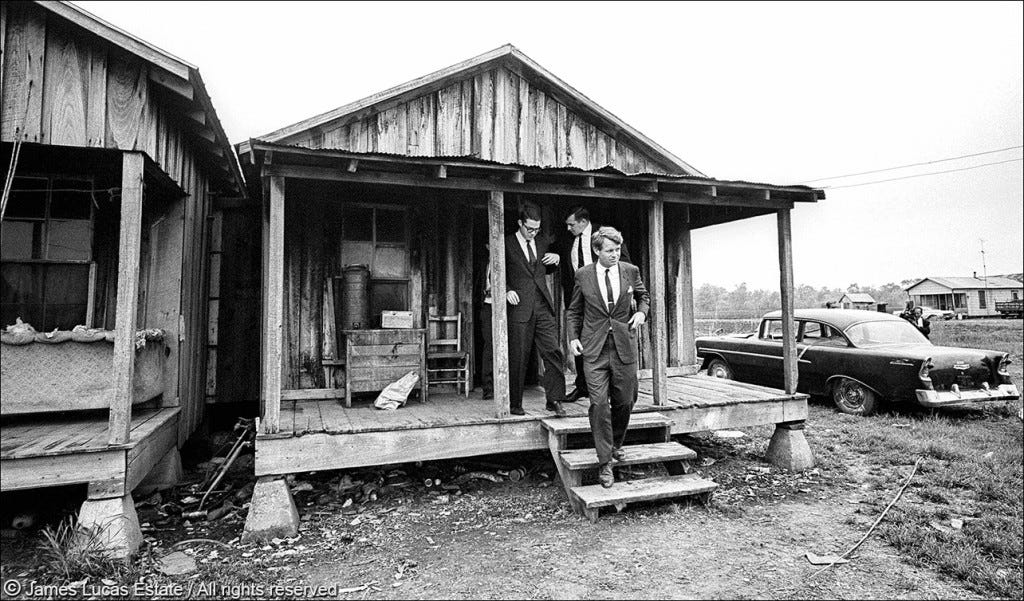
“My father, when he came back one time from the Delta, said, ‘I was in a tar-paper shack today that was smaller than this dining room, and there were two families living there. The children get one meal a day, and when you get older, I want you to help those people.’ And when we would go into Appalachia or Southeast Washington, he would say, ‘These are your people, these are Kennedy people.’
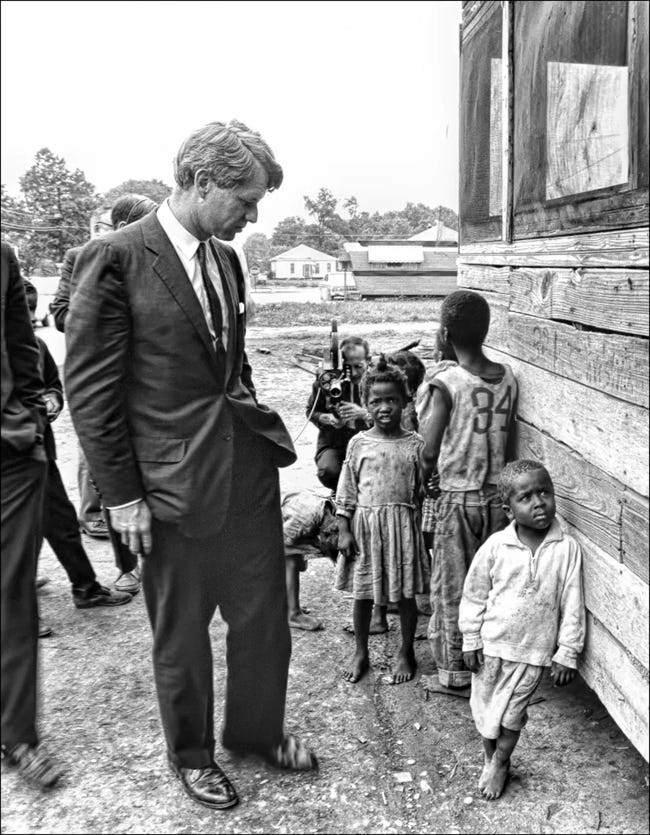
He said, ‘The other people, the big shots, the corporations, the millionaires don’t need the Kennedys. They have lobbyists, they have PR firms, they have lawyers.’ And he said, ‘These are your people, and these are the people you need to spend your life helping.’” — RFK JR.
From the minute he said those words, I was completely hooked. I dove into the campaign as a volunteer. I wrote prolifically about his candidacy and made a hundred video pieces about why RFK Jr. was the man for the moment. So when Jessica texted me to see if I had interest in screening Sean Stone’s latest movie, RFK: Legacy, and writing about it, I responded immediately with an emphatic, “Yes!”
I sat down this past weekend, after a long and terrible series of events in America, to watch this incredible movie. It seemed so timely to me. Our moment is clouded by unspeakable tragedy and political division unknown in generations. I have been markedly bothered by what has become of our ability as people to discuss the problems of our time, and how easily people are hypnotized by media and believe whatever comes their way on their phones. The algorithmic doom loop of belief reinforcement has created an atmosphere ripe for the kind of tragedy that was witnessed in Utah this past Wednesday. The Kennedy campaign was so attractive to me because I believed what RFK Jr. said about healing the divide between us. His discussions throughout the campaign and his ultimate uniting with President Trump were incredibly heroic acts to witness. I saw something in RFK Jr. that I had not seen in politicians before. He had a conviction that ran deep within and seemed to come from somewhere other than the typical political motives or donations.
RFK: LEGACY
“Do you think there’s a Kennedy curse?
Click Here to Watch
So, with all of that said, I am obviously predisposed towards liking a film about a man who has become a modern hero to me. But despite my clear bias, this is truly a wonderful piece of art. The storytelling is phenomenal. The editing and filming of the documentary are exemplary. There are subtle moves that only a great filmmaker would use, and they work amazingly in this marvelous film. The connection that Mr. Stone and his team make between father and son is remarkable. There are beautiful, rarely seen, archival clips of RFK Jr. sitting in mesmerized fixation, watching his father as he speaks about the future of a country torn apart by war and an autocratic government. In so many shots, you can almost see the words of a father being emblazoned on the mind of his son. With each unfolding segment of the documentary, the similarities between a dad and his child become increasingly inextricable from one another.
The mainstream media, and even the Kennedy family, have made a tremendous amount of noise about how far RFK Jr. has strayed from his father’s ambitions and legacy, but Mr. Stone takes on those accusations and puts them squarely where they belong. As the timelines flash back and forth between the 60s and RFK Jr.’s own moments in history, the words and the philosophies of both men are clearly bound together. I had the chance to talk with Sean Stone about the film and asked him what he hoped people would take away from watching it.
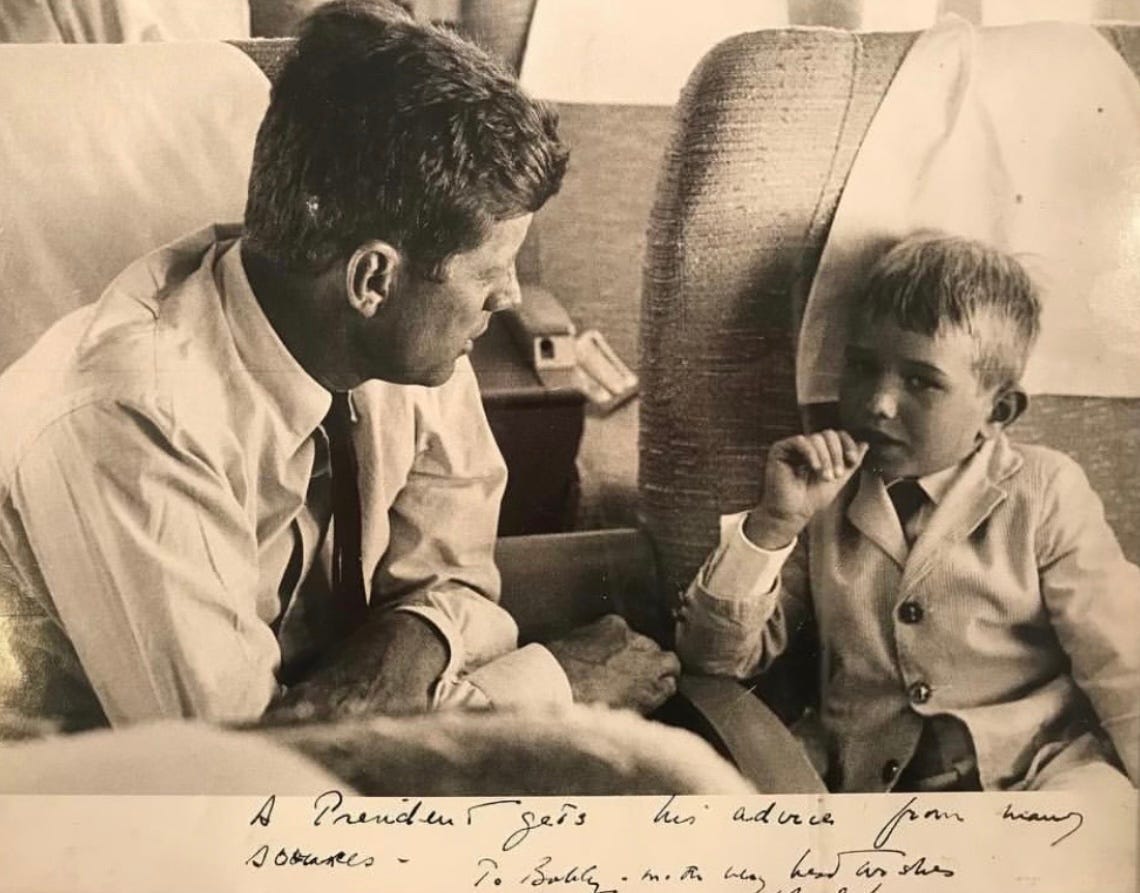
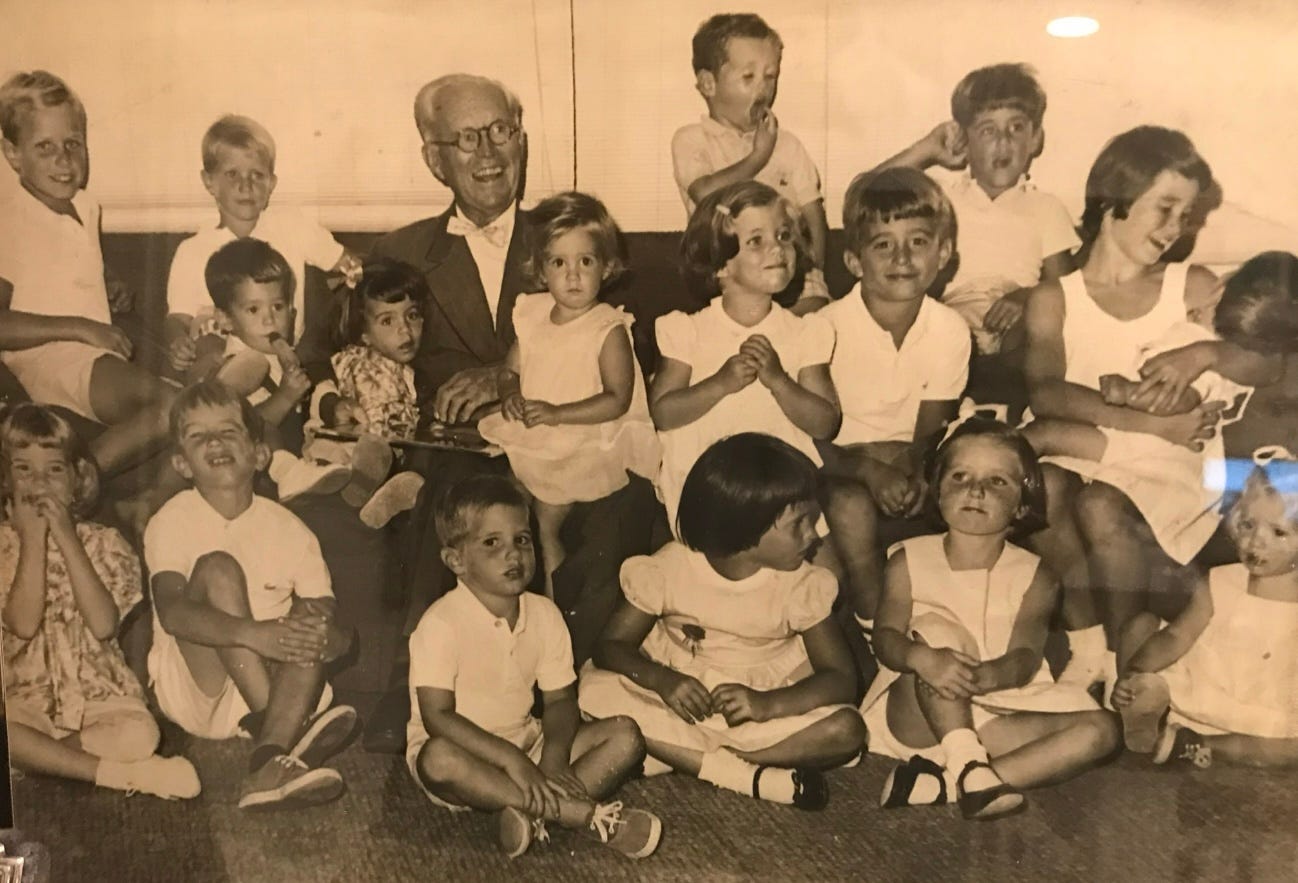
“This film isn’t about focusing on these two men’s faults. No one is claiming them to be saints, but it is intended to focus on the heroic things they have done for the people of this country. It is intended to showcase what to admire in both of them instead of what to disparage. What telling the stories of both men does is help uplift the ideals of what politicians could do - to appeal to the better angels of what those who govern us might be capable of.”
During all of my time volunteering for the Kennedy campaign, I struggled to understand what had happened to RFK Jr. in the circles of the elite. He had seemingly been a hero to so many of the old political left. He had taken on the boogiemen like Monsanto and General Electric. His work on the Hudson was landscape-altering and had changed the river from one of lifelessness to a robust waterway for fishing, commerce, and recreation. He was the champion for so many, and yet he could not break through to the establishment voters in the Democratic Party. He had gone from a left-wing hero to a pariah in an inconceivably short time. All through the campaign, he was parodied in the press for his escapades with bears in Central Park and brain worms, and no matter how much he spoke about the things most Americans cared about, he was dismissed and denigrated by the media. Mr. Stone’s film takes aim at this disturbing character assassination and showcases the drive, mission, and love for the American people that RFK Jr. is consumed by. I asked Sean why he thought that Mr. Kennedy had been so maligned by the powerful. I told him that I struggled to understand it, especially since others have tried to speak out in a similar manner in the past and had suffered far less consequence.
“The most unifying theme for all Americans is that we all love our children. If we all unite around that issue, now we can finally give them the protection, the health, and the future that they deserve". — RFK JR.
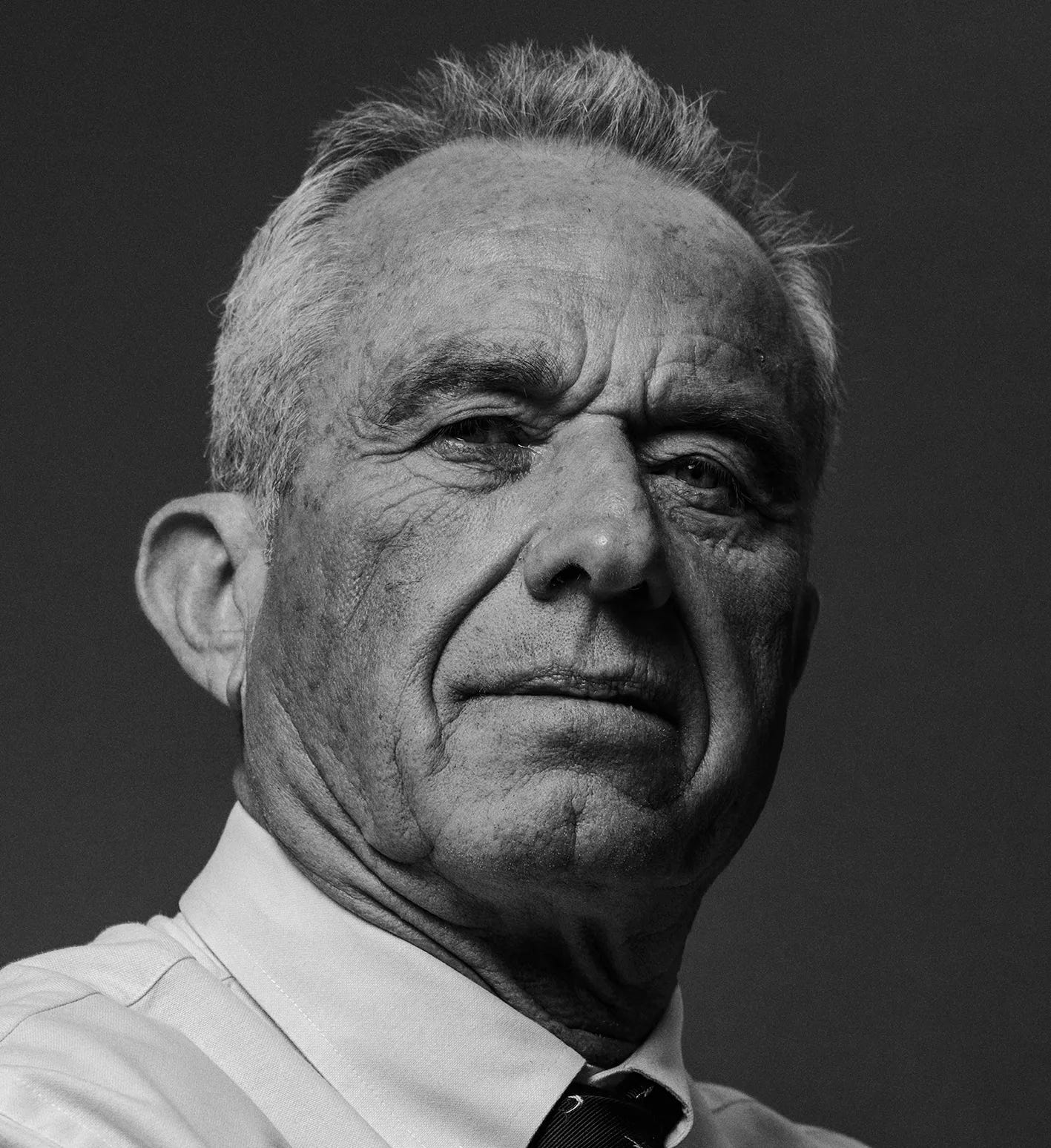
“It’s one thing for people to throw stones from the outside. They are easily dismissed. But people who are considered insiders who blow the whistle or question sacred cows are considered traitors to the system. We live in a social construct where, in polite society, you don’t air dirty secrets. There’s a certain understanding that if you have an insider’s privilege and use that access to call out corruption, you have betrayed your class. To those inside the circle, if you use that granted access and betray them, you are in the last circle of Dante’s hell.”
The movie has wonderful interviews with RFK assassination expert Lisa Pease and 60s historian David Talbot, who both lend deep credibility to the assertions that the film represents about the RFK assassination and 1960s era political history. The film and the conversations within it feel uncannily close to the stories we are witnessing as Americans. We have been forced, unfortunately, to discuss these unthinkable topics again about how people who try to speak out are often the victims of politically motivated tragedy.
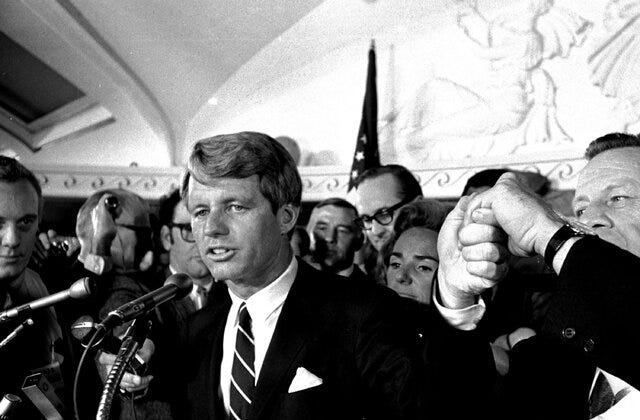
The examination of the RFK assassination is one of the best breakdowns of that terrible night in Los Angeles that has been put to film. As Mr. Stone retold the story of RFK Sr.’s untimely end, he captured, through flashbacks, those initial days in Washington as he worked as JFK’s Attorney General and how his run for the presidency had suffered the ultimate consequence that the state can place upon a man: death. The film tells the story of how it was Bobby who had been Jack’s most trusted ally, and it revisits the Cuban Missile Crisis and substantiates the claim that it was Bobby whom Jack trusted enough to avoid nuclear armageddon. Stone’s movie weaves in the struggles that Bobby faced mentally after the JFK murder, and how his goal of returning to Washington to expose the truth about his brother’s horrific death motivated his political savviness and his wandering in political isolation after his resignation as Attorney General. It takes a hard look at the evidence of the last night of RFK Sr.’s life at the Ambassador Hotel after winning the California primary and how there is far more to the story then presented by the government.
As I watched, I couldn’t help but be reminded of the hyperventilating voices that have called for more radical and immediate changes in the industries that RFK Jr. is battling now in Washington, and how his steady and tactical work is paying off. It was another indication that Bobby Jr. was watching intently as his father navigated the challenging waters of the politics of his time, and how Bobby uses these imparted skills in his current role with the Trump administration.
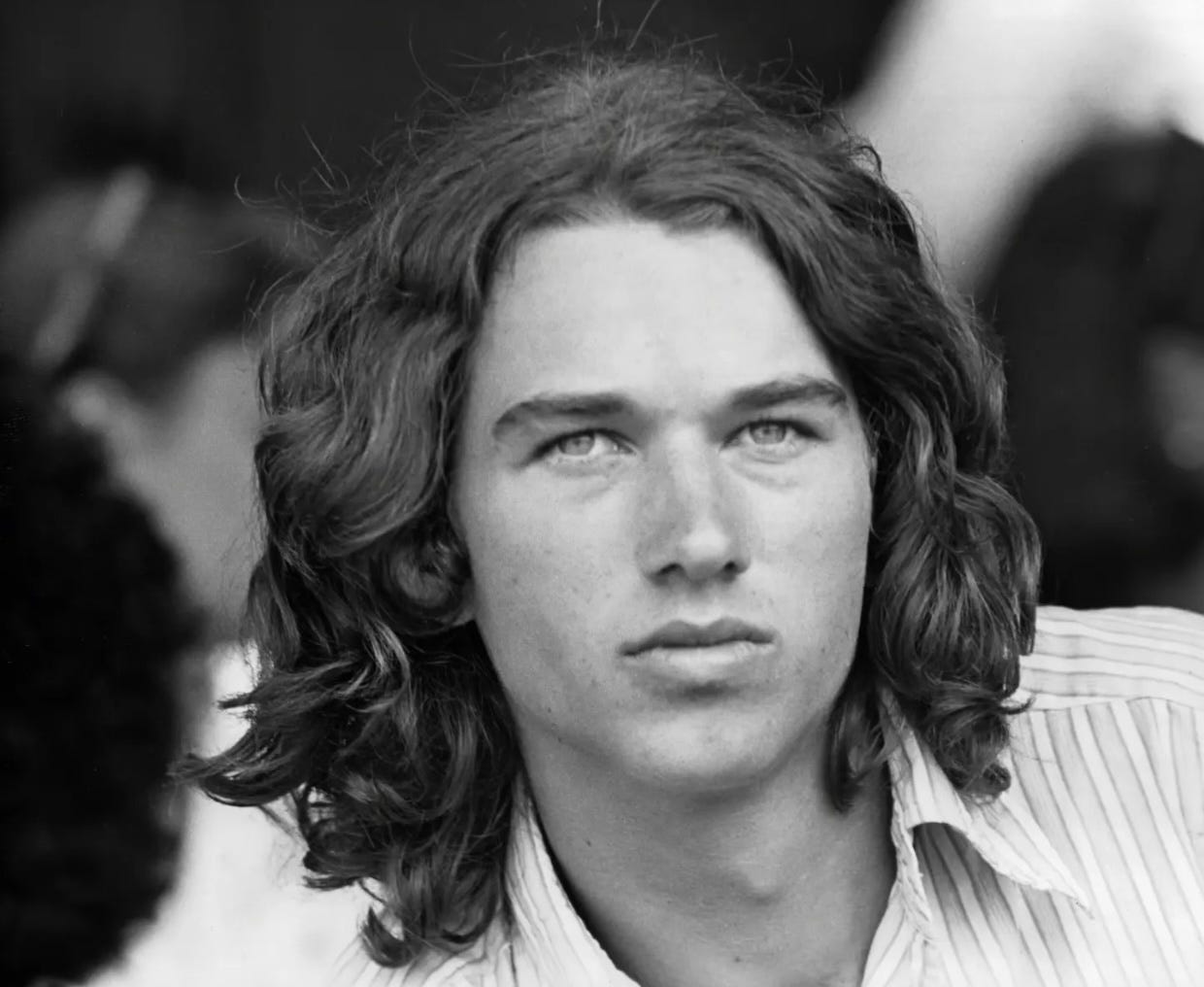
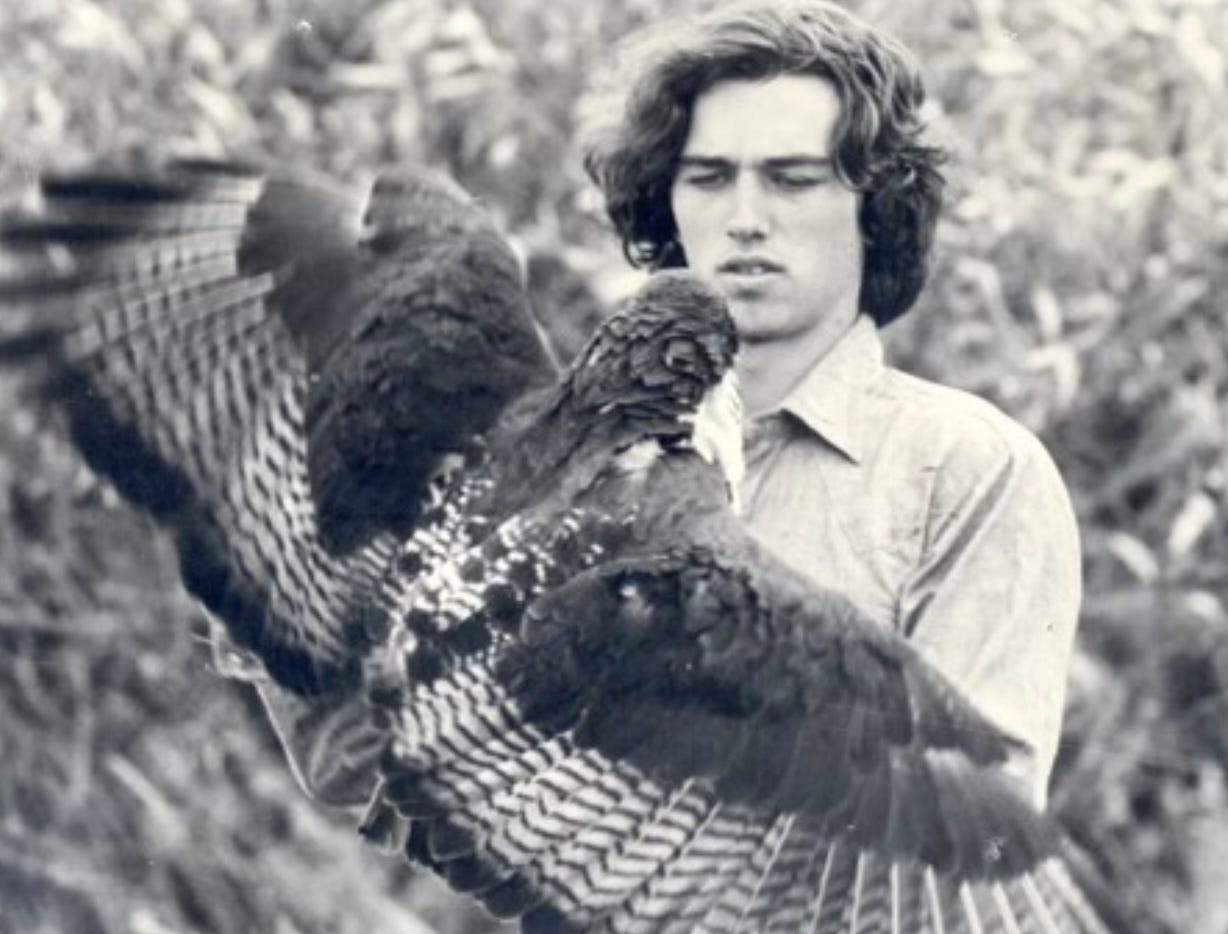
Washington is famous for its ability to ruin the lives of change agents. People who have come too close to the truth have ultimately been silenced by propaganda or by force. Our country needs good people who are willing to say the quiet parts out loud. Sadly, in modern America, that truth-telling comes at a heavy cost. Charlie Kirk’s assassination this past week is a reminder of why speaking up and changing minds is a dangerous endeavor. RFK Jr. and President Trump are in the thick of dark enterprises that have strong motivations to keep the government always headed in the same trajectory. Mr. Stone reminds us, through his masterful storytelling, why truth tellers are more important now than ever in America, and why RFK Jr. has become a national treasure for his boldness.
The film is an emotional experience. I was particularly drawn to the parallel of RFK Sr. in his darkest times after his brother’s assassination, and RFK Jr.’s terrible struggles with addiction after his own father’s passing. There was something so heartbreaking about watching both men struggle to find their way in those dark nights of their souls. The human experience is tremendously complicated, and for both father and son, their journeys through hardship seemed to eventually stiffen their resolve about doing the right thing. Mr. Stone spoke of the strong resistance that RFK Jr. is facing today as he takes on the entrenched interests that run the Washington machine, and how it seems that Mr. Kennedy is forging ahead despite the political or personal troubles it may cause him.
“He’s a contemporary Martin Luther who is taking on our era’s version of the Catholic Church. The medical industry treats vaccines as modern-day indulgences that require their use in order to be granted access to their heaven.”
In hindsight, it must have been incredibly intimidating for RFK Sr. to stand up and take on the forces that killed his brother and the military complex that hated both of them, yet he did it because it was the right thing to do. He understood the costs, but did it anyway. Similarly, every time that RFK Jr. heads to Congress or is maligned by his former staffers at one of the divisions he oversees, the political powers and mercantile interests make themselves a foreboding presence that hangs as a cloud over his work. Yet both men, a generation apart, seemingly have the same mission to see the country they love transformed through the dismantling of those deeply corrupt powers.
There is no doubt that RFK Sr. is the primary influence on his son, and this film delivers a poignant and artistic showcase of that reality. RFK Jr.’s dedication and resolve to expose corruption and harm in America during our time has a straight line from his father’s own life and work. The film is outstanding and should be seen by anyone who loves twentieth-century history, the Kennedy story, and the modern political realignment unfolding in America today, which was, in part, started by RFK Jr. and Donald Trump. Our country needs more storytellers and history raconteurs. Mr. Stone and his team have done something marvelous in this film by doing both exceptionally well.
"What has not had a chance is a unity government headed by an independent president beholden to no party... I know people are ready for it because everywhere I go, people tell me they're sick and tired of the division and they're sick of the hatred". — RFK JR.
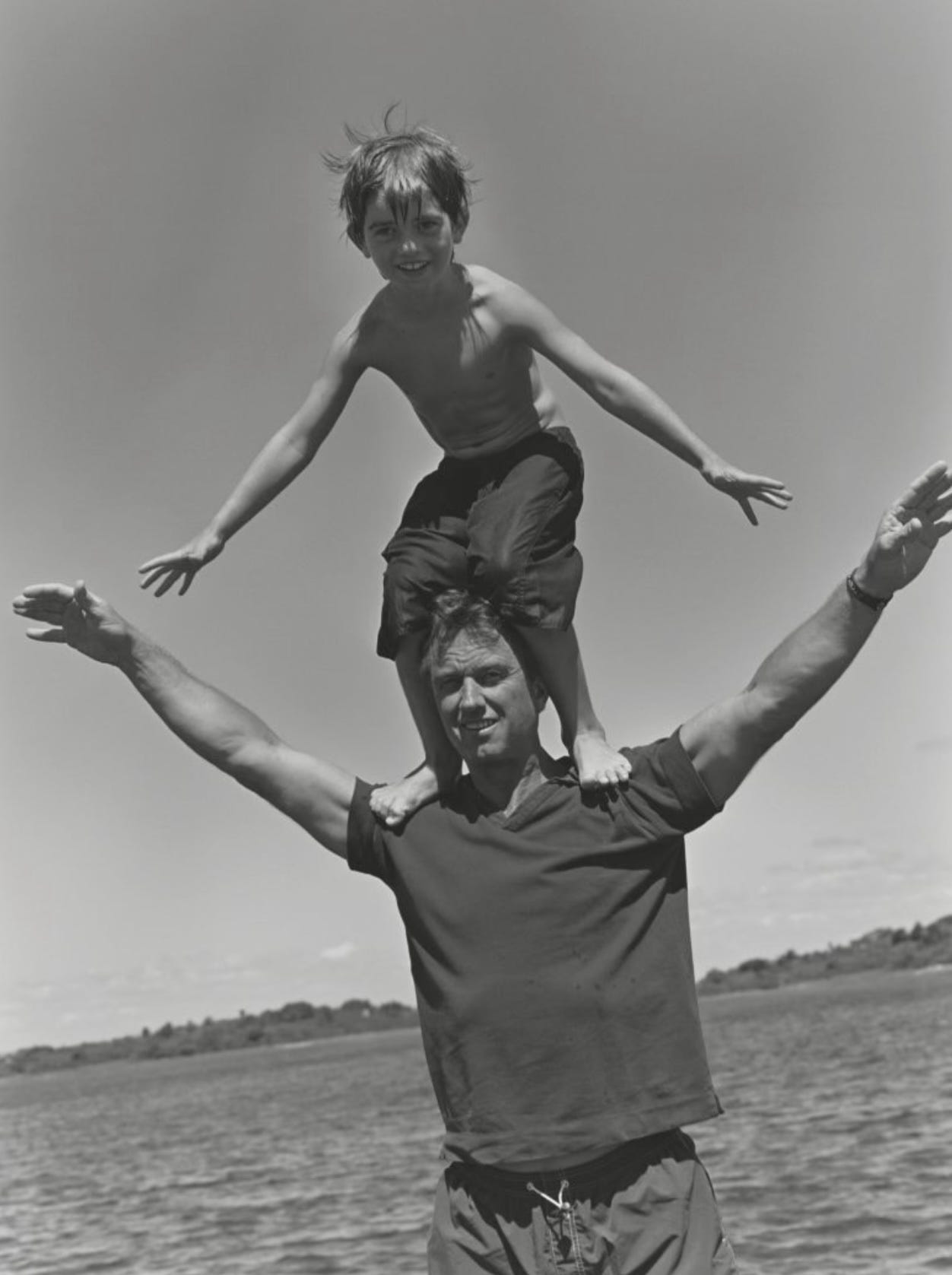

I met RFK Jr. once, and it galvanized my support of him permanently. He is a genuine person who, seemed when we met, to want to listen to my opinions about our country. That is unique in American politics. I, unfortunately, have never met Charlie Kirk, but his resonance with people had that same quality of genuineness and intellectual capability to think through hard questions. As I sat on my couch watching this film, while wrestling with mental images of Charlie Kirk’s death, his grieving wife, and the shock that has been thrust upon so many of us because of this recent tragedy, Stone’s storytelling and recollection of other political figures who were also cut down because of their courage, helped me deal with the darker side of American politics. The movie also gave me hope for success against those forces by Mr. Kennedy and the team in Washington. Seeing RFK Jr. speak about his father and the loss he felt during that time made me realize that the process of grieving is difficult, but it is a road that has been walked before in America. Somehow, in that realization, I found a lot of gratitude for bold voices and a little bit of comfort from our terrible week. RFK Jr.’s speech last night at the Kirk memorial at the Kennedy Center seemed to echo the overtones contained within Mr. Stone’s film, and why I found watching it so cathartic in such a tragic moment for our country.
“I asked my mother, after my brother David died, whether the emptiness left behind ever grew smaller. She answered: ‘No, it never gets any smaller. But our job is to build ourselves bigger around the hole. It is our job to take the best virtues and character traits of the person that we lost, and integrate them into our own lives through discipline and restraint; in that process, we both enlarge ourselves and make the hole proportionally smaller, and we also give that person a kind of immortality because the best parts of them are now living on in us.’” —Robert F. Kennedy Jr.
The film is currently available through Angel Studios and can be streamed with a membership.
 | A guest post by
|
What a read. Thanks Aaron. “People who come too close to the truth are silenced by propaganda or by force “ this line says it all. I’ve admired RFK jr long before Covid or presidency. He is just a man with a good heart who follows through on what he believes, and the simplicity of that stands out so loudly in a system that now elevates the exact opposite.
Thank you Aaron for bringing me back to the RFKJr I fell in love when he was running for President. Who I endured attacks for from family and friends and strangers when I asked the if they wanted to sign the ballot on my clipboard to help him get the signatures he needed. I got to meet him and take a selfie one night when I drove by myself to a scary neighborhood in Brooklyn. The minute I found my way to the front of the venue , I was immediately met with people who were on the same page as me. When it was finally my turn for my selfie, I said Bobby, my family is mad at me and I’ve lost friends over my support for you. He took his arm off my shoulder and turned to face me. He said, I know, we all have, but you know what? You are going to make new friends! I have over 40 selfies from that night. Your beautiful article made me remember why it’s worth enduring the clown show senate hearings to support this beautiful man.