

FACE TO FACE WITH STEVE HILTON
On the eve of the California primary, a Q&A with former political strategist for UK turned Silicon Valley entrepreneur and Fox News host Steve Hilton

Last Weekend,

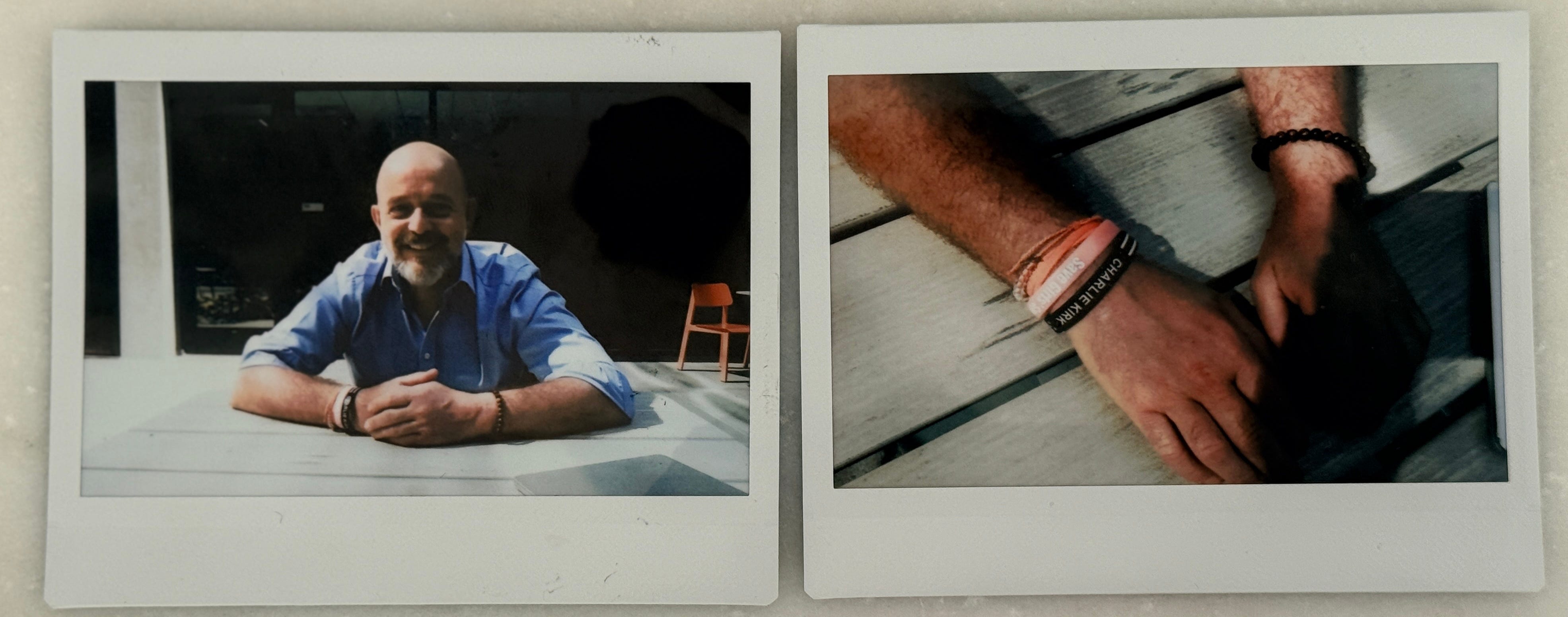

Last weekend, we took a road trip and drove the coast to San Luis Obispo to sit at a table in the sun with Steve Hilton, who is currently running for governor of California, ahead of his town hall at Cal Poly University. He is as energetic and charming as I’d been warned, candid, tan, steel-eyed, and according to him—a few pounds heavier than he prefers due to a hectic campaign schedule interrupting his more rigid exercise and dietary regimens.
AHEAD: FACE TO FACE WITH SHERIFF CHAD BIANCO
Over the course of an hour, we sat and talked through his background—growing up with Hungarian immigrant parents, his Oxford stint, and his almost accidental path from London advertising and political consulting to a new life in California, where family and politics converged.
We also dug into where he sees California heading: homelessness, affordability, and the daily pressure points weighing on people across the state.
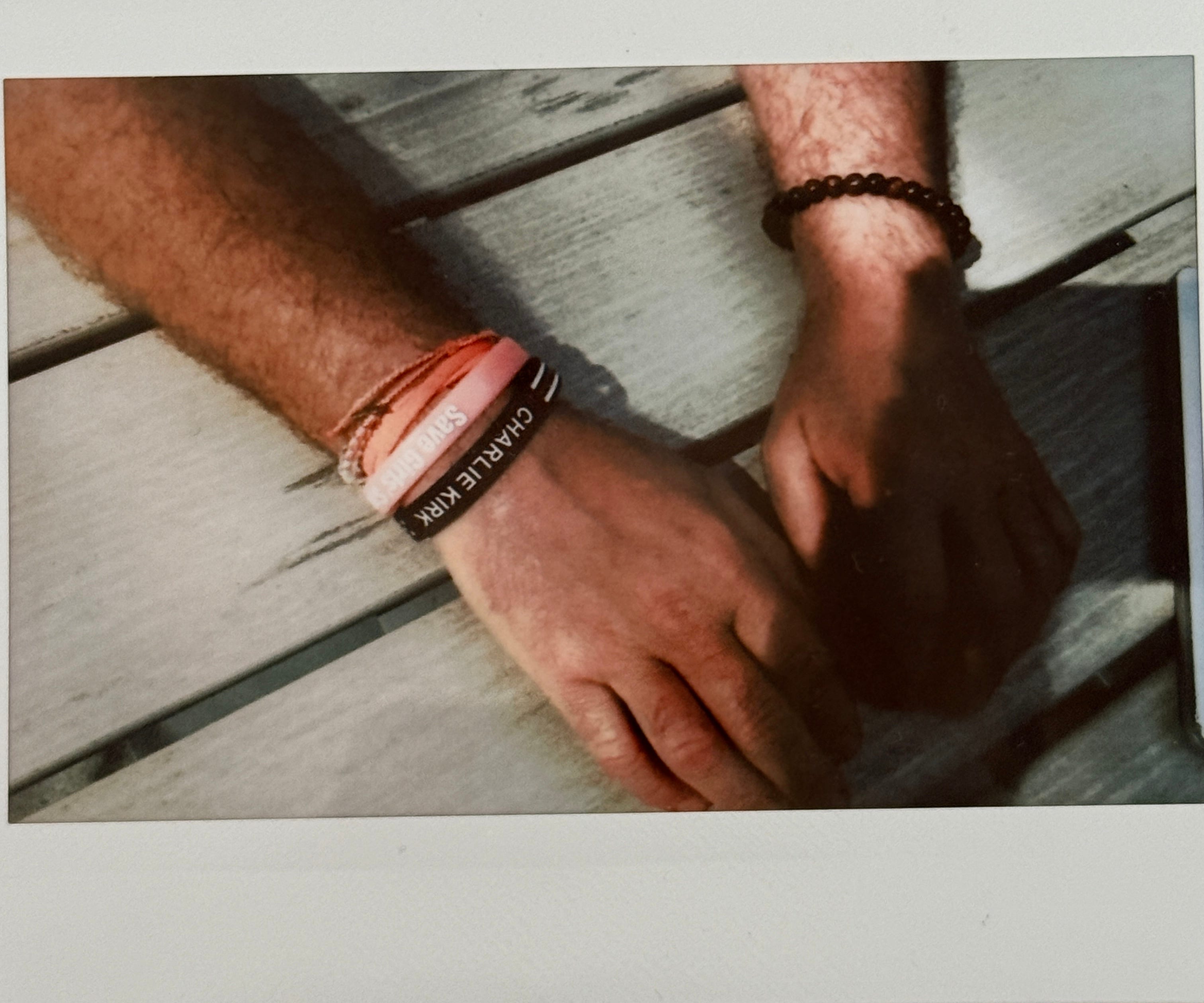
Included are a handful of hot takes on Trump and Elon Musk, Princess Kate, Nigel Farage, and Charlie Kirk.
Donald Trump recently said that energy is what drives success. People have big ideas all the time, but not the energy required to execute them.
The California Post offered this assessment of Hilton: “He has the ideas, the energy, and the optimism to turn California around. That is why The California Post is endorsing him for governor. Hilton has spent years analyzing California’s challenges and coming up with solutions.”
The question now is whether the President’s endorsement helps or hurts in a blue state—and whether Californians are ready to hand the keys to Sacramento to a governor who still carries an English accent.
This interview have been condensed for clarity — audio clips are included
JRK: DO YOU HAVE A MORNING ROUTINE?
HILTON: Well, it’s much too… okay, I’m going to give you the ideal, and then I’m going to give you reality.
The ideal used to be before I became a candidate. So ideal is not early— but not too early. I want to say no earlier than six. I really don’t like getting up early. I felt quite embarrassed saying that once—we were talking about it in the Central Valley with farmers, and I said, “Not too early,” and these people get up at like… very early, you know what I mean. So, not too early.
And ideal is a stretching routine. That’s what I’m trying to implement. I’ve got it down to about 20 minutes for the full thing—so not long, not some massive yoga commitment. But I can do an express version in five minutes, just very basic. That’s a big deal, right?
So that would be ideal. Then a cup of tea—hot tea, black tea with milk. And then get on with the day. That’s it, really.
Ideal breakfast—if we’re doing perfect: two boiled eggs from our chickens.
Q. HOW DO YOU KEEP YOUR ENERGY UP ON THE CAMPAIGN TRAIL?
HILTON: I actually don’t know. It’s very… I think I just really enjoy it. And I’m not just saying that as a cliché—it’s genuinely fun for me.
My wife is the one who’s really doing the work at home. She’s very involved and enthusiastic about that. She’s also got a full-time job, and she’s at home with two teenage sons.
We used to split things—well, I don’t want to say equally, she’d probably laugh at that—but I did my bit around the house. For example, I typically did the cooking. So I’m not there now most of the time. And I really do enjoy what I’m doing, but
I’m very aware it’s her incredible commitment to keeping the show on the road at home that enables me to do it.
AUDIO: HIS WIFE RACHEL
Q. HOW LONG HAVE YOU BEEN MARRIED?
HILTON: Just over 18 years.
Q. WHAT DO YOU LOVE ABOUT HER?
HILTON: She’s just really… she’s incredibly cool. She’s a badass. I think that’s the right word.
Q. I’D LOVE TO KNOW A LITTLE ABOUT YOUR HOUSEHOLD GROWING UP—SPECIFICALLY YOUR MOTHER.
HILTON: I’m Hungarian. My parents are Hungarian. My stepfather too. Immigrants, exactly. My parents split up when I was young. And then my mother remarried… well, they never got married, but they’ve basically been together ever since.
So there was a stepfather in your life from?
Yes, from early on. My dad left when I don’t actually remember him being there. I only really remember him as someone I’d visit on holidays because he went back to Hungary.
And so where were you living with your mum?
In a town in England called Brighton, on the south coast.
AUDIO: HILTON’S MOTHER | THE QUEEN
How many siblings?
I didn’t have any full siblings. I had three stepbrothers from my stepfather, and one half sister. So four in total, but she wasn’t really there in that day-to-day sense. It was a very regular working-class, aspirational immigrant setup.
Was your mother supportive of your interests growing up?
She was pretty cool. Very hands off. Very warm and loving. But she wasn’t the kind of person saying, “You’ve got to do your homework,” because I just did it anyway.

WHAT ARE THE ODDS?
WHO Will Advance From the California Governor Primary
Polymarket Has Hilton’s at 83%
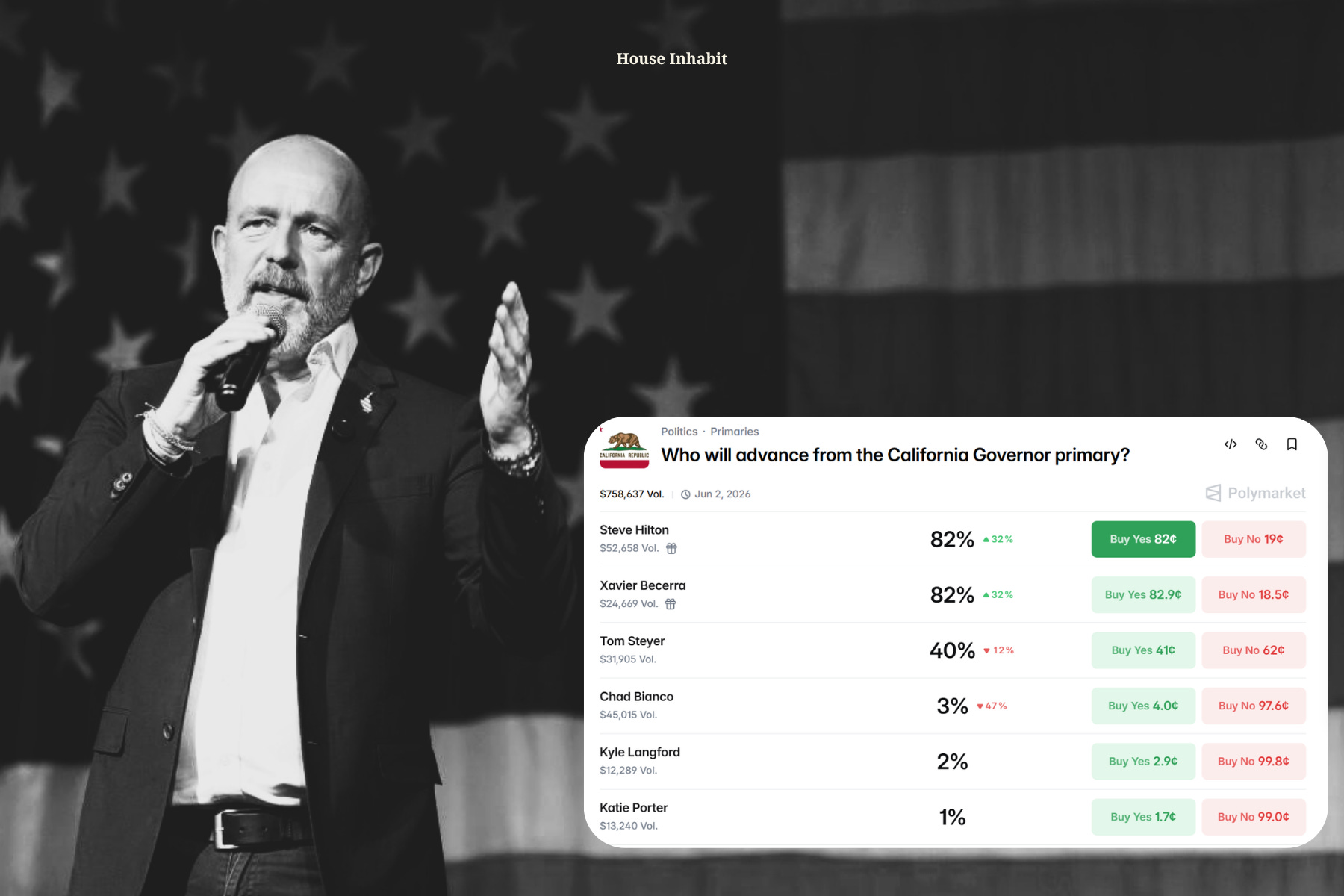
In Partnership with Polymarket

Q. WHAT DID SHE THINK OF THE QUEEN? WHAT DID YOUR FAMILY THINK OF THE MONARCHY GROWING UP?
HILTON: So it’s very interesting. What an amazing question. These are literally the only questions no one’s ever asked me. I’m a big fan. I became that, but I didn’t start out that way.
I’ll tell you a very specific story. At school there was a debate—I don’t think it was even a debating club, just a debate—about whether the monarchy should be abolished. This would have been in the early 80s. I don’t actually remember the debate itself, but I do remember what happened after. It was written up in the school magazine that gets sent home, and I was described as an “ardent republican,” in the sense of wanting to abolish the monarchy. I remember my mum saying, “You can’t say that. That’s terrible. You’ll get in trouble.” And it was really interesting because she wasn’t angry. She just genuinely thought it was dangerous. I think it came from her upbringing in a communist country—you just don’t speak out like that. You don’t say certain things. She really believed it could get me in trouble just for having said it.
But over the years, I’ve come to absolutely love the Queen. I was devastated when she died. I remember it very clearly. Every second of it.
I don’t support the system in a formal sense. I think the system here in the US is better. I’m an American, and I guess I have the zeal of the convert. I’ve actually renounced my UK citizenship.


Q. HOW WOULD YOU DESCRIBE YOURSELF AT 25?
HILTON: So at that point I was working in London for an ad agency—Saatchi & Saatchi—just before moving to Hong Kong for a year. I was very fast-paced, running around London, having fun, working, enjoying it. It was exciting. A really cool job.
And what do you think 25 has changed about you?
I mean a lot… none of us have, I’m sure that’s right—but this is where you have to ask my wife, because we’ve known each other a long time. We met in 1990. We were friends before we got married. My answer is I don’t feel that different. I’m pretty much the same. Well, politically completely different. But same passion for what you live in. High energy.
Q. WERE YOU POLITICALLY MINDED WHEN YOU WERE YOUNGER?
HILTON: When I was I was at Oxford, and I started obviously because I studied philosophy, politics and economics. It’s a classic degree in England. It’s a bit of a cliche, you know, most of the prime ministers have studied.
It’s call it PPE, and it’s a classic, slightly mocked kind of PPE, you know. So obviously, I chose that as my degree, and even before then, yeah, so in fact, during that time, in the third, so the second, in between my second and third year in the summer, I got a job at a conservative party, in England, in London, because I’d done all these shitty jobs in the vacations to earn a bit of money, like, you know, washing up and all that kind of stuff. Just earn some money.
There was one job that was so boring I thought, I can’t do this again.
It was 1987. I remember there was a hurricane in England—very unusual, in the south—and I got a temporary job at Eagle Star Insurance. They were overwhelmed with claims, so they were sending paperwork to different offices around the country. My job for weeks was just stamping files, sorting them, and labeling where they went. If it was Edinburgh, you wrote “E” and put it in a box. That kind of thing. It was so mind-numbing.
Then I did another job at American Express in Brighton, their European headquarters. I was in the microfiche department—pre-internet. You’d manually scroll through records looking for account numbers. I’d get up at 6 a.m., work until 2 p.m., and I’d just fall asleep at the machine sometimes. I thought, I need something more interesting for vacation work.
So I wrote to the Conservative Party—literally a letter saying I was at Oxford and looking for work.
And they gave me a job. And that really changed things.
Q. THAT WAS A TURNING POINT?
HILTON: Yeah, I think so. It was quite transformational. A real game changer.
Q. ARE YOU STILL IN CONTACT WITH PEOPLE FROM THAT TIME?
HILTON: Yeah, a few of us are still in touch. My oldest friend I’m still very close to—we’ve known each other since primary school. We actually just went to Glastonbury together. We suddenly realised we’ve been friends for something like 45 years. You kind of stop and think… how long have we actually been alive?
Q. SO YOU END UP IN CALIFORNIA BECAUSE OF YOUR WIFE’S JOB OFFERS AT GOOGLE. WHAT IS IT LIKE WHEN YOU GET OVER HERE?
HILTON: Oh, it’s amazing. The sun, the light…
But the thing is, I had… I was running a business in London at the time, it was doing pretty well. And then David Cameron—who I’d worked with after Oxford—asked me to come back and help with his leadership campaign for the Conservative Party. So I did that. And he won. So it was all quite intense and political.
And then things shifted again. We had our first son at the end of 2007, just before Christmas. And at the same time, Rachel—my wife—was at Google. She was head of communications for Europe. Her boss left for Facebook, and she got promoted to global head of communications. So suddenly we’ve got a new baby, she’s in this major role, and I’m working in the UK for the leader of the opposition. The Google team were very understanding. They said, “We get your situation—come out, meet the team, spend some time here.” It was meant to be six months.
We came in 2008 and ended up staying a year in Palo Alto.
It was actually a really lovely time. Our son was very little, it was his first year, and I got to spend a lot of time with him.
We were just able to be a family. I was working remotely, which at the time felt quite unusual—flying back to London every few weeks. But it worked, because of the time difference.
After a certain point in the afternoon in California, the UK is asleep. So I remember those early mornings were for work, then later in the day I could be with my son.
I look back on that time very fondly.
Q. AND THEN YOU MOVED PERMANENTLY?
HILTON: Later, yes. When our second son was born in 2011, we were back in government—Downing Street, much more intensity. Rachel’s job had grown even more as Google scaled globally. She was managing California time from London, working late into the night. It was just a lot.
In 2012 we made the move. But by then we’d already spent time here, so it didn’t feel like a shock. It felt familiar. And in a deep way—not just the weather or lifestyle—I felt like this was where we were supposed to be. That’s how it still feels.
Q. WHERE DO YOU LIVE?
HILTON: We live in the Bay Area.
Q. WHERE DO YOU GUYS LIKE TO GO OUT?
HILTON: We don’t go out much, honestly. We just don’t really. We walk the dogs—that’s probably our thing. We’ve got two little dogs, which are very sweet. And we cook at home a lot. So it’s pretty quiet, actually.
Q. COVID WAS A PIVOTAL MOMENT FOR EVERYONE. YOU’VE BEEN AN EARLY CRITIC OF MANDATES AND RESTRICTIONS. WHAT DO YOU REMEMBER ABOUT THAT TIME?
HILTON: I think it woke up a lot of people. It could be the seeds of me winning this year, actually—I really feel that. It was a critical moment. There was a lot of rage and skepticism, like “this is crazy,” and I don’t think that’s really been reflected in an election yet in California.
You had the recall, but that was very last minute. Larry Elder did his best, but it was scrappy and not well timed. Then the 2022 race—again, the Republican candidate didn’t really have the profile or the resources. So this is the first time there’s a serious challenge. And I think since then you’ve got a whole shift in sentiment. There’s a kind of rebel energy out there. I really believe that.
AUDIO: CALIFORNIA’S RAGE AND REBEL SPIRIT | SPENCER PRATT
Q. WHAT DO YOU REMEMBER PERSONALLY FROM THAT TIME?
HILTON: I really remember it. I can still picture exactly where I was sitting. It was the second week of the “15 days to slow the spread.” I was sitting on the back porch. I knew it was going to be a long conversation. It was Charlie Kirk. We were talking and it just felt like—this is insane.
He was on it early too. Very much. And we said, we’ve got to do something about this. At that point I was hosting my show on Fox, and I remember thinking: okay, let’s actually try to influence this. I remember saying on air, “the cure is worse than the disease.”
And then that night the president tweets it. And everything escalated from there. The pushback was enormous. But we believed what we were saying was right.
AUDIO: COVID CORRUPTION | SANTA CLARA | STANDFORD | BIO WEAPONS | CHARLIE KIRK | A PRESIDENTAL TWEET
WERE YOU AWARE OF RFK JR?
HILTON: No, not at all, then. So neither was I, but. I mean, because he was suffering the same censorship and punishment.
Q. WHAT DID YOU THIINK ABOUT THE CENSORSHIP?
HILTON: That became very real. We had guests on the podcast talking about vaccine mandates, and it seemed like a legitimate scientific discussion.
Then the episode was taken down by YouTube.
We went through the appeals process, and it was rejected. At the same time, I went on air and did the same conversation on television. And almost simultaneously, we got two responses: One from YouTube saying it violated guidelines and wouldn’t be restored. And one from Fox saying it had been a mistake and should never have been taken down.
It was all happening in real time.
Q. AND THE RESTRICTIONS?
HILTON: Yes. It got very granular. Rules about parks, benches, time limits outside. It started to feel extremely controlled. And I remember thinking at the time—this doesn’t feel proportionate anymore.
Q. ABOUT MAHA?
HILTON: So I wrote a book in 2015 called More Human. It was really my reflection on working in government by then. We’d moved here, I’d been teaching at Stanford. It wasn’t a political memo—it was more of an ideas book. The theme was More Human: Designing a World Where People Come First. It’s divided into chapters—health, food, education, schools, family, poverty, economics, business.
I remember giving the book to Nicole Shanahan. I met her at Turning Point when we were both speaking there. That was the first time I met her. She lives near us, and she was on stage there. And I knew I was going to see her, so I gave her the book and said, “Just read the food and health chapters. It’s basically MAHA.”
That was 2015. So I feel very deeply connected to the movement in that way.
Q. THIS EXPLAINS THE OVERLAP IN SUPPORT YOU’RE SEEING NOW, RIGHT?
HILTON: Yeah, I think it can do it. People say it’s liberal, Republican, Trump, this, that—but I understand all that. And I don’t think it’s going to be easy to win.
Q. WHAT DOES IT TAKE FOR YOU TO WIN MATHEMATICALLY?
HILTON: The first thing is a big Republican turnout. I mean I’m Republican. It’s going to be very… look, the election is just over a week away, the primary. It looks like I’m going to be in the top two. That’s good. I don’t take it for granted, but it’s looking promising.
So then it’s me against another Democrat—either the vice or Tom Steyer. And then it becomes very clear: do we want change, or more of the same? I understand it’s a Democratic-dominated state. It’s going to be hard. The unions, the machine. But a majority of Californians want change—that’s what the polling says.
The best indicator is whether people think the state is going in the right direction or wrong direction. And “wrong direction” is now well over 50 percent. So there is a majority for change. But to get there, you need a big Republican turnout. That’s going to be helped by voter ID on the ballot in November. That helps Republicans a lot. It’s going to be hard, but I think it can be done. Because to me it’s obvious we need change.
Q. WHAT ARE THE TOP ISSUES VOTERS ARE CONCERNED WITH?
HILTON: So statewide it’s more economic issues. Because government is… if you look at it, I’ve got a plan on homelessness. And it’s actually very similar to what Spencer is saying in LA.
Q. SO YOU THINK HE’S GETTING THAT RIGHT?
HILTON: 100%. And he’s being very strong on the first point of it.. Which is you’ve got to take people off the streets.
No one’s gonna get better on the street. No one’s over whatever number you want to pick, most of the people on the streets are either addicted to drugs or have severe mental health problems or some combination. And nobody’s going to get better if they’re on the street.
So it starts with taking you off the street, and we can’t be pathetic about that. I mean, that’s against the law. All these homesless and cameras, they’re against the law, but for years, they haven’t been enforcing the law ‘cause they got this idea of compassion, and you can’t force people to get off and all this.
So Spencer’s completely right about that, and that’s basically broadly what he’s laid out for L.A is what I would want to do to statewide, except that. So your two are aligned on the messaging of, on scale. We’ not working.
You know, like, he’s got a very different thing. He’s a nonpartisan, I’m Republican. It’s not the same at all.
I mean, broadly speaking, I would say, for me, statewide, it’s more the economic issues that are the focus. So definitely everything being so expensive, home, has in costs, taxes, gas prices, electric bills. You know, my whole plan, we were going to town hall here at Cal, where we’re talking, it’s called the Californordable Tour.
Like that’s my brand. Calordable, and it’s $3 gas. Cut your electric bills in half.
First 100 grand tax free, a home you can afford to buy. Very practical things. I mean, underlying that, I’ve got a lot of kind of policy reform plans, and there’s a really deeper point, which is we’ve got to make the business climate more attractive in California because if we don’t do that, it’s all going to fall apart.
Right now we’ve got the highest poverty rate in the country, tied with Louisiana, and the highest unemployment rate of all 50 states, because so many businesses that you can’t do business here. Of course, you can, but it’s so difficult. I was just with the local business guy a beautiful business just here in the central coast, he makes gin distillery.
It’s exactly the kind of business we should love. Yes. Local, artisans fantastic.
Every single thing that he tries to do there.’re blocking, it’s, you have permits, he wants to expand. It’s a nightmare. The permits are out of control.
HILTON HOT TAKES
GAVIN NEWSOM?
HILTON: Okay, so I’ll do my… okay, it’s time for a governor with less hair.
DONALD TRUMP?
HILTON: I’m proud to be endorsed by the President. I’m looking forward to working with the President and his team to make California golden again.
PETER THIEL?
HILTON: Oh, that’s interesting. I’ve never met Peter. I’d love to meet him. He’s a great original thinker, great entrepreneur.
ELON MUSK?
HILTON: Oh, amazing. I mean, this is America at its best. He’s an incredible entrepreneur.
JRK: PRINCESS KATE?
HILTON: Oh yeah, I mean, the way she handled the cancer thing, she’s so great. I love her. She’s great.
NIGEL FARAGE?
HILTON: He’s fun. He’s great. I’ll tell you a very funny story. We were at the Republican Convention in Milwaukee, just walking around one evening, and there was the former prime minister Liz Truss. Someone with me said, “Isn’t that the former prime minister?”
And I said yes—there she was on her own, walking around.
So I went over, said hi, had a nice chat.
The next evening we’re up in the donor area, and I’m there and people are coming up for selfies, a bit of a crowd. I look over and there’s another crowd and I wonder who it is—maybe a senator, maybe Ted Cruz. So I walk over… it’s Nigel Farage.
He’s such a character. People love Nigel.
CHAD BIANCO?
HILTON: So look, it’s nothing personal, but I think he just loves this state of California and wants the best for California. So do I. That’s why we both did this.
But it’s obvious now that Chad is not going to be able to make it into the top two.
So I would love nothing more than to have me and Chad work together to make sure we get a strong Republican vote in the primary, and then we can really work together to turn California around.
YOU WERE CLOSE TO CHARLIE KIRK. WHAT DO YOU MISS MOST ABOUT HIM—WHAT WAS HE LIKE AS A FRIEND?
HILTON: Unbelievably loyal, and always so… I don’t know, just the strength of his friendship. I love Charlie. The twinkle in his eye, you know? He was always a little bit mischievous. I love that. I miss that.
And, you know, it’s funny. In a way I miss him, but I always feel… I’ve said this often at my events. He endorsed me on day one. One of the first people I spoke to about running for governor. For the first few months—I started my campaign in April, and he was murdered in September—so during that time I would go to events and say I’ve got all these different people behind me, and I always end with: I’ve got Charlie Kirk behind me. And I really feel incredibly strong. And I still say it now at events every day. I really feel it.
He loved California, actually. He really did. And he didn’t have that attitude a lot of conservative commentators have—“forget California, it’s a lost cause.”
Charlie was never like that. He was like, “We can’t let California go.” And I just feel he’s with me on this every step of the way.
I’ve now gotten to the point where I can barely talk about him without cracking up sometimes… but I want to say he’s still with me, actually.