

RFK’s List
Like him or not, he’s set himself apart as a highly effective cabinet member. The factions of MAHA and the disappointing pace of government have not seemed to be the same obstacles for his team

Editor’s note: Happy Wednesday! We’re taking a much-needed break from tracking the latest drama on X (where everyone in conservative media is accused of being gay, a fed, or suing their most viral critic). Before we dive back into the mire of messy media feuds, I thought we’d shift gears and highlight a few positive points of policy. Yes, there are good things happening. Aaron is back to shed light on some impressive statistics showcasing RFK’s accomplishments as Secretary of Health so far. I also have a fun holiday-party recap, a conversation with David Harris, and a few other topics that have been patiently waiting their turn in the drafts—coming your way the rest of this week.
Don’t Miss: A Year Ago Today, Luigi Mangione Became the Poster Boy for Murder
LIVE With Matt Bilinski: Conservatism as Oppositional Culture
Aaron Everitt:
Anyone who has read my writings over the past several years knows how much I loathe the system we have. Entirely dysfunctional is the kindest thing I can say about it. Watching President Trump get caught on a hot mic about how feckless and loserish the Republicans are, followed by his scoldy Truth Social post about the Attorney General, makes it clear to me that Washington has done what it always does best - shut down the disruptions. The early wins and celebrations are nearing their end. We are well into primary season for the midterms. If all things hold as they seem to be today, the Republicans will be lucky to hold onto minorities that can stem the coming endless tides of scandal investigations, impeachments, and the end of Trump 2. The machine loves the machine. There is no stopping that at this point. They believe themselves to be the objective. That’s a strange thing to think about, but they see it as their duty to preserve the system as it is. They have a devotion to it. This time was no different. It took a few months to get it together, but once they united on the front that Washington, DC, is the central figure that must be preserved at all costs, the deal was done, and all the distractions and foreign policy fumbles were just the ways that the snakes in the grass could destroy the will of the plebeians.
I wrote this yesterday because I think it is imperative to understand where we are as an empire.
“We’re at a moment where the presidency, as an office, is being forced into becoming a Caesar-like figure. The Senate (and House) have become impotent institutions, especially as seen through a lens through which we believe them to be about reflecting the voices of the citizens, the old constitutional framework. But they cannot and will not govern with the motives of representing constituents’ needs or ideas. Not because they fear their removal from their office, but because their offices are so secure that they have no threat of what a “vote” might do, and they believe it is their duty to preserve the government in its present form.
We no longer live as a “self-evident” people, so government no longer has any interest in serving the culture it supposedly comes from. Instead, it has turned against the people and believes itself to be the divine voice of order for civilization and nature.
So the impasse in our government is the inevitable order of all civilizations. Congress believes its duty is to remain the guiding force for government preservation. The people who find themselves in the presidency from here will become stronger and more boisterous people subsequently, in order to demonstrate effectiveness, or they will be like President Biden—puppets for the machine. Study the emperors of the Roman Empire…there are no other types of leaders that arise when a nation reaches this point in its destruction as a republic.
Oswald Spangler, who was a student of civilizations, said that after the age of money and power, and after the age of oligarchs, the only thing that can destroy the spiderweb of bureaucracy is a strongman. We are there.”
Despite all of my doom and gloom, I don’t find any disillusionment with my advocacy for RFK Jr. I still think it was a missed opportunity as a country to elect a man made for a moment, but what we, as RFK advocates and the medical freedom community, got out of the deal was the best we could have hoped for.
I don’t wish this to happen, but if there is a cabinet member that the people in Washington hate more than anyone, it is RFK Jr., so when the midterms end up like I think they will, RFK will likely be on the chopping block. The left sees him as a key figure in the election of Donald Trump, and they hold that as the unforgivable sin. If I had to guess, he will be hauled up to Capitol Hill for his own impeachment, and it will either end in his resignation or removal by a newly elected group of Congressional actors armed with pitchforks and the angriest bureaucratic machine anyone has ever faced.
All that to say, if things go to course, RFK is likely on borrowed time to accomplish the remainder of his goals. The good news is that he was always clear to President Trump that he wanted to see tangible improvements within two years, or he would self-select off the ride, so there was no lallygagging around for Mr. Kennedy. What that means for his work in the Washington machine is that he has attempted to accomplish things as quickly as he could and with a steadfast relentlessness towards accomplishing what he believes to be right. Was he able to do some of the big things that everyone in the MAHA world wanted, like banning mRNA technology or fixing the causes of exploding costs? No, and he likely isn’t going to be able to, given the massive headwinds he has against him. But he has put together a rather lengthy list of things that are beneficial to the health of the average American.
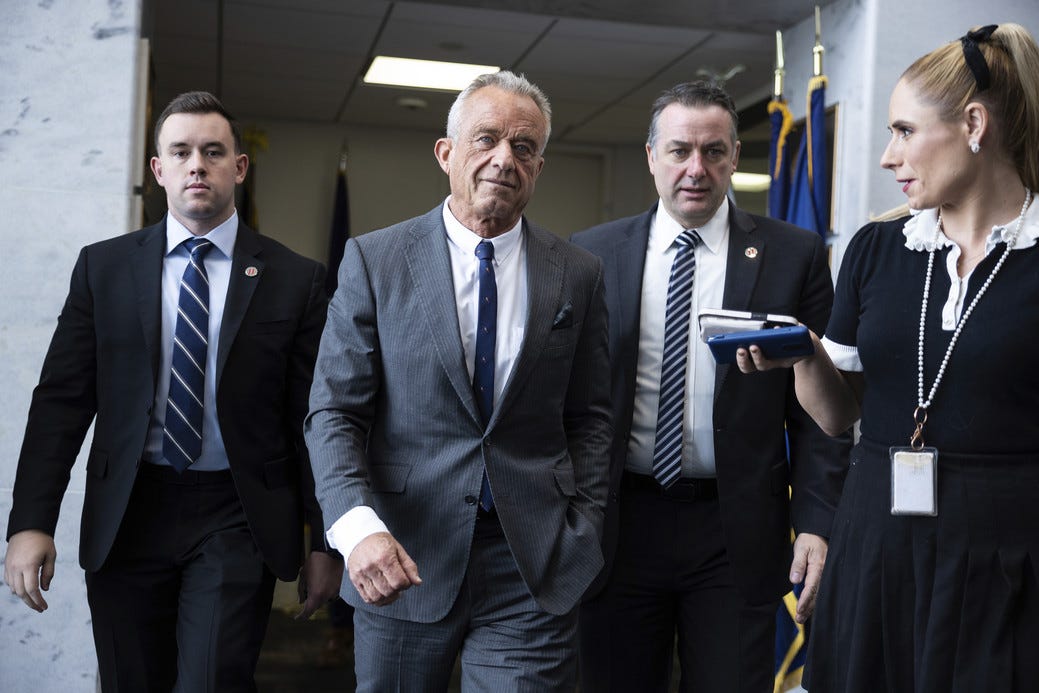
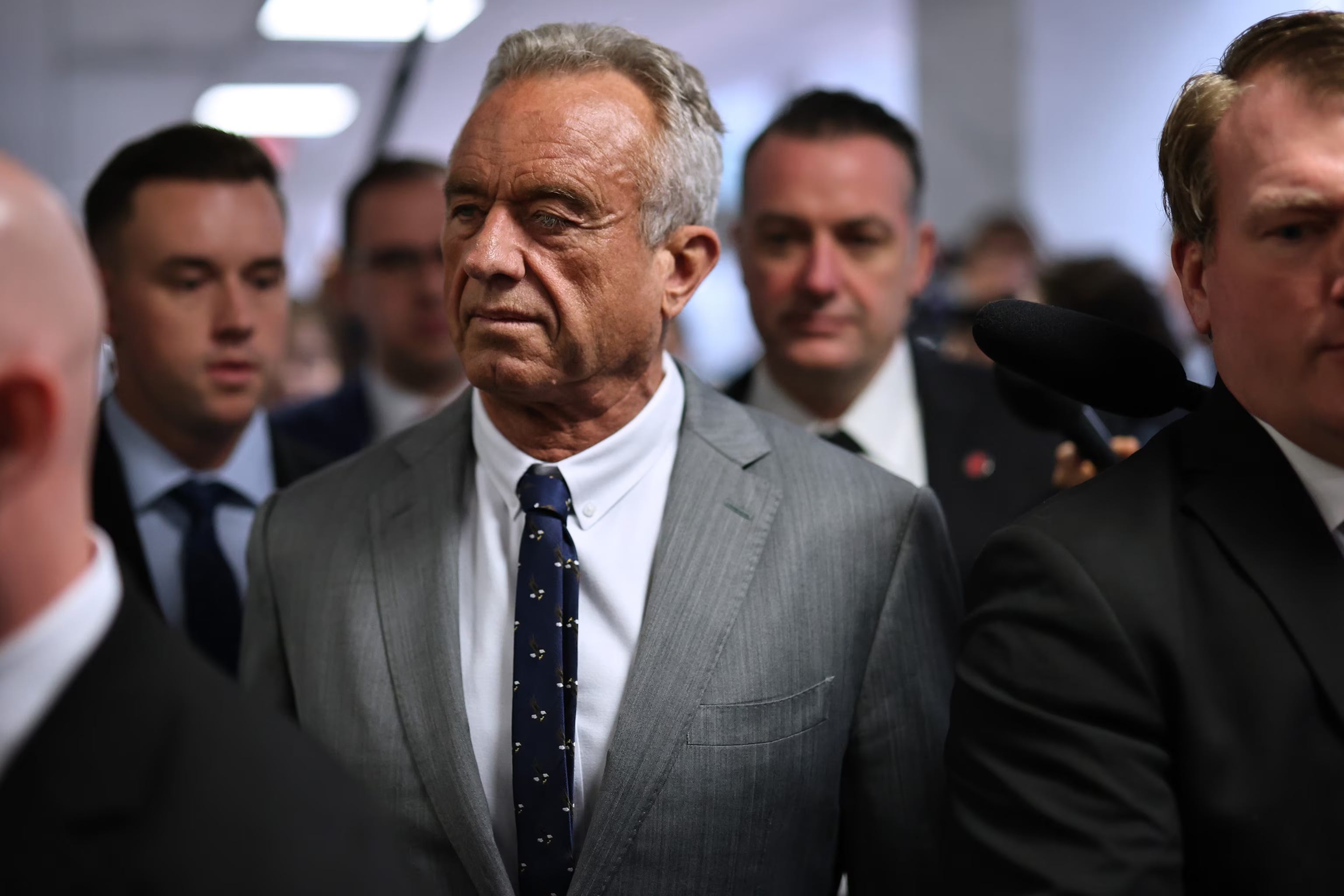
Prompted by a reader, I wanted to assemble a list of actual accomplishments that are not just theoretical, but actual policy changes that RFK Jr. has led the charge on. As I have said many times, Mr. Kennedy is by far the most effective cabinet member in the Trump administration. Despite the peanut gallery of people who all think they could do it better from the MAHA world, and the massive forces of corporate interests, government entrenchment, and a president who doesn’t always seem to have Kennedy’s best interests at heart, he has moved the needle significantly in areas that are meaningful to the citizen. The things on this list aren’t my friends’ in public health’s favorite things, but as I have said to them, this system is so big that if we are ever going to fix anything, any action is better than the stalemate and obfuscation we get from everything else in government.
Being effective in this leviathan of government is difficult. It requires singular focus on the task at hand and a willingness to shut out the naysayers’ voices. It hasn’t been perfect, but this list is rather impressive. Even some of the better voices in public health agree with the idea that the broken system needs fixing and are saying it openly in places like the New York Times and the Atlantic. Their openness to the conversations is partially why this political movement has continued to soar in prominence. The examples are becoming more evident with each new wave made by Mr. Kennedy, and that is amazing for the health of America. My friend, Dr. Craig Spencer, went to the Children’s Health Defense conference to see why this movement is making waves and despite his objections to some of what was presented, he saw why so many have united around this issue. Others I know, like Dr. Rachel Bedard are saying similar things about the significance of the moment. All of this would be impossible without the awareness that RFK has brought to this space. He moved an entire generation of Republicans to the opposite position of their media mouthpieces about health and healthcare simply by aligning with Trump. That alone has to be recognized as monumental.
This list is likely not comprehensive, but it does hit the highlights of what has happened in less than a year at Health and Human Services. As I look through this list, I have to remind myself that most of these things were never going to be accomplished without the political alignment of Trump and Kennedy, and for that, even I can set down my doom and gloom for one column.
(Sources below)
Early Reforms (February–March 2025): Focus on Funding and Oversight
NIH Grant Indirect Cost Cuts (February 7, 2025): The National Institutes of Health (NIH) reduced funding for indirect costs on research grants from 50%+ to 15%, redirecting savings toward preventive and holistic health research. This affects university and lab overhead, potentially slowing some biomedical projects but aligning with Kennedy’s push to prioritize “alternative” approaches over traditional drug development.
Elimination of Public Comment Requirements (February 28, 2025): HHS rescinded longstanding rules requiring public input on many agency plans, streamlining internal decision-making but raising concerns about transparency. The Federal Register notice argued public participation was unnecessary for routine operations.
Major HHS Restructuring and Workforce Reduction (March 27, 2025): HHS announced a sweeping overhaul, cutting ~10,000 jobs (reducing total staff from 82,000 to 62,000) and consolidating 28 divisions into 15. Key elements include:
Creation of the Administration for a Healthy America (AHA), merging offices for addiction, toxic substances, occupational safety, mental health, and preventive care to centralize chronic disease efforts.
Closure of half of HHS’s 10 regional offices (down to 5) and centralization of HR, IT, procurement, and policy functions across agencies like FDA, CDC, and NIH.
Folding the Administration for Strategic Preparedness and Response (ASPR) into the CDC.
New Assistant Secretary for Enforcement to oversee appeals, Medicare hearings, and civil rights, targeting waste and fraud. These changes aim to save $1.8 billion annually and refocus on “reversing the chronic disease epidemic,” though they’ve led to resignations and lawsuits from medical groups.
Spring Initiatives (April–June 2025): Nutrition and Environmental Priorities
SNAP Reforms and Soda Restrictions (April 2025): HHS partnered with USDA and states to ban soda, candy, and high-sugar items from the Supplemental Nutrition Assistance Program (SNAP), redirecting funds to healthier foods. This targets prediabetes in teens (affecting 38%) and aims to curb child obesity, with 10% of prior SNAP spending on sodas now reallocated.
Ban on Synthetic Food Dyes (April 2025): HHS mandated removal of 9 chemical dyes from processed foods, working with major processors. This follows Kennedy’s GRAS (Generally Recognized as Safe) standard revamp to eliminate additives linked to behavioral issues.
Operation Stork Speed for Baby Formula (April 2025): Launched to eliminate heavy metals and toxins from infant formula, including stricter FDA inspections and incentives for domestic production. This addresses contamination scandals and ensures “toxic-free” options.
Fluoride Reassessment (April–May 2025): Collaborated with EPA to revise federal fluoride recommendations after studies linking high levels to IQ impacts in children, potentially reducing exposure in water systems.
School Nutrition and Cell Phone Guidelines (May 2025): Worked with states to overhaul school lunches (removing dyes and junk food) and restrict cell phone use in schools to combat attention disorders.
Insurance Pre-Authorization Reforms (June 2025): Secured pledges from insurers covering 280 million Americans to eliminate prior authorizations for 80% of common procedures (e.g., imaging, knee surgery) by January 2026, speeding up care access after 30 years of failed attempts.
Summer–Fall Shifts (July–October 2025): Vaccine and Research Overhauls
Vaccine Policy Revisions (Ongoing from May 2025):
New CDC guidelines narrowed COVID-19 vaccine access to high-risk groups only, announced via social media without full scientific review, making shots harder to obtain.
Replaced the Advisory Committee on Immunization Practices (ACIP) with appointees skeptical of standard schedules; proposed splitting childhood vaccines and delaying newborn hepatitis B shots (vote delayed in October).
Launched a dedicated CDC division for vaccine injury reporting and treatments, emphasizing “gold-standard science” for adverse events.
Threatened to withhold federal funds from states without easy vaccine opt-outs for parents.
End to Gain-of-Function Research and Gender-Affirming Care Funding (September 2025): Halted NIH funding for gain-of-function virus studies and federal support for what Kennedy called “child mutilation” (gender-affirming procedures for minors).
Autism Causation Study (September 2025): Initiated research linking autism rises to vaccines and Tylenol, with preliminary findings expected; aligns with Kennedy’s long-held views.
Rural Hospital and Nursing Home Relief (September–October 2025): Doubled investments in rural hospitals and revoked burdensome staffing rules for nursing homes on reservations, saving $25 million and preventing closures.
Recent Actions (November–December 2025): Enforcement and Broader Impacts
Drug Price Negotiations (November 2025): In talks with 14 pharma companies to lower prices on high-cost drugs, enforcing transparency rules.
Health Data Privacy and Tech Access (November 2025): 60% of major tech firms agreed to grant patients access to (and stop selling) their health records without consent.
Medical Education Mandate (November 2025): Required medical schools to include nutrition training or lose federal funding, shifting focus from pharma-centric care.
Animal Testing Reduction (December 2025): Phased out much animal testing in favor of AI models for drug development.
Hepatitis B Vaccine Delay Confirmation (December 5, 2025): ACIP voted to delay routine newborn hepatitis B vaccination, a major shift from prior universal recommendations, citing risk-benefit analysis.
School Vaccine Consent Investigation (December 2025): Launched probe into unauthorized COVID shots in schools, enforcing parental consent nationwide.
Maybe some of these are things that MAHA hates or thinks could be done better. I know there are some in the movement who think all of the food stuff was a waste of time and energy when there are still COVID shots on the market. And to be sure, some of these things are troublesome to public health officials who see the changes as reckless and harmful to the infrastructure that many depend on. But to accomplish any of this in a governmental system that is actively working to sabotage the efforts is significant. Sadly, all of this is never going to be codified by Congress, so it will likely be undone by the next secretary who will inevitably be bought by the corporations that make Washington run. But the fact will remain that what Mr. Kennedy accomplished as a political movement is the most monumental and rapid movement in the modern moment of government. He has raised awareness in a population that was hardly talking about any of these things five years ago. He has converted an entire segment of the Republican political voting world from corporate defenders to Pharma skeptics. He has brought attention to pesticides, to processed foods, to exercise and mental health, all in a very short window.
His tenure may end in a typical Washington ending, but what he has left behind is a movement that cannot be ignored. Whoever runs the system next will have to placate the people in this area to “win” their elections. That is real, lasting change.
Sources:
Changes at HHS , FDA Operations, HHS Transformations, Job Overhaul, HHS Restructure, Change Happening Fast, Public Comment, Vaccine Shakeup, Research shakeup, Cuts at FDA
 | A guest post by
|
Thanks for another great article. As a mother to five kids, who is thrilled by the light he’s shed on nutrition and vaccines in this country, I would be very sad to see Kennedy go.
Excellent analysis which elucidates the reasons our "government of the people" is not very effective nor even concerned with, what the masses of voters desire.